
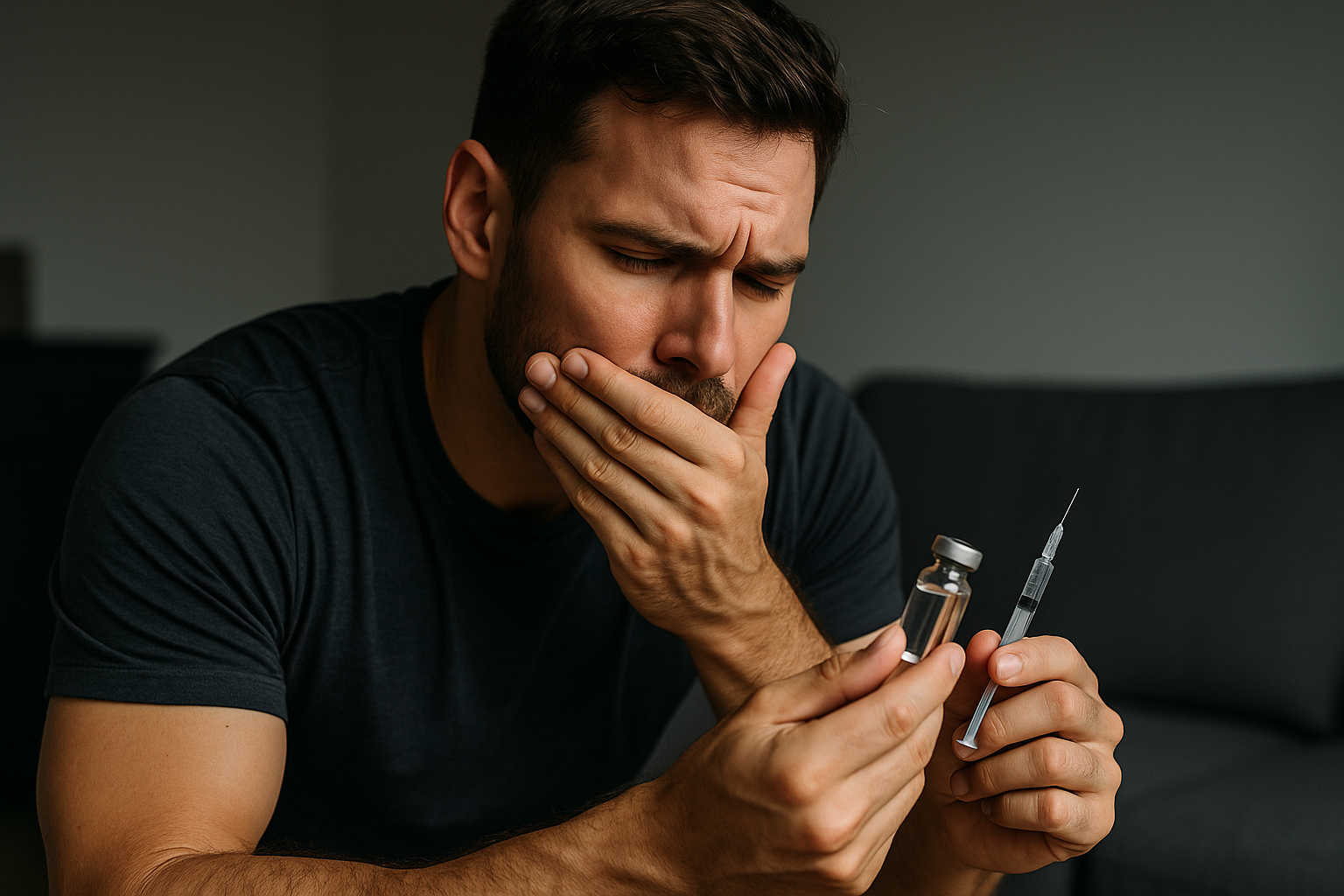
PT-141 nausea is one of the most commonly discussed downsides of PT-141 (also called bremelanotide)—and it’s also one of the reasons people search for “how long it takes to work,” “how long it stays in your system,” and “pt-141 experiences.” This article focuses on evidence-based safety context: what PT-141/bremelanotide is, what it’s studied for, the side-effect pattern (including pt-141 nausea), timing expectations, and when to seek urgent medical help.
Important: PT-141 is a medical compound. This guide is not medical advice and does not provide a dosing schedule. If you’re considering PT-141, use clinician-directed guidance based on your medical history and risks.
What PT-141 (Bremelanotide) Is and What It’s Used For
PT-141 mechanism overview (melanocortin agonist context)
PT-141 refers to bremelanotide, a synthetic peptide designed to act on the melanocortin system in the body. In clinical settings, bremelanotide has been investigated in relation to sexual desire pathways—so it’s not simply an “instant libido booster.” Because it interacts with receptor signaling, side effects (including pt-141 peptide side effects like nausea) are a key part of the safety profile.
Mechanistic background is discussed in scientific literature; see PT-141 (bremelanotide) melanocortin agonist clinical research (PubMed).
Who it’s been studied for (set expectations; don’t oversell)
Bremelanotide has been studied for hypoactive sexual desire disorder (HSDD) in specific populations (for example, premenopausal women) under medical supervision. That matters for safety: clinical use is tied to defined patient selection, monitoring, and labeling-type side-effect expectations.
Because PT-141 is often discussed online outside of regulated indications, it’s wise to treat pt-141 experiences and “protocol” talk as non-medical context—not proof of safety or effectiveness for you.
PT-141 Side Effects (What to Know Before You Try It)
Common side effects overview (include nausea, flushing/headache/injection-site irritation as general categories)
Most safety-focused discussions of bremelanotide overlap on a few broad categories. While individual reactions vary, common side effects of pt 141 reported across clinical descriptions include:
- Nausea (often highlighted as a prominent complaint)
- Flushing or warmth/redness sensations
- Headache
- Injection-site irritation or local reactions
- Other general systemic effects that can occur with peptide/protein-like agents
For an indication and side-effect framing based on clinical description, review Bremelanotide side effects & dosage (Mayo Clinic).
PT-141 nausea: why it happens and when it may show up
If you came here searching for pt 141 nausea or “pt-141 nausea,” you’re not alone. Nausea is frequently mentioned because bremelanotide can affect signaling pathways that influence gastrointestinal comfort and the brain’s response to certain stimuli.
When it may show up: nausea can appear after dosing for many users, and it may cluster around the same window people are also thinking about “when will it kick in?” Because timing varies, don’t assume you’ll feel fine—plan for the possibility that nausea can occur around the early period after administration.
What to watch: mild nausea that improves might be manageable, but severe or persistent symptoms aren’t something to ignore. If you experience symptoms that suggest an allergic-type reaction (see the “when to seek help” checklist later), get urgent medical attention.
How Long PT-141 Takes to Work
Timing expectations (non-guarantee language)
Search intent often combines side effects with timing—e.g., “how long does pt-141 take to work” alongside “pt-141 nausea.” Here’s the evidence-first reality: timing cannot be guaranteed because individual absorption, body differences, and context all play roles.
What many users try to infer from pt-141 experiences is an “onset window.” But online reports are influenced by expectations, dosing variability, and the fact that people often only share experiences when something happened (good or bad). Clinically, you should treat timing as uncertain and avoid planning critical activities around a single expected minute.
Practical approach: if nausea is a concern, plan your day so you can rest and hydrate if needed. If you’re using PT-141 with a clinician’s guidance, ask them what monitoring they recommend and how to handle side effects in the hours after use.
How Long PT-141 Stays in Your System
Factors that can affect duration (dose, frequency, individual variation—no hard numbers)
Another common query is how long does pt-141 stay in your system. The honest answer: your body’s handling of bremelanotide depends on multiple factors, and there isn’t one universal number that applies to everyone.
Key variables that can influence duration and detectability include:
- Dose and whether dosing is repeated
- Individual metabolism and physiology
- Timing between doses (if repeat dosing is discussed)
- Other medications you’re taking
- General health factors (e.g., gastrointestinal tolerance, hydration status)
Because of that variability, it’s safer to focus on functional safety: if you experience pt-141 peptide side effects like nausea, give your body time to settle, and don’t stack doses close together based on forum timelines. Timing/duration should be interpreted through clinician guidance rather than “pt-141 dosing reddit” style discussions.
PT-141 Dosing Basics (High-Level, Not a Prescription)
Typical dosing discussions you’ll see online (what “dosing reddit” tends to focus on)
When people search pt-141 dosing reddit, they often want a simple schedule: when to take it, how often, and what dose “works.” That’s exactly where forum content can become misleading—because dosing discussions often:
- Mix different product sources/strengths
- Recount anecdotal effectiveness without consistent safety monitoring
- Ignore contraindications and medication interactions
- Don’t account for variability in onset (which also matters for nausea)
So while you’ll see “protocol” narratives, treat them as unverified context. If you’re trying to avoid pt-141 nausea, the most relevant question is not “what dose did someone else use?” but “what risk factors do I have, and how should nausea be managed?”
Why dosing should be clinician-guided (safety and variability)
PT-141/bremelanotide is a medical compound. Clinician-directed dosing is the safer path because healthcare professionals can consider:
- Your health history and risk profile
- Other medications and potential interactions
- How to monitor side effects (especially nausea and systemic symptoms)
- When to stop and seek urgent help
If you’re considering use outside a formal prescription pathway, that adds uncertainty around product quality and consistency—another reason not to adopt forum dosing guidance.
PT-141 Experiences: What Users Report vs What Evidence Says
Where Reddit narratives match clinical side-effect patterns
Many pt-141 experiences (including what’s discussed in pt-141 peptide reddit threads) tend to converge on side-effect themes that mirror clinical framing. The overlap commonly includes nausea and other systemic sensations like flushing or headache. That doesn’t mean every personal story is accurate, but it suggests that nausea is not just an isolated complaint—it’s a repeatable theme.
Key takeaway: if you see repeated reports of pt-141 peptide side effects such as nausea, that aligns with the general side-effect category awareness described in clinical sources. Your individual experience may differ, but nausea is a “plan for it” side effect.
When to stop/seek medical advice (red flags list)
You should seek medical attention urgently if you develop possible severe allergic-type symptoms or serious adverse reactions. Common red flags to treat as urgent include:
- Chest pain, fainting, or severe dizziness
- Difficulty breathing, wheezing, or throat tightness
- Swelling of the face, lips, tongue, or throat
- Severe or persistent vomiting or dehydration symptoms
- Rash with other systemic symptoms
- Any symptom that feels rapidly worsening or “not like the usual side effects”
When you see these, don’t “wait it out.” Contact local emergency services or urgent care as appropriate.
PT-141 Nausea: How to Reduce It (Evidence-Based Comfort Strategies)
This section is about symptom management, not “making PT-141 work better.” Different people experience nausea differently, and there’s no universal protocol that can guarantee you won’t feel sick. However, there are practical, safety-conscious strategies you can discuss with a clinician or use as general GI-comfort steps.
What helps some people (general, non-prescriptive comfort measures)
- Plan your timing around comfort: choose a window when you can rest and avoid heavy exertion.
- Hydrate thoughtfully: dehydration can worsen nausea. Sip water consistently rather than chugging if you feel queasy.
- Go light with food: bland, easy-to-digest options may be more tolerable than heavy meals (individual tolerance varies).
- Avoid alcohol: alcohol can increase GI irritation and may worsen nausea.
- Don’t ignore medication interactions: if you take other drugs, ask a clinician/pharmacist what nausea-management options are safe for you.
What not to do (common mistakes people make from forum advice)
- Don’t stack doses in an attempt to “push through” nausea.
- Don’t rely on “flushes it out” myths—how long it takes to leave your system is variable.
- Don’t follow dosing guidance from pt-141 dosing reddit without medical oversight.
Bottom line: your goal is to reduce discomfort while staying within a safety plan. If nausea is severe, consult a clinician rather than experimenting further.
Safety Checklist + Questions to Ask Your Clinician
Contraindications/risks to discuss (general, not invented specifics)
Because you’re dealing with a medical compound, use a checklist mindset. Ask your clinician about:
- Your personal risk for side effects of pt 141, including pt-141 peptide side effects like nausea
- Potential interactions with your current medications and supplements
- Any history of allergic reactions or sensitivity to injectable products
- Monitoring recommendations for the hours after use
- What symptoms mean you should stop and seek urgent medical care
If you want a structured safety approach, you can also review how other peptides are discussed on Forged Alpha (for example, to learn the kind of side-effect/timing framing we recommend):
- MOTS-c Peptide: Evidence, Dose, Benefits Side Effects (Safety Guide)
- SS-31 Peptide Dosage Protocol: Evidence, Safety Side Effects
- GHK-Cu Peptide Side Effects: Safety, Dosage Chart WADA
Optional broader timing theme: peptides often involve timing and tolerability considerations. If you want a related example of “timing + comfort + safety language,” see CJC-1295 Peptide Therapy: Morning Timing, Hunger, Flushing, Fridge Life Safety.
What Reddit Reports vs What Clinical Sources Say
People searching pt-141 experiences, pt-141 peptide reddit, or pt-141 dosing reddit are usually trying to answer two questions: “Will it work for me?” and “Will I feel sick?” Here’s a reconciliation that stays grounded:
- Match: Repeated reports of nausea align with clinical side-effect awareness—so nausea is a credible concern, not just a one-off complaint.
- Mismatch: Forum timelines for onset and dosing often vary widely and may be influenced by expectations, product differences, and inconsistent monitoring.
- Clarification: Clinical sources emphasize defined patient populations and safety framing; online posts are experiences, not proof.
So instead of “believing the thread,” use it the way it’s most useful: as a prompt to ask better questions of a clinician—especially if you’re worried about pt 141 nausea, how to reduce it, and what safety steps you should follow.
FAQ: PT-141 Nausea, Timing, and Safety
What is pt-141 nausea and how common is it?
PT-141 nausea refers to feeling nauseated as a side effect associated with bremelanotide. It’s commonly discussed and is a known side-effect category in clinical descriptions, but the exact frequency can vary by individual and context.
What are the side effects of pt-141 peptide?
Common side-effect categories include nausea, flushing/warmth sensations, headache, and possible injection-site irritation—along with other individual variability. For clinical framing, see Mayo Clinic’s bremelanotide description.
How long does pt-141 take to work?
How long does pt-141 take to work varies and isn’t guaranteed. Individual absorption and response differ, and side effects like nausea may occur around the early period. Treat onset timing as uncertain and follow clinician guidance.
How long does pt-141 stay in your system?
How long does pt-141 stay in your system also varies based on dose, frequency, and individual physiology. Rather than rely on a single number, prioritize safety planning—especially if you’re experiencing pt-141 peptide side effects.
What do people report in pt-141 experiences (and how should I interpret it)?
People often report both effects and side effects, with nausea being a recurring theme. Interpret pt-141 experiences as anecdotal context—not evidence of what will happen to you personally.
What should I ask a clinician about pt-141 dosing and safety?
Ask about your risk of pt-141 nausea, potential medication interactions, monitoring recommendations, what warning signs mean you should stop, and what guidance they provide for symptom management if nausea occurs.
Conclusion: A Safer Next Step If Nausea Is Your Main Concern
PT-141 nausea is one of the most relevant side-effect categories to understand before making any decision. Evidence-first sources and clinical side-effect framing support nausea as a plausible reaction, while online “timing” and “dosing reddit” narratives can be inconsistent and should not be treated as a reliable guide.
Next step: If you’re considering PT-141, schedule or prepare a clinician discussion focused on (1) your side-effect risk (especially nausea), (2) what timing expectations are realistic for you, and (3) clear red flags for when to seek urgent help.
Medical disclaimer: This article is for informational purposes only and does not provide medical advice or dosing instructions. Individual responses vary, and PT-141/bremelanotide is a medical compound that requires clinician-directed guidance.