
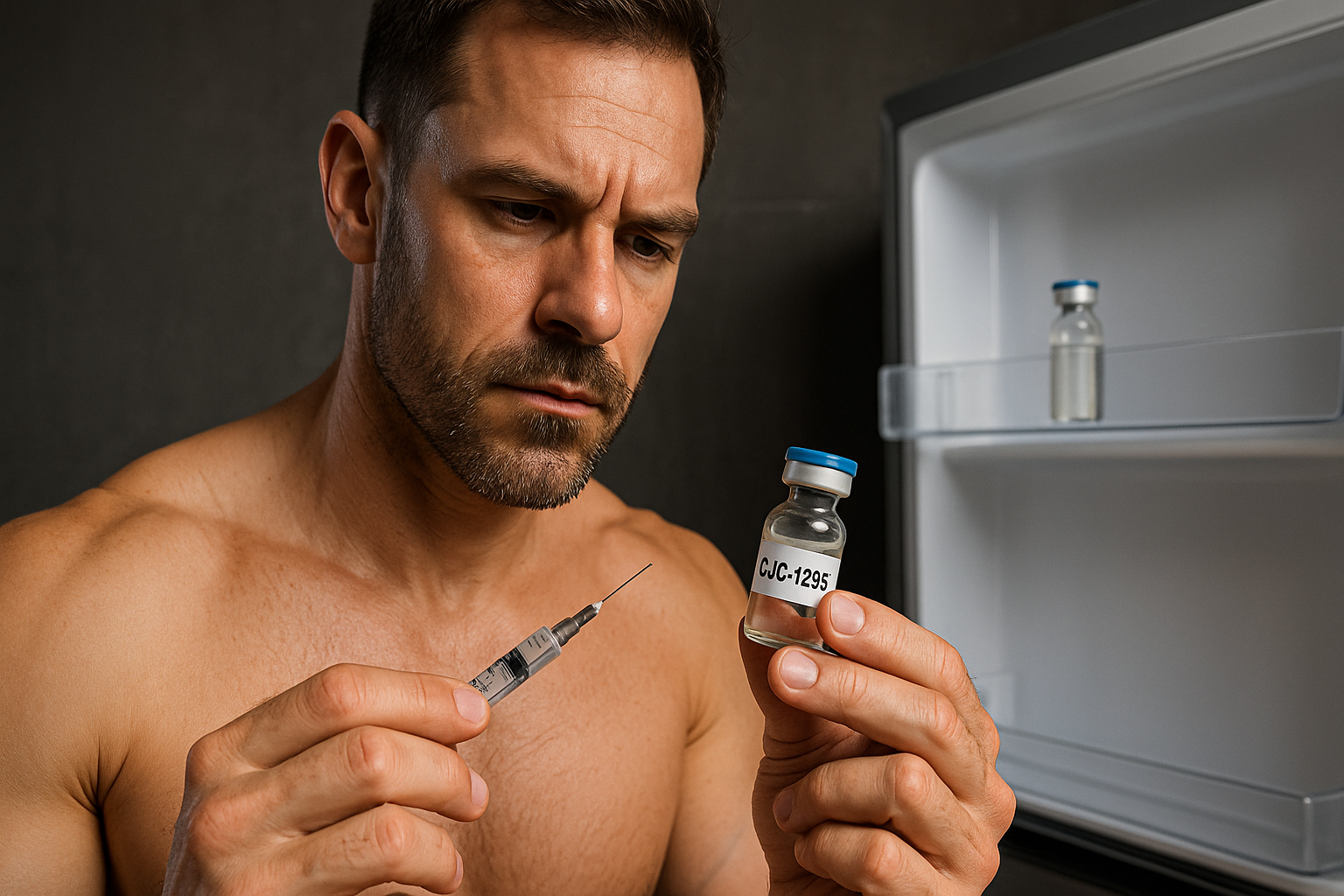
If you’re researching cjc-1295 peptide therapy, you’re probably trying to answer the same questions before spending money: what it does, how long it stays active, whether timing matters (especially morning), what side effects to watch for (including flushing), and how to think about safety and storage. This guide translates the best available evidence into a practical, safety-first FAQ—plus a “reddit vs evidence” section so you know what’s anecdotal vs what’s actually studied.
Quick note up front: CJC-1295 (and many peptide products sold online) are not FDA-approved for general bodybuilding/wellness use. Purity, sterility, and dosing can vary widely between vendors and countries. Consider working with a qualified clinician, especially if you have endocrine issues, diabetes/prediabetes, cancer history, or are on hormone-related medications.
What is CJC-1295 (and how does it work)?
CJC-1295 as a long-acting GHRH analog (high level mechanism)
CJC-1295 is commonly described as a long-acting GHRH (growth hormone–releasing hormone) analog. In simple terms, it’s designed to influence the brain/pituitary signaling that controls growth hormone (GH) release.
Mechanistically, it’s intended to prolong the stimulation of GH release, which then can influence downstream hormones such as IGF-1. That’s the main pathway researchers look at when evaluating effects, dosing-related pharmacodynamics (what the body does), and safety.
For general background: CJC-1295 (overview, long-acting GHRH analog)
What “growth hormone release” means in practice (non-promissory framing)
When a product increases GH signaling in lab or clinical settings, people online often assume it will translate to dramatic body composition changes. In reality, the human outcomes (fat loss, muscle gain, recovery, skin changes, etc.) depend on many factors beyond GH exposure alone—sleep, calorie intake, training stimulus, baseline hormone status, insulin sensitivity, age, and comorbidities.
So instead of promising results, it’s safer to focus on what the evidence supports most directly: pharmacokinetics (how the drug behaves in the body), pharmacodynamics (biologic effects like GH/IGF-1 changes), and safety signals.
CJC-1295 peptide therapy: timing and “morning” questions
Can you take CJC-1295/ipamorelin in the morning?
Search queries like “can i take cjc-1295 ipamorelin in the morning” show up constantly because people want a schedule that fits daily life. The key point is that timing guidance should not be treated like universal medical instruction.
Why? Because:
- CJC-1295 is designed to be long-acting, so users aren’t dealing with a short-lived stimulant where “morning vs night” drastically changes exposure.
- Individuals differ in baseline hormone patterns (GH pulses vary across the day, and sleep strongly affects them).
- Most online schedules are not derived from head-to-head timing studies in real-world users combining multiple peptides.
Practical, safety-first take: If you’re considering timing (morning or otherwise), prioritize clinician guidance and your full medical profile over “what people do” on forums. If you’re pairing with another peptide (e.g., ipamorelin), discuss the combined plan with a professional because the interaction risk is rarely evaluated as a “stack” in the same way people market it online.
Does timing change hunger/appetite effects?
Another common question is “does cjc 1295 make you hungry?” People often connect appetite changes to growth-hormone–axis effects or to an overall insulin/glucose response.
Here’s the responsible way to think about it:
- Some people report appetite differences anecdotally.
- In clinical research settings, appetite is not always measured as a primary endpoint, and the signal may be inconsistent.
- Diet composition and training load can create hunger changes that are incorrectly attributed to the peptide.
What to do if hunger increases: track it for several days, monitor body weight trend (not daily fluctuations), and make sure your calorie/protein targets are aligned with your training. If you develop concerning symptoms (significant swelling, allergic-type reactions, persistent nausea), seek medical care rather than adjusting dosing on your own.
If appetite is affecting meal quality, you may find these helpful for staying on track: Cheap High Protein Meals for Muscle Gain.
Dosage and “reddit dosing” topics—how to interpret them safely
What users discuss vs what evidence can/can’t confirm
Keywords like “cjc 1295 ipamorelin dosage reddit” and “cjc 1295 peptide therapy” point to forums where dosing schedules get repeated. The problem is that forum threads tend to mix:
- Different products (gray market sourcing, different purity)
- Different reconstitution/storage practices
- Different baseline health status (sleep, insulin sensitivity, age)
- Different stacks (CJC-1295 alone vs combined with ipamorelin or other agents)
So while “what people do” can be interesting, it cannot substitute for controlled pharmacokinetic/pharmacodynamic study data. The most evidence-aligned way to interpret dosing is to anchor it to what the studied compound and regimen actually achieved in the body—and then treat all translation as uncertain.
Why clinician supervision matters (unknowns, variability, contamination risk)
Even if you find an internet dose that “matches your goal,” you still have to manage safety variables:
- Medical risk: GH/IGF-1 axis changes may not be appropriate for everyone.
- Product risk: contaminated, underdosed, or mis-labeled products can cause harm.
- Monitoring risk: if you don’t track relevant labs (when guided by a clinician), you may miss concerning trends.
Bottom line: If you want the commercial investigation angle covered properly—don’t buy solely based on forum dosing. Use forums to understand questions people ask, then use evidence and professional guidance to choose your risk path.
If you’re comparing strategies with other GH-axis options, keep reading for a tesamorelin vs cjc 1295 reddit comparison.
Side effects FAQ (including flushing)
Can CJC-1295 cause flushing?
Yes—flushing is frequently reported by users searching for “cjc-1295 ipamorelin face flushing.” However, “frequently reported” is not the same as “proven cause-and-effect” in controlled studies.
When flushing occurs, the practical question becomes: Is it mild and transient, or is it part of a bigger reaction? If flushing comes with symptoms like trouble breathing, widespread hives, facial/lip swelling, or severe dizziness, seek urgent medical care.
Why does CJC-1295 cause flushing?
Forum discussions often focus on “why this happens,” and it’s reasonable to ask—because it can feel alarming. At a high level, flushing could be related to:
- Vasodilation/skin blood flow changes (common theme with many compounds people inject)
- Timing around injection (some people notice it soon after administration)
- Injection-site or product-related effects (e.g., irritation from technique, reconstitution differences, or sensitivity)
Also, when users stack CJC-1295 with other peptides, it becomes harder to isolate the exact driver of flushing. That’s why clinicians who consider GH-axis therapies typically emphasize baseline screening and careful monitoring.
CJC-1295/ipamorelin face flushing: possible triggers to watch (general)
Instead of guessing a single cause, use a structured approach:
- Track timing: record when flushing occurs relative to injection (minutes vs hours).
- Check technique: injection discomfort, rubbing the site, or contamination during reconstitution can contribute to nonspecific reactions.
- Review co-factors: alcohol, spicy food, overheating, intense exercise, and stress can also trigger flushing.
- Assess severity: mild warmth/redness is different from painful swelling or allergic-type reactions.
Safety red flag: If flushing is severe, persistent, or accompanied by other symptoms, stop and seek medical advice rather than trying to “push through” or adjust dosing based on social media.
Storage, stability, and “how long it lasts in the fridge”
What factors affect peptide stability (generic storage considerations)
People often ask, “how long does cjc-1295 last in the fridge?” The honest answer is that stability depends on multiple factors you typically can’t fully verify at home:
- Manufacturer guidance: the supplier’s instructions are the closest thing to a direct stability reference.
- Reconstitution method: how it’s mixed, the diluent used, and technique.
- Container and handling: cap integrity, avoiding repeated temperature cycling, and keeping the product protected from light as instructed.
- Hygiene/sterility: any compromise during reconstitution increases risk regardless of “fridge life.”
How to think about “how long it lasts” without overpromising
Because stability data isn’t standardized across all vendors and peptide forms sold online, this article won’t invent shelf-life numbers. Instead, use a practical rule:
- Follow the label/supplier’s stated storage instructions exactly.
- If you don’t have reliable instructions or the product looks/smells “off,” do not use it.
- If you have any concern about sterility, treat it as a medical safety issue—not a convenience issue.
If you want to reduce risk overall, be extra conservative with hygiene, temperature exposure, and handling steps.
How long does CJC-1295 stay in your system?
Half-life/pharmacokinetics at a conceptual level
People search “how long does cjc-1295 stay in your system” because they’re thinking about duration of exposure and timing between doses.
In the evidence-based sense, “staying in your system” corresponds to pharmacokinetics (PK)—how long it persists and how concentrations decline. CJC-1295 is described as long-acting, so the expectation is that it can maintain biologic signaling over a longer window than short-acting compounds.
But without your specific product’s dosing regimen, your injection technique, and the exact formulation you used, any “time in system” number you see online is likely to be approximate at best.
What to expect regarding duration of effects (avoid exact timelines unless sourced)
Instead of chasing an exact number, interpret duration in a safer way:
- GH/IGF-1 axis effects can be downstream and not perfectly aligned with injection timing.
- Individual response differs, especially if baseline IGF-1, sleep, and metabolic health differ.
- Forum claims are not lab-confirmed, so use them only as “signals of possible experiences,” not as timing guarantees.
If you’re trying to decide “how long does CJC-1295 last” for planning purposes, the best next step is to align your plan with clinician monitoring and evidence-based expectations rather than guessing from threads.
CJC-1295 vs alternatives (Tesamorelin comparison)
Tesamorelin vs CJC-1295 (user discussion themes, key differences in purpose/mechanism)
Search terms like tesamorelin vs cjc 1295 reddit are common because both are discussed in the “growth hormone axis” space. However, the safest comparison starts with mechanism and typical therapeutic framing.
- Tesamorelin is commonly discussed as a therapeutic agent aimed at increasing GH secretion via upstream signaling (and is often described in a more clinical context).
- CJC-1295 is often described as a long-acting GHRH analog in bodybuilding/wellness discussions.
Forum discussions often focus on perceived differences in:
- Side effect patterns (including “feels stronger” or “more noticeable”) — anecdotal
- How people time injections — anecdotal
- Perceived appetite and energy changes — mixed and confounded by diet/training
Safety-first takeaway: Even if two agents both target GH signaling, they’re not interchangeable. If you’re investigating either for therapy-like goals, talk with a clinician who can evaluate risks, contraindications, and monitoring needs for the specific option.
Evidence summary + safety checklist
What PubMed data contributes (PK/PD/safety framework)
For an evidence anchor, one commonly cited study is: “Prolonged stimulation of growth hormone (GH) and insulin-… (CJC-1295 study)” (Teichman, 2006). This research is designed to examine the pharmacokinetic profile, pharmacodynamic effects (what biologic markers do, such as GH/IGF-related responses), and safety.
How to use this in decision-making:
- PK: helps explain “why it’s considered long-acting” in the studied context.
- PD: shows which hormones/markers shift and how that relates to exposure.
- Safety: identifies monitored adverse events and the types of findings investigators watch for.
Important limitation: Study conditions aren’t your real-life scenario. Your product quality, dosing regimen, health status, and any added peptides may differ substantially. Evidence can inform uncertainty; it can’t guarantee outcomes for you.
Red flags: when to stop and seek medical advice
If you experience any of the following, do not treat it as “normal peptide adjustment”:
- Allergic-type symptoms (hives, significant swelling, difficulty breathing)
- Severe or persistent flushing, especially with dizziness or chest discomfort
- Rapid worsening of symptoms after injection
- Neurologic symptoms (severe headache, vision changes) — seek urgent care
- Any signs of infection at an injection site
Also consider clinician review if you have diabetes/prediabetes, are at risk for insulin resistance, or have endocrine-related concerns. GH-axis stimulation can be a safety-sensitive territory for some people.
If you want to broaden “hormone support” knowledge in a general wellness sense (not as a dosing guide), you may also like: Thymosin 101: What Thymosin Does, Thymosin Alpha-1 Benefits.
“Reddit vs evidence” — why answers conflict
People searching “cjc 1295 ipamorelin dosage reddit” or “tesamorelin vs cjc 1295 reddit” are often trying to reduce uncertainty. But forum reports often differ because:
- Different formulations/products are being used
- Different stacks (CJC-1295 alone vs CJC-1295 + ipamorelin, etc.)
- Different reconstitution/storage and handling cleanliness
- Different baseline health and lab monitoring (or lack of it)
- Expectations and perception influence how side effects are reported
A safer way to use Reddit is to extract themes (“people often mention flushing” or “timing debates exist”), then cross-check with what PK/PD/safety studies actually measured. Evidence won’t answer every personal question—but it can help prevent avoidable risks from oversimplified claims.
FAQ: cjc-1295 peptide therapy dosing/timing, side effects, and safety
Can I take CJC-1295 ipamorelin in the morning?
Possibly, but there isn’t a one-size-fits-all evidence-based “morning rule” that you can safely apply to everyone—especially when combining agents like CJC-1295 and ipamorelin. Because individuals differ and because stacking adds uncertainty, the safest approach is to follow clinician guidance and the supplier’s labeling rather than forum schedules.
Does CJC-1295 make you hungry?
Some users report hunger/appetite changes, which is why queries like “does cjc 1295 make you hungry” are common. However, appetite effects are not consistently predictable and can be confounded by diet, training load, and sleep. If appetite changes significantly, track it and consider medical advice if symptoms persist or worsen.
How long does CJC-1295 stay in your system?
“Time in system” depends on pharmacokinetics (PK) and your specific regimen and formulation. CJC-1295 is generally described as long-acting, and PK data from clinical research helps explain why—but forum estimates may not match your actual product or dosing schedule. For planning and safety, avoid using exact timelines unless they come from a source that matches your exact scenario.
Why does CJC-1295 cause flushing (and what should I do if it happens)?
Flushing is reported by some users (“cjc-1295 ipamorelin face flushing”). At a high level, it may relate to vascular/skin responses, injection-related factors, or sensitivities—especially when timing around injection differs. If flushing is severe, persistent, or accompanied by allergic-type symptoms (swelling, hives, breathing difficulty), seek urgent medical care.
How long does CJC-1295 last in the fridge?
Follow the supplier/label instructions for your specific product. Stability varies with formulation, reconstitution method, and handling/sterility. Don’t use compromised or unlabeled products, and avoid assuming a generic shelf-life number applies to what you have.
Tesamorelin vs CJC-1295: what are the key differences?
Both are discussed in the growth hormone axis space, but they aren’t identical. Differences can include mechanism details, typical clinical framing, and how people report effects or side effects. The safest comparison is to understand the specific compound’s purpose and risk profile with a clinician rather than relying on “tesamorelin vs cjc 1295 reddit” opinions.
Conclusion: your next safe step
To evaluate cjc-1295 peptide therapy responsibly, focus on three things: (1) what evidence says about PK/PD and safety (starting with the PubMed PK/PD/safety framework), (2) your personal risk factors and potential interactions—especially when combining peptides, and (3) storage/sterility discipline since “fridge life” depends on the exact product and handling.
Next step: If you’re seriously considering CJC-1295, write down your current medications, medical history, goals, and questions (timing/morning, hunger, flushing, system duration). Then bring that list to a qualified clinician so you can decide with monitoring and safety in mind.