
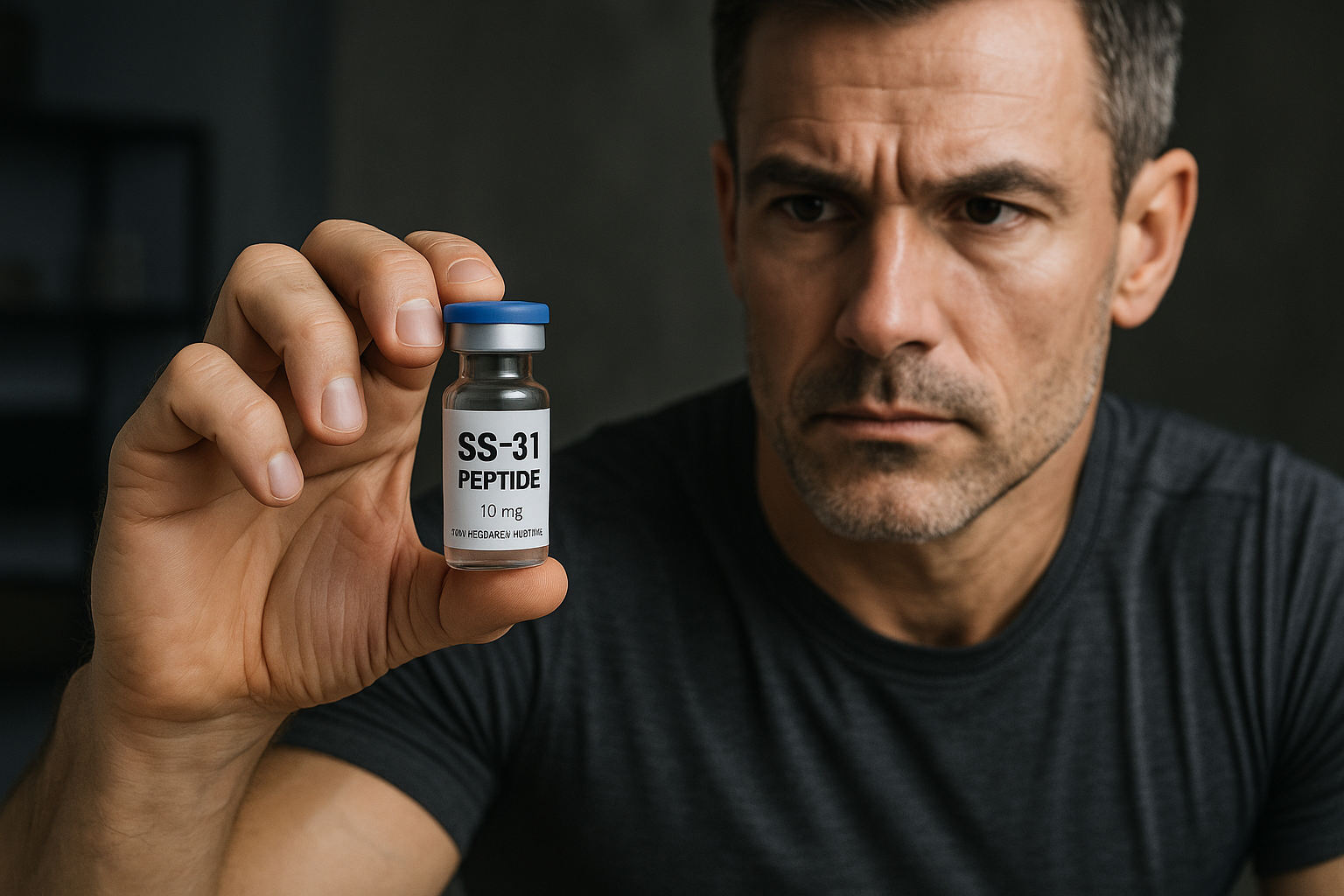
SS-31 peptide dosage protocol searches usually come from two angles: (1) “what is SS-31 and what does it do?” and (2) “how do people dose it—and is it safe?” This article is an evidence-first guide to SS-31 (elamipretide): what research suggests about its mechanism (mitochondria-targeting antioxidant effects), what “benefits” realistically mean, and a safety-focused framework for understanding dose/protocol discussions online.
Important medical disclaimer: SS-31/elamipretide is a biologically active compound studied in research and clinical contexts. This article is for educational purposes only and is not medical advice. Do not self-prescribe or use without qualified medical supervision. “Dose” and “protocol” information online may not be appropriate for your situation—dosing decisions depend on the indication, your clinical status, and prescriber guidance. If you experience adverse effects, stop use and seek medical help. Side effects and tolerability vary by person.
Quick compliance note: regulatory rules around peptide use, compounding, and sourcing can change. If you’re trying to stay informed about how reclassification may affect compounding practices, see Peptide Regulatory Reclassification 2026: What Changes for Compounding.
SS-31 (elamipretide) overview: what it is and how it works
What is SS-31 peptide?
SS-31 peptide is also known as elamipretide. You may see different labeling in research and public discussion, but the scientific literature commonly refers to elamipretide as the molecule associated with the SS-31 name.
For background on naming and the compound, see Elamipretide (SS-31) background and naming. For mechanism and evidence, the best starting points are peer-reviewed studies.
Mechanism at a glance (mitochondria-targeting; antioxidant effects)
What does SS 31 peptide do? The interest is largely because SS-31/elamipretide is described as a mitochondria-targeting antioxidant. In plain English: mitochondria are cellular energy “power plants,” and oxidative stress inside or near mitochondria is one reason some tissues don’t function optimally in certain disease states. SS-31 is studied for its potential to influence mitochondrial processes related to oxidative stress.
An evidence summary from a peer-reviewed paper in PMC describes SS-31 as a mitochondria-targeting antioxidant that can decrease mitochondrial reactive oxygen species (ROS) production—a core mechanistic theme in the research. Source: SS-31 mitochondria-targeting antioxidant evidence (PMC).
Another external reference highlights how SS-31 interacts with mitochondrial protein landscapes: Mitochondrial protein interaction landscape of SS-31 (PNAS).
Takeaway: Instead of focusing on marketing claims, frame SS-31 around the mechanism being studied—mitochondrial targeting and mitochondrial oxidative stress modulation.
What is SS-31 peptide used for? (research/clinical context)
Indications studied in research (stay general; cite research where possible)
In the clinic and research setting, SS-31/elamipretide is discussed in relation to conditions where mitochondrial function and energy metabolism are implicated. For example, research attention includes studies in contexts such as kidney-related mitochondrial dysfunction and oxidative stress pathways.
One cited example is a paper in PMC focusing on kidney research: SS-31 mitochondria-targeting antioxidant evidence (PMC). The mechanism discussion (mitochondrial ROS reduction) is central there, rather than bodybuilding-style performance outcomes.
Important: Research/clinical contexts are not the same as elective performance enhancement. If your primary goal is “fitness,” “endurance,” or “fat loss,” you should be especially cautious about extrapolating from disease-focused mechanisms.
Why mitochondrial function is central to the interest in SS-31
Mitochondria don’t just produce energy—they also shape cellular stress responses. When mitochondrial ROS is elevated or mitochondrial function is impaired, cells may struggle with energy supply, signaling, and recovery.
That’s why many mechanistic discussions of SS-31 center on oxidative stress and mitochondrial function. In addition to the PMC summary, other medical research sources also explore mitochondrial function effects in specific tissues (e.g., kidney-related contexts). See: SS-31 effects on mitochondrial function in kidney research (Kidney International).
Practical takeaway: If you understand mitochondrial targets, you can evaluate claims more critically: “Does the claim match the mitochondria/ROS mechanism studied?” If not, treat it as speculation.
SS-31 benefits: what the evidence says (and what it doesn’t)
Mitochondrial reactive oxygen species reduction (evidence summary)
“SS-31 peptide benefits” often gets presented as a broad list: energy, longevity, performance, recovery, and more. Evidence-first interpretation requires separating mechanistic plausibility from proven outcomes.
What’s reasonably supported at the mechanism level is the focus on mitochondrial oxidative stress. The PMC evidence summary emphasizes SS-31 as a mitochondria-targeting antioxidant and notes decreased mitochondrial reactive oxygen species production as a key idea. Source: SS-31 mitochondria-targeting antioxidant evidence (PMC).
Mechanism does not automatically equal a guaranteed “benefit” for every person in every context. It means: in certain systems, SS-31 is being studied for ability to influence pathways linked to mitochondrial function.
Practical takeaway: how to interpret “benefits” claims
When evaluating an SS-31 peptide review or marketing post, use this quick checklist:
- Evidence level: Does the claim cite human clinical trials, or is it based on mechanistic inference/animal data?
- Outcome alignment: Does the claimed benefit track back to mitochondrial ROS/mitochondrial function or is it “generic wellness” language?
- Context: Was the research done in a disease model, a specific organ/tissue, or a population with mitochondrial dysfunction?
- Magnitude & measurement: Are there concrete endpoints (and do they matter clinically) or just subjective anecdotes?
What we don’t do in this article: We’re not going to promise specific bodybuilding or performance outcomes, because those outcomes are not the same as the evidence base described in mechanistic and clinical research discussions.
SS-31 peptide dosage protocol (how to think about dosing safely)
Second medical disclaimer (near dosage section): This section explains protocol concepts and what variables affect SS-31 peptide dosage protocol discussions online. It is not a prescriptive dosing guide. Dosing decisions should be made only with qualified medical supervision based on indication, clinical status, and available guidance for the specific product being used.
“Protocol” vs “dose”: what those terms mean in practice
In research and clinical contexts, people often use “protocol” to mean a complete treatment plan, not just a number:
- Dose amount (how much)
- Frequency (how often)
- Timing (time of day, relation to meals/training)
- Duration (how long you run it)
- Monitoring (what labs or symptoms are tracked)
- Stop rules (what triggers discontinuation)
That’s why searching for ss-31 peptide dosing protocol often leads to confusion: different sources are describing different “protocols,” sometimes for different indications, different study designs, or different product formulations.
Variables that may affect dosing decisions (without prescribing)
When someone posts “ss-31 peptide dosage per day,” they may be oversimplifying. In real-world research-informed decision-making, dosing can vary based on:
- Indication / target condition (mitochondrial dysfunction context varies by disease state)
- Stage of disease (early vs advanced may change risk/benefit)
- Clinical trial design (study endpoints, inclusion criteria, and safety monitoring differ)
- Route and formulation (different preparations are not automatically interchangeable)
- Concomitant medications (drug-drug interactions and overall risk profile)
- Individual tolerability (side effects and lab changes drive adjustments)
How to use this: If you’re reading forums or a “ss 31 peptide benefits” thread, treat any single dose claim as context-dependent unless it clearly states the underlying study protocol or prescriber framework.
Bodybuilding dosage protocol—what to consider before using
It’s common to see “ss-31 peptide bodybuilding dosage” discussions. But bodybuilding use often relies on extrapolation rather than on disease-targeted clinical protocols.
If you’re considering any peptide for performance or composition goals, evaluate risk more strictly:
- Product quality & sterility: Injections require strict sourcing and sterile handling. Poor quality increases risk.
- Expectation management: A mitochondria-targeting mechanism is not a guarantee of noticeable training outcomes.
- Safety monitoring: “No issues yet” is not the same as safety. Talk to a clinician about what to monitor.
- Don’t ignore regulatory and sourcing risks: Compounding and sourcing rules can materially affect what you’re actually getting.
If you want a broader safety/regulatory lens on peptide handling and compliance context, it can help to review how regulatory reclassification might affect compounding practices: Peptide Regulatory Reclassification 2026: What Changes for Compounding.
SS-31 peptide side effects and safety considerations
Potential risks/side effects: what to monitor (non-exhaustive)
When people search ss-31 peptide side effects, they often want a short list. The reality is that reported effects can vary by person, formulation, route, and background health.
Without inventing a “side effect list,” here are sensible monitoring categories to discuss with a clinician:
- Local reactions: redness, swelling, pain at injection sites
- Systemic symptoms: fatigue, headache, nausea, or changes in how you feel overall
- Allergic-type responses: rash, itching, swelling, breathing difficulty (seek urgent care)
- Lab or organ-related concerns: if you have kidney or other organ risk factors, clinicians may focus monitoring accordingly
Because SS-31 has been studied in specific organ contexts (e.g., kidney-related mitochondrial pathways), it’s reasonable to ask a clinician what relevant safety monitoring would be appropriate for your situation. See research context: SS-31 effects on mitochondrial function in kidney research (Kidney International).
When to avoid use / consult a clinician
Do not use SS-31/elamipretide as a self-directed experiment if any of these apply:
- You are pregnant or breastfeeding
- You have significant kidney disease or other major comorbidities—because risk/monitoring needs may be higher
- You take multiple medications and are unsure about interactions
- You can’t access qualified medical oversight and appropriate monitoring
- You have a history of severe adverse reactions to injections or peptides
Safety principle: If you experience adverse effects, stop use and seek medical help. Side effects and tolerability vary by person.
For an example of how peptide safety discussions can include dose-chart style education (without making SS-31 dosing claims), you may find relevant context in: GHK-Cu Peptide Side Effects: Safety, Dosage Chart.
SS-31 peptide review: common questions answered
Is SS-31 the same as elamipretide? (Bendavia / Forzinity)
SS-31 is commonly used as an alias for elamipretide. In medical/product contexts, you may also see brand names referenced. The naming can be confusing, which is why it’s important to confirm you’re discussing the same compound in any research or protocol talk.
For general naming background: Elamipretide (SS-31) background and naming.
What does SS-31 do for the body?
Based on the research emphasis, SS-31/elamipretide is studied for mitochondria-targeting antioxidant activity, including reducing mitochondrial reactive oxygen species production as a mechanistic theme. Source: SS-31 mitochondria-targeting antioxidant evidence (PMC).
However, “what it does” in your body as an individual depends heavily on your baseline mitochondrial status, health context, and whether any clinical benefits shown in studies translate to your goals.
How to evaluate SS-31 peptide protocols (experience-first reviewer checklist)
Here’s a practical way to assess any ss-31 peptide dosage protocol you see online—without getting trapped by hype:
- Find the source protocol: Is it tied to a study, a clinician, or just forum repetition?
- Check for context: What indication, population, and safety monitoring were involved?
- Look for transparent boundaries: Are they clear about uncertainty and variability?
- Confirm product specificity: Are they actually discussing elamipretide/SS-31, or mixing compounds?
- Ask about monitoring: What symptoms and/or labs should be tracked?
- Identify stop rules: What adverse effects would trigger discontinuation?
If a protocol provides numbers but not monitoring, not risk framing, and not context, treat it as low information, not as “medical-grade guidance.”
FAQ
What is SS-31 peptide used for?
SS-31 (elamipretide) is studied in research/clinical contexts where mitochondrial function and mitochondrial oxidative stress are relevant. Specific research examples include work examining mitochondrial pathways in organs such as the kidney. See mechanism/evidence discussion in SS-31 mitochondria-targeting antioxidant evidence (PMC).
What does SS-31 peptide do in the body?
Research interest centers on mitochondria-targeting antioxidant activity, including reducing mitochondrial reactive oxygen species (ROS) production. This is a mechanistic theme described in peer-reviewed literature. Source: SS-31 mitochondria-targeting antioxidant evidence (PMC).
What are the common SS-31 peptide side effects?
Side effects vary by person and context. Potential categories to watch for include local injection reactions, systemic symptoms, and any signs of allergic-type responses. Discuss monitoring and risks with a qualified clinician—especially if you have relevant health conditions. (This is not an exhaustive list.)
What is an SS-31 peptide dosage protocol (and why does it vary)?
A “protocol” is a full treatment plan (dose, frequency, timing, duration, and monitoring). It varies based on indication, clinical trial design, patient factors, formulation/route, and safety/tolerability. Online “ss-31 peptide dosage protocol” posts may not match a study context.
How much SS-31 peptide should I take per day?
This article does not provide a prescriptive ss-31 peptide dosage per day. Dosing decisions must be individualized and supervised by a qualified medical professional, because safety and appropriateness depend on the reason for use, your health status, and the specific product/formulation.
Is SS-31 the same as elamipretide (Bendavia / Forzinity)?
SS-31 is commonly used as an alias for elamipretide. Brand names may appear in medical/product contexts, but the compound discussed in research is elamipretide. Background: Elamipretide (SS-31) background and naming.
Conclusion: your next step to a safer SS-31 approach
If you’re searching for an ss-31 peptide dosage protocol, the most evidence-aligned starting point is understanding what it is (SS-31 = elamipretide), what it’s studied for (mitochondria-targeting antioxidant effects, including mitochondrial ROS reduction), and why dosing varies (protocols depend on indication, study design, formulation, and monitoring).
Next step: If you’re considering SS-31 for any goal, bring these protocol concepts to a qualified clinician—specifically asking about (1) appropriate indication context, (2) product/formulation specificity, and (3) what monitoring and stop rules would apply to you.