
This article is general nutrition information, not medical advice. If you have diabetes, kidney disease, a history of eating disorders, or take medications (especially for blood sugar or cholesterol), consult a healthcare professional before making major diet changes. Also, if you plan to change carbs significantly (including low-carb approaches), do so with clinician guidance to avoid unwanted effects.
If you’re searching for the best diet for men over 50, you’re probably trying to solve a real-life problem: keep muscle while aging, support heart and metabolic health, and still feel satisfied—without turning eating into a complicated science project.
The simplest “best diet” answer for most men 50+ is a Mediterranean + DASH-style eating framework: lots of vegetables, fruit, legumes, whole grains, nuts, olive-oil type fats, and high-quality protein—paired with less processed food, added sugar, and refined grains. This hybrid reliably targets the biggest aging nutrition priorities: healthy aging nutrition, cardiovascular health, fiber and whole grains for men, and a protein strategy that helps prevent muscle loss.
Below is a practical system you can follow immediately: what to eat more/less, how to structure a daily plate, common goal-based variants (fat loss, blood sugar, brain health), plus a repeatable 1-day menu.
The “Best Diet” Framework for Men Over 50 (what matters most)
The top 50+ priorities (muscle, heart health, metabolic health)
At 50+, the “best diet” isn’t just about calories—it’s about choosing the right nutrients for what your body needs now:
- Preserve muscle (sarcopenia prevention): Older men generally benefit from consistently getting enough protein and pairing it with resistance training. Food patterns that support protein quality and satiety make compliance easier.
- Support heart and cardiovascular health: Emphasize unsaturated fats (olive-oil type fats, nuts, fish), fiber, and potassium-rich plants; limit trans fats, excess sodium, and ultra-processed foods.
- Improve metabolic health and blood sugar stability: Prioritize fiber-first carbs (beans, lentils, vegetables, intact whole grains) and minimize refined carbs and added sugars.
- Cover key micronutrients: Calcium and vitamin D for bone health (via dairy/fortified alternatives and appropriate sun exposure where applicable), plus magnesium, potassium, and antioxidants from plants.
- Maintain healthy digestion: Fiber and diverse plant foods improve gut tolerance and regularity.
The daily food rules (plate method: produce, protein, whole grains, healthy fats)
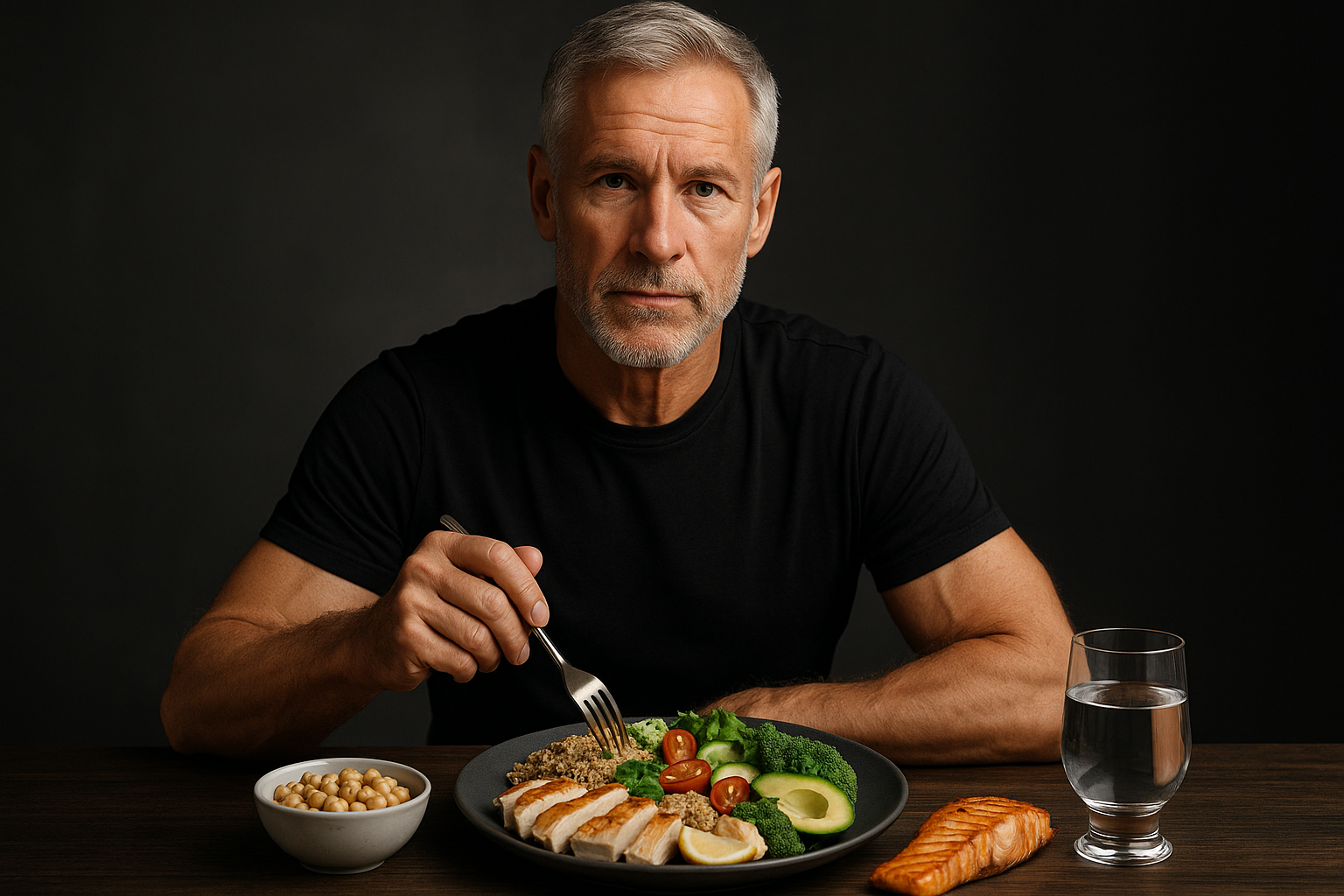
Use this “plate method” for the best diet for men over 50 without obsessing over dieting:
- ½ plate non-starchy vegetables + fruit: leafy greens, cruciferous veg, peppers, tomatoes, berries, citrus.
- ¼ plate protein: fish, poultry, eggs, Greek yogurt/unsweetened dairy (or fortified alternatives), lean meats, legumes if tolerated.
- ¼ plate smart carbs (mostly whole grains or legumes): beans/lentils, oats, quinoa, brown rice, barley, whole wheat (if you tolerate it), starchy veg in moderate portions.
- Add healthy fats: olive oil dressing, a small handful of nuts, seeds, or avocado.
- Water + unsweetened drinks: water, sparkling water, tea/coffee without added sugar.
Simple protein target idea (food-first): Think “protein at every meal” rather than trying to hit exact grams. If you want a practical benchmark, many men aim for roughly one palm-sized portion of high-quality protein per meal and increase from there if activity is high or fat loss is the goal.
If you like a quick label-driven approach for convenience foods, see: Plant Based Meal Replacement Drinks: Label Checklist for Protein, Fiber, Sugar and Micronutrients.
Best Overall Option: Mediterranean + DASH-Style Eating (why it fits 50+)
This hybrid is a strong “best diet for over 50 men” because it combines two proven patterns: the Mediterranean diet for men over 50 (emphasis on plants, olive oil, fish, nuts) and DASH (Dietary Approaches to Stop Hypertension) (emphasis on lowering sodium and increasing potassium-rich foods). Together, it’s built for heart-healthy diet outcomes and steady energy.
If you want an easy way to remember it:
- More: plants + fiber + omega-3 sources + high-quality protein.
- Less: processed foods + added sugars + refined grains + excess sodium.
What to eat more of (vegetables, fruits, whole grains, lean proteins, nuts, olive-oil type fats)
- Vegetables (most meals): aim for 2+ cups/day as a starting point (more is fine if tolerated).
- Fruit: berries, apples, citrus, stone fruit—choose whole fruit over juice.
- Whole grains and fiber and whole grains for men: oats, barley, quinoa, brown rice, whole wheat, farro—keep portions reasonable.
- Legumes: beans and lentils for fiber, protein, and satiety.
- Healthy fats: extra-virgin olive oil, nuts (walnuts/almonds), seeds (chia/flax), avocado.
- Omega-3 sources: salmon, sardines, trout; if you rarely eat fish, consider plant omega-3 (chia/flax) plus discuss fish oil/alternatives with a clinician if needed.
- Calcium + vitamin D via foods: yogurt/kefir, fortified milk or alternatives, cheese (moderation), and vitamin D from appropriate sources (food and clinician-guided supplementation if necessary).
What to limit (processed foods, high added sugars, refined grains)
- Ultra-processed snacks and meals: chips, sugary cereals, instant noodles, packaged desserts.
- Added sugars: soda, sweetened coffee drinks, candy, many breakfast pastries.
- Refined grains: white bread, doughnuts, pastries, many “white flour” products.
- High sodium patterns: deli meats, fast food combos, canned soups without rinsing.
- Alcohol if it harms weight or sleep: keep it modest; consider how it affects your sleep quality and appetite.
For fundamentals on healthy eating patterns, you can also reference the National Institute on Aging: healthy eating basics.
Diet Choice for Common Goals (pick your variant)
You don’t have to abandon the framework. You just adjust the “carb type, fat type, and protein consistency” based on your goal.
If your goal is fat loss/weight maintenance: keep calories disciplined without cutting protein quality
Fat loss is about energy balance, but at 50+ you want the “how” to protect muscle. A Mediterranean + DASH-style framework helps because it naturally emphasizes high-fiber foods (more fullness) and healthier fats.
- Keep protein consistent: aim for protein at breakfast, lunch, and dinner.
- Use carbs as “performance fuel,” not empty calories: choose beans/lentils, oats, quinoa, and starchy vegetables—then reduce portion size rather than removing protein.
- Increase volume with vegetables: add extra non-starchy vegetables to meals.
- Watch liquid calories: sugary drinks, fancy coffee add-ons, and alcohol can quietly stall fat loss.
If you want a structured calorie-deficit template, use: 7-Day Belly Fat Loss Plan for Faster Fat Burning.
If you’re managing blood sugar: fiber-first carbs + fewer refined starches
The “best diet for over 50 men” for blood sugar support usually isn’t extreme restriction—it’s better carb quality and meal structure.
- Build meals around fiber: beans/lentils, non-starchy vegetables, intact whole grains.
- Pair carbs with protein + healthy fats: this slows digestion and improves post-meal glucose response for many people.
- Limit refined starches: white bread, most sweets, and large portions of white rice/pasta.
- Choose fruit strategically: fruit is healthy, but keep portions steady (e.g., 1 serving at a time) and avoid juice.
Important: If you take diabetes medications (including insulin or agents that lower glucose), changing carbohydrate intake can affect medication needs. Talk to your clinician before adjusting carbs significantly. For additional context, see: Semaglutide for Type 2 Diabetes: Side Effects, Safety, and What to Do.
If you care about brain health: consider MIND diet pattern
The MIND diet (Mediterranean-DASH hybrid) is a popular “brain-healthy” variation designed around foods associated with slower cognitive decline risk. It overlaps heavily with Mediterranean + DASH, so it’s easy to adopt without starting over.
- Prioritize: leafy greens, berries, beans/lentils, olive oil, nuts, whole grains.
- Limit: butter/margarine, pastries/sweets, and red meat more than occasionally.
- Make it practical: keep your daily plate rules and simply emphasize “brain foods” more often.
You can also compare diet patterns using reputable summaries like WebMD: diet patterns for men over 50 and U.S. News: best diets for men (Mediterranean, DASH, etc.).
What “Good Protein” Looks Like After 50 (food-based examples)
Protein is a cornerstone of healthy aging nutrition because it supports muscle maintenance, recovery, and satiety. You don’t need a gimmick—choose high-protein foods for older men you’ll actually eat consistently.
Protein sources (fish, lean meats, eggs, dairy/alternatives, legumes if tolerated)
- Fish: salmon, sardines, trout (also omega-3 friendly).
- Lean poultry: chicken/turkey breast or thigh (trim skin if needed).
- Eggs: whole eggs or egg whites in a balanced meal.
- Dairy (if tolerated): Greek yogurt, kefir, milk, cottage cheese.
- Legumes: lentils, chickpeas, black beans (great for fiber + protein).
- Lean meats: trimmed beef or pork occasionally; prioritize portion control and cooking methods.
- Fortified alternatives: soy yogurt or fortified drinks for protein if you avoid dairy.
Spreading protein across meals (practical approach)
Instead of one “big protein” meal, aim for protein distribution. A simple coaching approach:
- Breakfast: include 20–35g-ish (varies by body size/activity) from eggs, Greek yogurt, or a protein-forward option.
- Lunch: include a palm-sized protein portion (fish/chicken/legumes).
- Dinner: repeat with protein + vegetables + smart carbs.
If you’re short on time, prioritize a protein-forward snack option—then build the rest of the plate around plants and fiber.
Sample 1-Day Menu for Men Over 50 (simple and repeatable)
This is an example day of Mediterranean + DASH-style eating. Swap meals based on preferences; the rules stay the same.
Breakfast / Lunch / Dinner + 1–2 snacks
- Breakfast: Greek yogurt (unsweetened) + berries + chopped walnuts + cinnamon. Add a small side of whole-grain oats or a piece of fruit if needed.
- Lunch: Big salad bowl with mixed greens, tomatoes, cucumbers, olive-oil vinaigrette, chickpeas or lentils, and grilled chicken (or tuna). Add quinoa or farro (small-to-moderate portion).
- Snack (optional): apple + 1–2 tbsp nut butter, or carrots + hummus.
- Dinner: Baked salmon (or turkey) + roasted non-starchy vegetables (broccoli, peppers, zucchini) + a serving of brown rice or sweet potato.
- Snack (optional): kefir or cottage cheese (if you enjoy dairy) or a small handful of nuts.
Easy swaps for common preferences (no detailed medical claims)
- No fish? Use sardines/other fish occasionally; otherwise choose lean poultry/eggs and legumes for protein + add ground flax/chia for omega-3 plants.
- Don’t like beans? Try lentils, chickpeas, or smaller servings paired with extra vegetables; start with ½ cup and increase as tolerated.
- Want fewer grains? Use more non-starchy vegetables and add extra protein. Keep one “smart carb” serving per meal rather than eliminating all carbs.
- Italian cravings? Choose tomato-based sauces with olive oil, add vegetables, and swap refined pasta for whole wheat or smaller portions plus extra salad.
If you want a reference meal plan example from a government resource, here’s one you can adapt conceptually: Sample meal plan for men (government resource). (It’s for adults aged 19–50, so adjust portions and protein needs to your 50+ activity level.)
Common mistakes men make with diets after 50
Over-restricting carbs too aggressively
Many men “go low-carb” to lose weight fast, but cutting carbs hard can backfire for older adults—especially if fiber drops and workout energy suffers. A better approach is to choose better carbs (beans, vegetables, intact whole grains) and reduce refined grains first.
Too little fiber/vegetables
If your meals lack vegetables and fiber, you’ll likely feel hungry, have digestion issues, and miss key micronutrients. Aim to add produce first—then adjust everything else.
Ignoring hydration and consistency
Even the best best diet for men over 50 won’t work if meals are inconsistent. Also, hydration affects appetite and energy. Build consistency with a repeatable plate template and shop from a short list.
Consistency is easier when sleep is supported too. Consider: Mens Sleep Optimization: A 14-Night Plan for Falling Asleep, Staying Asleep.
How to start (a 7-day Mediterranean/DASH “application” plan)
Use this short coaching-style rollout. The goal is to make the system stick, not to be perfect.
Day 1–2: Clean up the default foods
- Swap sugary drinks for water/tea.
- Replace one refined-grain food with a whole-grain option.
- Add one “always-on” plant at meals (salad greens, frozen vegetables, or a fruit serving).
Day 3–4: Build protein into every meal
- Plan two protein meals you like (e.g., salmon + vegetables; chicken salad bowl).
- Choose one “protein backup” for busy days (Greek yogurt, eggs, tuna packets, lentils).
Day 5–6: Shop using this starter list
- Produce: leafy greens, tomatoes, cucumbers, broccoli, peppers, onions, berries, citrus.
- Protein: salmon or canned fish, chicken/turkey, eggs, Greek yogurt, lentils/chickpeas.
- Whole grains/legumes: oats, quinoa, brown rice, barley, beans/lentils.
- Fats & flavor: extra-virgin olive oil, nuts, seeds, olives, spices, low-sodium sauces.
- Convenience: frozen vegetables, pre-washed salad greens, hummus.
Day 7: Repeat a “best day” template
Pick one breakfast, one lunch, one dinner, and repeat with small swaps. When your choices are predictable, you make fewer decisions—and consistency improves.
For additional balanced eating basics, see NHS: how to eat a balanced diet.
FAQ: Best diet for men over 50
What is the best diet for men over 50 for heart health?
For most men, a Mediterranean + DASH-style eating pattern is one of the strongest options for heart-healthy diet support because it emphasizes plants, fiber, unsaturated fats (olive oil, nuts, fish), and reduced sodium and added sugars.
Is the Mediterranean diet or DASH diet better for older men?
Both are excellent. Mediterranean emphasizes healthier fats and whole-food plant variety; DASH emphasizes lowering sodium and increasing potassium-rich foods. A hybrid works especially well because it covers both.
What should men over 50 prioritize: protein, fiber, or carbs?
Prioritize protein at meals (muscle maintenance), then fiber (digestion, satiety, metabolic health), and choose carb quality (mostly whole grains/legumes/vegetables over refined grains and added sugars).
What does a healthy day of eating look like for a man over 50?
A practical day includes: half a plate of vegetables at lunch/dinner, a protein source at each meal, a smart carb serving (beans/whole grains/starchy veg) rather than refined grains, plus healthy fats like olive oil, nuts, or seeds.
Are low-carb diets safe/effective for men over 50?
Some men do well with lower-carb approaches, but safety and effectiveness depend on your health history, medications, and dietary quality (especially fiber). If you have diabetes or take glucose-lowering meds, make changes with clinician guidance. For many, the best “first move” is improving carb quality rather than going very low-carb.
How can I start Mediterranean/DASH eating if I’m currently eating a lot of processed foods?
Start with easy swaps: replace sugary drinks, add one vegetable-based meal component daily, choose whole-grain or legume options, and limit processed snacks to specific times. Then build protein into meals and repeat a simple week template until it feels automatic.
Conclusion: Your next step to the best diet for men over 50
The best diet for men over 50 is less about memorizing a “perfect” meal plan and more about using a reliable framework: Mediterranean + DASH-style eating with a daily plate template, high-quality protein at meals, plenty of fiber-rich plants, and fewer processed foods and added sugars.
Next step: Choose one breakfast, one lunch salad/bowl, and one dinner template from the sample menu. Shop your starter list, then repeat the day pattern for 7 days. If you want extra support with adherence, pair this with a sleep-focused plan: Mens Sleep Optimization: A 14-Night Plan for Falling Asleep, Staying Asleep.