
Safety note (not medical advice): Strength training advice here is general information. Stop if you experience sharp pain, dizziness, or symptoms that feel abnormal. If you have injuries, pain, or a medical condition, consider getting clearance from a qualified clinician/physio and (ideally) professional coaching for technique. Start conservative with loads and prioritize form.
If you’ve been wondering whether strength training is “worth it,” what to do first, and how to build a plan without overcomplicating it—this guide is for you. We’ll cover what strength training is, why it works, the best beginner exercise patterns, how to progress weekly, what isotonic strength training means in real routines, how to think about calories for strength training, and goal-specific tweaks (including life after 40, skinny fat, punching power, and even cellulite expectations).
Strength training 101: what it is and why it works
Strength training vs other exercise (weights, bodyweight, resistance bands)
Strength training is any exercise that makes your muscles work against resistance so they adapt over time. That resistance can come from:
- Free weights (dumbbells, barbells, kettlebells)
- Machines
- Your bodyweight (push-ups, pull-ups, split squats)
- Resistance bands
The key is not the equipment—it’s that you’re training your muscles to produce force and progressively challenge them (more reps, more load, better leverage, or improved control).
What “strength” means: muscle, performance, and health outcomes
In practical terms, strength training builds:
- Muscle (size and capacity to handle work)
- Performance (better force production for lifting, sprinting mechanics, and daily tasks)
- Health resilience (stronger movement patterns, improved functional ability, and the ability to keep doing what you enjoy as life changes)
For general effectiveness and health rationale, see Mayo Clinic strength training benefits and effectiveness.
The best strength training exercises for beginners (and what they target)
Most beginners do best starting with a handful of movement “patterns” that you can safely learn and then build on. Think: squat, hinge, push, pull, carry.
Foundational moves (e.g., squat/lunge/hinge/push/pull/carry patterns)
Here’s a beginner-friendly way to think about exercise selection—each pattern trains something useful:
- Squat / lunge pattern: teaches leg strength and control (quads, glutes, overall stability). Examples: goblet squat, split squat.
- Hinge pattern: teaches hip-driven strength and back safety (hamstrings, glutes). Examples: hip hinge drills, dumbbell Romanian deadlift (RDL).
- Push pattern: trains chest/shoulders/triceps (upper-body strength). Examples: incline push-ups, dumbbell bench press.
- Pull pattern: trains back and helps shoulder positioning (lats, upper back). Examples: supported rows, lat pulldown variations.
- Carry pattern: builds core stiffness and athletic “grip/brace” strength. Examples: farmer carries, suitcase carries.
Tip: If you’re trying to track progress, your “starting strength training log” can be as simple as recording which exercises you did, how many sets/reps you achieved, and what felt easy vs challenging.
Are squats considered strength training?
Yes—squats are absolutely considered strength training. They’re a classic lower-body strength movement because they load the muscles of the thighs and hips through a controlled range of motion.
How you squat determines what you emphasize:
- Goblet squat: beginner-friendly and often easier to keep an upright torso.
- Front squat: more upright, more quad emphasis.
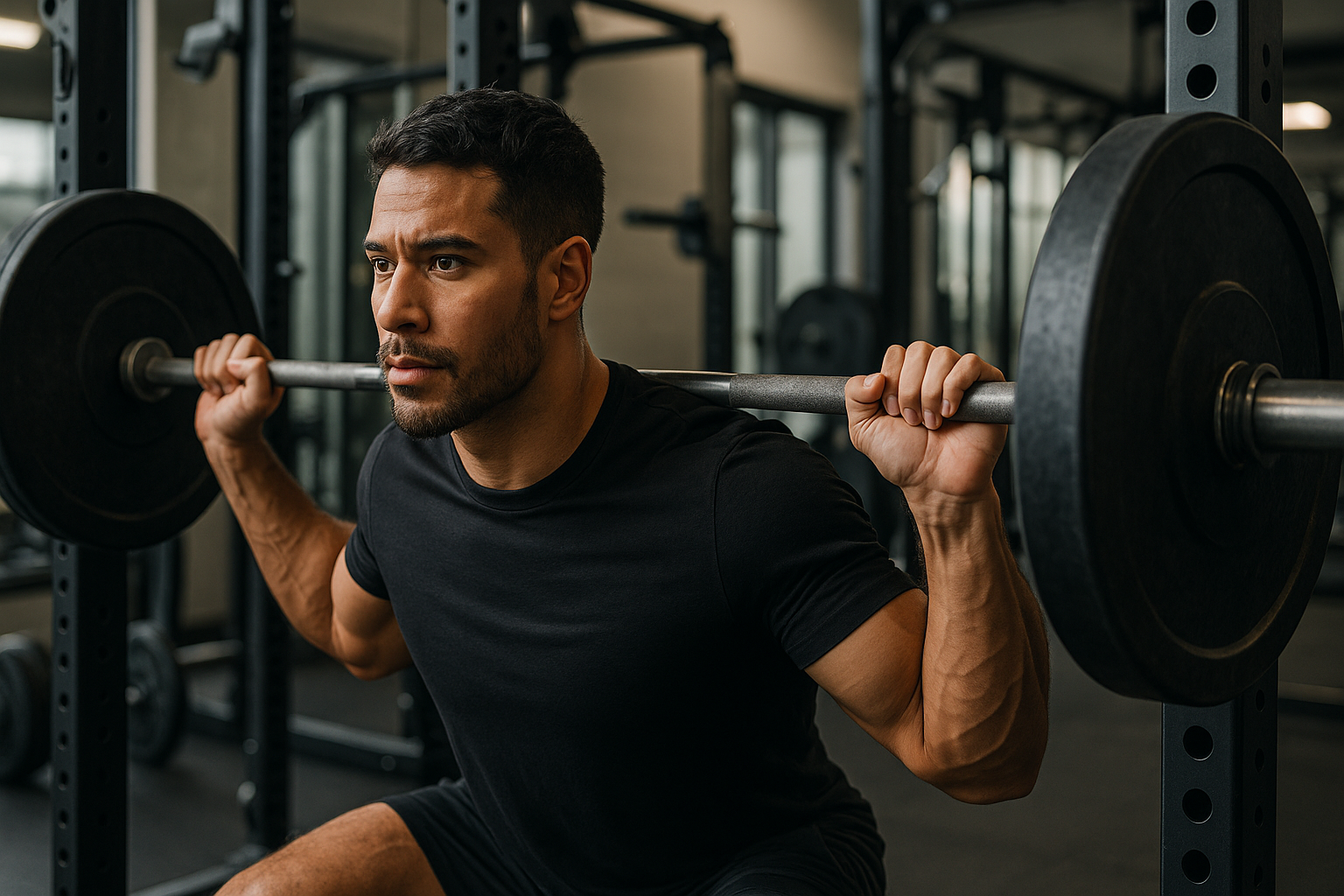
- Back squat: can be effective for strength, but requires more technical consistency.
- Split squat / Bulgarian split squat: single-leg emphasis; great for stability and muscle-building variety.
If squats hurt your knees or low back, don’t force it. Adjust stance, range of motion, load, or use a different squat variation (or swap for a safer leg press variation under good guidance).
How to structure a weekly strength training plan
Frequency and progression (conceptual progression, not “magic” numbers)
A strong beginner plan is built on two ideas:
- Train enough for your body to adapt.
- Progress gradually so the workload is challenging but manageable.
Most people do well with a plan that spreads full-body work across multiple sessions per week (or uses a simple upper/lower split). If you’re new, prioritize consistency over complexity.
Progression principle: Keep your technique stable and “earn” progression. A practical approach is to use a rep target range and add load or reps when performance is solid. For example, when you can complete the higher end of your reps with good form, that’s usually your cue to increase the challenge next time.
Sets/reps guidelines by goal (muscle gain vs strength vs general fitness)
You don’t need complicated formulas to start. Use effort and range of motion as your guide:
- Muscle gain (hypertrophy focus): use controlled reps and pick loads that make the last reps of a set challenging (without breaking form).
- Strength focus: emphasize fewer reps with heavier loads while staying technically sound and avoiding “grinding” every set.
- General fitness: you can still build muscle and strength—choose a moderate effort, cover the main movement patterns, and progress over time.
When in doubt: start at a level that leaves you with a couple reps “in reserve” on most sets, then gradually raise difficulty as your technique improves.
Isotonic strength training: what it means in practical terms
You’ll sometimes see terms like “isotonic” in strength discussions. In plain language, isotonic strength training refers to exercises where the muscle changes length while producing force—typically when you move a joint through a range of motion with a load.
How to spot isotonic movements in your routine
- If you’re doing a curl (barbell/dumbbell/band) through a full range, that’s a common isotonic pattern.
- If you’re doing a press (bench, overhead press, push-ups), you’re typically moving through a range with changing muscle length.
- If you’re doing a squat, lunge, or row, you generally match the same “length changes under load” idea.
Quick takeaway: Most typical gym lifts are either taught and practiced as isotonic movements. If you’re trying to include the term for SEO or for clarity, you can think of it as: “normal lifting reps through a range of motion.”
Common example exercises (general examples)
Common isotonic-style movements you’ll see in beginner routines include: squats and lunges, hip hinges like RDLs, presses, rows, and carries where the body is moving through positions under load.
Strength training for specific goals and situations
Strength training for life after 40
After 40, the goal isn’t just looking strong—it’s building the physical “hardware” that supports independence: moving well, recovering faster, and staying injury-resistant.
What to prioritize:
- Quality movement first: stable technique beats chasing heavy weights.
- Joint-friendly progression: slower ramps, smarter exercise selection, and ranges you can own confidently.
- Recovery discipline: consistent sleep and training volume that doesn’t constantly leave you wrecked.
- Mobility + control: especially around hips/ankles and shoulders so your lifts feel “available,” not restricted.
If you want a simple starting point, keep your weekly sessions consistent, focus on the big patterns, and progress conservatively.
Strength training for skinny fat woman
“Skinny fat” is often described as having a higher softness/less muscle while body weight may be normal or only slightly elevated. Strength training can help because it targets muscle-building and improves how your body stores and uses energy.
Realistic expectations: changes to body composition can be gradual. Also, you can’t spot-reduce fat from one area—but building muscle increases your overall capacity and can improve how your body looks as you refine nutrition and consistency.
Beginner strategy for strength training for skinny fat woman:
- Train the main patterns (squat/lunge, hinge, push, pull).
- Use a consistent weekly schedule so your body learns the movements.
- Progress slowly enough that technique stays clean.
- Pair training with a nutrition plan that supports either recomposition (if appropriate) or gradual fat loss (if needed).
Strength training for punching power
Punching power isn’t only about how much you “bench” or “curl.” It’s force generation, transfer, and coordination. Strength training helps by building:
- Whole-body stiffness and control (core and trunk strength)
- Leg and hip strength (the engine)
- Shoulder/back support (to stabilize as force transfers)
What to include: prioritize lower-body strength work (hinge/squat patterns), pulling for upper-back stability, pressing you can do with strong scapular control, and carries for trunk rigidity. Then add skill work (bags/sparring/footwork) outside the weight room.
Strength training cellulite
Cellulite has multiple contributors (skin structure, fat distribution, connective tissue). Strength training is not a magic “erase it” tool—but it can still be part of an overall plan because building muscle improves overall body conditioning and can help your look as fat levels and tone change.
What strength training can and can’t do:
- Can: increase muscle mass, improve overall shape, and support fat loss if your nutrition supports it.
- Can’t: guarantee cellulite disappearance in every person.
If you’re managing cellulite and want the best odds, focus on consistent training + realistic nutrition progress rather than chasing “cellulite-specific” exercises.
Calories and recovery: what to eat around strength training
Strength training is only half the equation. Your results depend heavily on energy balance and recovery. If your calories and recovery are off, progression can stall—even if your workouts are “perfect.”
Calories for strength training
Calories for strength training basically comes down to the goal:
- Fat loss: you need a calorie deficit over time.
- Muscle gain / recomposition: you usually need enough energy to train hard and recover.
- Maintenance: keep intake close to what you burn so performance doesn’t drop.
If you’re trying to lose fat while training, build a plan you can stick to. For a structured approach, you may find Lose Weight Fast Safely: 14-Day Calorie Deficit Plan helpful (use it as a framework and adapt it to your training).
Common mistake: under-eating while expecting muscle growth. If your workouts feel weak and recovery is poor, your calorie intake may be too low for your current training demands.
Recovery basics (sleep, protein timing conceptually)
Recovery supports adaptation. The biggest levers for most people:
- Sleep: consistency and enough total hours.
- Manage training stress: don’t add volume and intensity at the same time.
- Protein timing (conceptually): aim to spread protein across the day so your body has amino acids available to repair and build tissue.
- Hydration: helps you perform and recover.
If you’re cutting calories, you’ll often need to be even more intentional about recovery—training hard is good, but training hard and under-recovered slows progress.
Optional nutrition support (calorie-free drinks): If you’re trying to reduce “extra calories” while staying hydrated, see Calorie-Free Drinks for Weight Loss: Best Picks, Label Rules, and What to Avoid.
Safety, form, and when to get help
Start lighter, prioritize technique, and progress gradually
- Start lighter than you think you need—especially for your first 2–4 weeks.
- Control the reps: avoid “falling” into the bottom position or using momentum to finish.
- Own your range: progress range of motion only when your movement stays stable.
- Log what matters: reps, load, and how hard the set felt (so you can progress intelligently).
If you’re doing a “strength training on Apple Watch” style routine, remember: wearable metrics can be a helpful motivation tool, but they can’t replace technique cues or load/rep tracking.
When to consult a professional
Get help from a qualified clinician/physio or a certified coach if:
- You have a history of injury, or pain that changes how you move.
- You feel sharp pain, numbness, or symptoms that don’t settle.
- You want coaching for form (especially squats, hinges, and pressing).
- You’re unsure which exercises match your body and goals.
And one more: Don’t rely on hype supplements to “fix” technique, recovery, or performance. If you’re tempted by fat-burners or other products, read Fat Burner Supplements: How They Work, Side Effects, Do You Poop, Frequency before you buy anything.
FAQ
Are squats considered strength training?
Yes. Squats are one of the most common strength training exercises because they train your legs and hips through a controlled range while producing significant force.
What is isotonic strength training?
Isotonic strength training describes exercises where the muscle changes length while producing force—most common “normal lifting” movements through a range of motion (like squats, presses, and curls) fit the concept.
How many calories do I need for strength training?
It depends on your goal (fat loss, maintenance, or muscle gain) and your body size/activity. A deficit supports fat loss over time; maintenance supports performance; a surplus or higher intake supports growth. If you need a starting framework for fat loss, use Lose Weight Fast Safely: 14-Day Calorie Deficit Plan and adjust based on training and recovery.
Is strength training effective for life after 40?
In general, yes. Strength training supports functional ability, helps you maintain muscle, and builds resilience—especially when you progress gradually, prioritize recovery, and choose joint-friendly exercise variations.
Does strength training help make ligaments, tendons, and cartilage stronger?
Strength training increases the load your tissues can tolerate and supports overall musculoskeletal health. However, individual outcomes vary, and there’s no guaranteed timeline. If you have tendon issues or cartilage pain, progress load carefully and consider professional guidance.
Is barre strength training or bodypump strength training “real” strength training?
Barre and bodypump classes are typically built around resistance and structured movements, so they can qualify as resistance training. The “strength” outcome depends on how progressive the loading is, how close you train to muscular fatigue, and whether you’re gradually challenging your body over time.
Conclusion: your next step
If you want a simple next step: pick 5–6 exercises that cover squat/lunge, hinge, push, pull, and carry patterns, schedule them into your week, and progress slowly by improving reps or load while keeping technique tight. Track it for a few weeks so you can see what’s working—then adjust calories for your goal and double down on recovery.
Not sure where to start? Choose a beginner full-body structure and commit to showing up consistently for 2–4 weeks. Consistency plus smart progression beats random effort every time.