
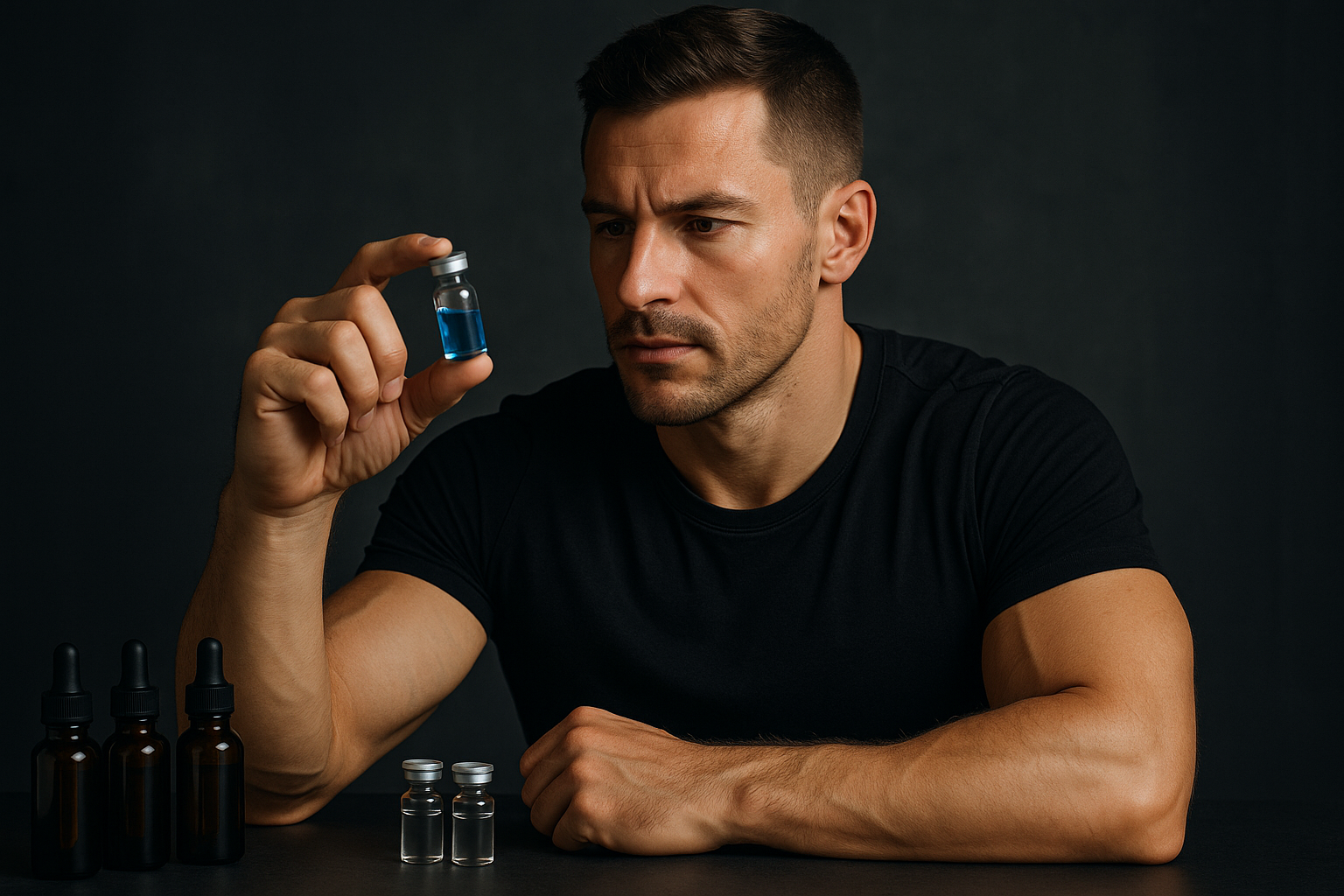
Important: This article is for informational purposes only and is not medical advice. Peptides and peptide stacks should only be used under the supervision of a licensed healthcare professional.
Protocols, concentrations, and dosing vary by provider—do not self-dose or combine peptides without clinician guidance. If you experience concerning symptoms, stop use and seek medical care.
If you’ve searched “GLOW Stack” (or wondered why everyone seems to have a different version of it), you’re not alone. A “GLOW stack peptide” routine is typically marketed as a way to support skin appearance and recovery, but the exact peptides, concentrations, and “glow stack peptide dosage” approach can differ a lot between providers.
In this evidence-aware, safety-first guide, you’ll learn what a GLOW Stack is, which peptides are commonly included (like GHK-Cu, BPC-157, and TB-500), why clinicians may combine them, what risks and side effects to watch for, and—most importantly—how to evaluate “before and after” claims without getting misled by lighting, timing, or marketing.
What Is the GLOW Stack?
The term GLOW Stack is a marketing label more than a single, universally defined prescription. Most providers use it to describe a peptide glow stack that aims to influence processes related to tissue repair, recovery signaling, and (often) skin quality.
Think of it as a concept: “use multiple peptides with overlapping goals.” But the implementation—which peptides, how much, and for how long—depends on the clinic and the patient profile.
Which peptides are typically included (GHK-Cu, BPC-157, TB-500) and why they’re combined
While variations exist, a common lineup you’ll see in a glow peptide stack includes:
- GHK-Cu (Copper Peptide): Often discussed for potential support of wound healing and skin-related signaling pathways.
- BPC-157: Often positioned as a recovery/tissue support peptide (frequently mentioned in sports and healing contexts).
- TB-500: Often discussed as related to cytoskeletal support and tissue repair mechanisms.
Why combine them? Providers generally argue that multiple peptides may target different steps in repair and recovery signaling. In practice, this also means you’ll see protocol variability—because the “stack” is not standardized.
How “GLOW Stack” varies by provider/clinic (protocol differences)
Two people can both say they’re using a GLOW Stack and still be taking different things. Protocol differences commonly include:
- Peptide selection: some include only two of the “big three,” others swap in different peptides.
- Concentrations and vial contents: compounding practices can vary.
- Frequency: daily vs. split dosing approaches.
- Duration: weeks vs. longer cycles.
- Adjuncts: some clinics pair peptides with other interventions (topicals, supplements, lifestyle changes).
This matters for both risk and expectations. If you’re trying to judge “how it worked for someone,” you may not actually be comparing the same glow stack peptide routine.
External context: Many modern “glow peptide stack” explainers emphasize the idea of collagen signaling and skin repair support. For example, Drip Hydration discusses a “modern approach” to skin repair and collagen signaling with peptide stacks: Glow peptide stack: modern approach to skin repair and collagen signaling.
How the GLOW Stack Is Supposed to Work (High-Level Mechanisms)
Most peptide stack marketing uses “mechanism” language without guaranteeing outcomes. A helpful way to frame it is: peptides may influence signaling pathways involved in repair and cellular function—but that doesn’t mean every user will get the same visible results.
Tissue repair & recovery signaling (conceptual overview)
The rationale behind a glow stack peptide often overlaps with what people want from recovery protocols in men’s health: supporting processes linked to:
- Repair signaling (helping tissues respond after stress/injury)
- Inflammation modulation (in some contexts)
- Cellular environment (the “conditions” tissue needs to recover)
Importantly, these are conceptual claims. Real-world results can be affected by baseline health, training, diet, sleep, genetics, and how a clinic structures the protocol.
Skin rejuvenation support (what “glow” usually refers to)
When people talk about GLOW stack benefits for appearance, they often mean changes such as:
- Improved skin “look” (hydration, texture, or perceived tone)
- Support around dryness or uneven appearance
- Reduced visible recovery time after irritation (in some users)
However, “glow” is not a guaranteed cosmetic outcome and can’t be reduced to one measurable variable. That’s why “before and after” analysis needs extra caution (more on this below).
GLOW Stack Benefits (What to Look For vs Marketing Claims)
To stay evidence-aware, focus on benefits framed as potential support rather than promised transformations. The most commonly described goals from a peptide glow stack typically fall into two buckets:
Expected areas of focus (skin + recovery, as commonly described)
- Recovery support: people often report feeling like they bounce back faster from training stress or minor injuries (individual results vary).
- Skin appearance support: users may describe improved “freshness,” smoother texture, or better recovery after skin stress.
Clinics may also mention broader benefits (cellular health, wound healing, etc.). If a provider guarantees outcomes, that’s a red flag—especially since protocols and baseline conditions vary.
How to interpret claims and avoid overpromising
Use this quick filter:
- Good sign: claims include variability (“results vary,” “often,” “may,” “monitor response”).
- Concerning sign: “full-spectrum glow” promises, exact before/after photos without context, or claims that suggest peptides replace proven skin health basics.
- Reality check: visible changes—if they occur—tend to be gradual and subtle at first. Rapid dramatic “overnight” transformations are often marketing or confounded by lighting and routines.
GLOW Stack Peptide Dosage (Evidence-Aware, Safety-First Guidance)
Safety reminder: The most important truth about glow stack peptide dosage is that it varies—and you should not self-dose. Only your licensed clinician can set a plan based on your health history, labs (when appropriate), and product quality.
Why dosing varies (peptide choice, concentration, experience level, clinician protocol)
There isn’t one universally accepted dosing standard for the GLOW Stack concept. Dose variability can depend on:
- Which peptides are included (and their intended goals)
- Concentration and reconstitution method (product-specific)
- Clinical experience and how a clinic structures escalation/adjustment
- Baseline health and contraindications
- Route and administration approach
Because of this, readers searching “glow stack peptide dosage” often find inconsistent recommendations—sometimes even conflicting. From a harm-reduction perspective, that’s why protocol transparency matters more than chasing an internet number.
Harm-minimization checklist: start low, monitor, don’t stack blindly
Even though you can’t use this as a dosing recipe, you can use it as an expectation checklist for what a safe, professional protocol should include:
- One change at a time (avoid adding multiple new peptides simultaneously if your clinician is monitoring tolerability).
- Clear documentation: what peptides, what concentrations, and what timeline.
- Monitoring plan: what symptoms are expected vs. not expected; what triggers adjustment or stopping.
- Product quality transparency: compounding source, testing/COA practices (when available), and batch traceability.
- Stop rules: explicit instructions for red flags.
If a clinic can’t explain what’s in your peptide glow stack, why each peptide is used, and what the safety monitoring plan is, that should lower your trust.
When dosing should be paused or reconsidered (side effects/red flags)
In general, dosing should be paused or reconsidered if you notice unexpected symptoms that persist, worsen, or suggest an allergic reaction or systemic issue.
More concrete guidance depends on the specific peptide(s) and your health history—but the general approach is:
- Don’t “push through” significant adverse effects.
- Seek clinical input if symptoms are more than mild and transient.
- Bring the exact products (labels, batch numbers, and dosing schedule) to your clinician.
For additional safety framing on peptide stacking and expectations, you may also find these Forged Alpha reads helpful:
- Peptides bodybuilding: safety-first side effects checklist
- SS-31 peptide dosage protocol (evidence + safety)
GLOW Stack Side Effects & Safety Concerns
Reminder: This section summarizes commonly discussed reports and safety considerations. It does not list every possible reaction. If you experience concerning symptoms, stop use and seek medical care.
Commonly reported issues (include a brief “Reddit theme” summary)
On forums and “glow stack peptide reddit” style threads, you’ll often see recurring themes. People commonly report issues that are generally described as:
- Injection-site effects (redness, irritation, swelling, or soreness)
- Headaches or changes in how they feel day-to-day (not always clearly linked, but frequently mentioned)
- Sleep or energy variability (some report feeling wired or off; others report the opposite—again, not proof of causation)
- Digestive or appetite changes (varies by person and by what else is in the routine)
Reddit theme (in plain language): Many users say they had to “experiment” with timing, frequency, or dose because tolerability wasn’t identical across people. That’s useful as a real-world observation—but it’s not evidence that a side effect is typical or safe.
Who should be extra cautious (general medical caution categories)
Extra caution is warranted if you have conditions or risk factors that make new treatments harder to evaluate safely. Examples include:
- History of severe allergies or prior adverse reactions to compounded products
- Significant chronic illness or complex medication regimens
- Uncontrolled endocrine or metabolic conditions
- Pregnancy or breastfeeding (use is generally not advised outside clinical guidance)
- Bleeding risks or clotting-related concerns (because recovery/tissue signaling discussions may overlap with safety considerations—clinician guidance is essential)
Your clinician should review your history and—when appropriate—consider labs or monitoring. If a provider won’t discuss safety screening, that’s another trust gap.
Red-flag symptoms that require medical attention
Seek medical care urgently if you experience signs of a serious reaction such as:
- Difficulty breathing, swelling of the face/lips/tongue, or widespread hives
- Severe or worsening pain, especially with fever
- Chest pain, fainting, or neurologic symptoms (weakness, confusion)
- Persistent vomiting or signs of dehydration
- Injection-site symptoms that worsen rapidly (e.g., spreading redness, severe swelling)
“Before and After” Expectations: What’s Realistic?
Many people searching “glow peptide stack before and after” are looking for proof. The best approach is to treat photos as clues, not evidence.
Why photos can be misleading (lighting, timing, baseline differences)
Before/after photos are vulnerable to confounding variables like:
- Lighting (phone camera, ring lights, angle, shadows)
- Skin hydration and routines (new moisturizer, sunscreen, exfoliation)
- Timing differences (morning vs night, after gym vs before)
- Baseline variation (sleep debt, stress, diet changes)
- Editing or retouching
This doesn’t mean “no one benefits.” It means you can’t reliably infer cause-and-effect from a single photo set—especially when routines aren’t identical.
What “good evidence” looks like for peptide claims
To evaluate peptide glow stack claims, look for:
- Clinical context: who used the peptides, how they were monitored, and what outcomes were measured.
- Outcome specificity: what exactly improved (texture, wound healing, recovery metrics) and by how much.
- Time horizon consistency: credible timelines for gradual changes rather than instant transformations.
- Safety reporting: not just “results,” but adverse events and discontinuation reasons.
If a “glow stack” claim is purely promotional and ignores variability and safety, consider it marketing—not evidence.
How to Choose a GLOW Stack Provider (Quality + Risk Reduction)
If you do choose to pursue a glow stack peptide protocol, provider quality can meaningfully affect risk through product sourcing, compounding transparency, and monitoring.
Sourcing/compounding transparency questions to ask
Before committing, ask the clinic or provider:
- What peptides are included in my exact glow peptide stack (names + intended purpose)?
- What concentrations are being used, and how are they prepared?
- What is the compounding source and do you have testing/COA practices?
- How do you handle adverse events and dose adjustments?
- What is the plan if I don’t tolerate it or don’t see expected progress?
Monitoring plan (labs/clinical follow-up conceptually)
A responsible clinic typically has a follow-up structure. This might include symptom check-ins and, depending on your situation, relevant labs. The key is that you’re not left guessing.
For additional safety and protocol thinking around peptides (timing, tolerability, and fridge-life/logistics), you may find these Forged Alpha guides useful:
How We Evaluate Protocols (Experience-Driven, Evidence-Aware Framework)
At Forged Alpha, we don’t treat “peptide stacks” as one-size-fits-all. When assessing protocols, we use a safety-first evaluation lens:
- Evidence awareness: we distinguish “plausible mechanism” from “proven outcome.”
- Protocol transparency: we look for clear peptide identities, concentrations, and monitoring plans.
- Risk realism: we treat dose variability as a safety factor, not a detail.
- Expectation management: we avoid guaranteed results and focus on what people might realistically notice over time.
- Red-flag readiness: we highlight when symptoms should trigger medical attention.
This article is not personal medical advice. If you’re considering a GLOW Stack, discuss options with a licensed clinician who can review your history and guide safe use.
FAQ
What peptides are in a GLOW Stack?
There’s no universal standard, but a common glow stack peptide setup includes GHK-Cu, BPC-157, and TB-500. Some providers may include variations or additional peptides.
What are the most commonly discussed GLOW stack side effects?
Commonly reported issues include injection-site irritation, headaches, changes in how you feel (sleep/energy variability), and occasional digestive/appetite changes. Reddit-style threads (“glow stack peptide side effects”) often emphasize individual variability and the need for monitoring.
What is the typical GLOW stack peptide dosage (and why does it vary)?
There isn’t a single “typical” dose that applies to everyone because protocols vary by peptide choice, concentrations, compounding, experience level, and clinician plan. Your clinician should determine a safe approach based on your health and the specific products used.
How long until people notice glow/skin changes with a peptide stack?
Visible changes—if they occur—are usually gradual. Photos can be misleading, so the best approach is tracking consistent baseline measurements (same lighting, similar routine, similar timeframe) and monitoring tolerability with your clinician.
Is a GLOW stack only for skin, or is it also used for recovery?
Most marketing frames it as skin-focused (“glow”), but many protocols are also discussed in the context of recovery support. In practice, outcomes people report can overlap both skin appearance and how they recover from training or stress.
What should I consider before buying peptides online vs via a medical provider?
Online purchasing increases uncertainty around product quality, labeling accuracy, storage, and compounding transparency. With a medical provider, you’re more likely to get dosing structure, safety screening, and a monitoring plan. In all cases: don’t self-dose or combine peptides without clinician guidance.
Conclusion: A Safety-First Next Step
A GLOW Stack is best understood as a provider-defined peptide glow stack concept, most commonly involving peptides like GHK-Cu, BPC-157, and TB-500. Because protocols vary, “glow stack peptide benefits” and “before and after” claims should be treated as uncertain—not guarantees.
Next step: If you’re seriously considering a stack, ask the clinic to clearly document which peptides are included, the concentration plan, and the safety/monitoring approach. Then—regardless of what you see online—evaluate results with controlled comparisons and a realistic timeline.