
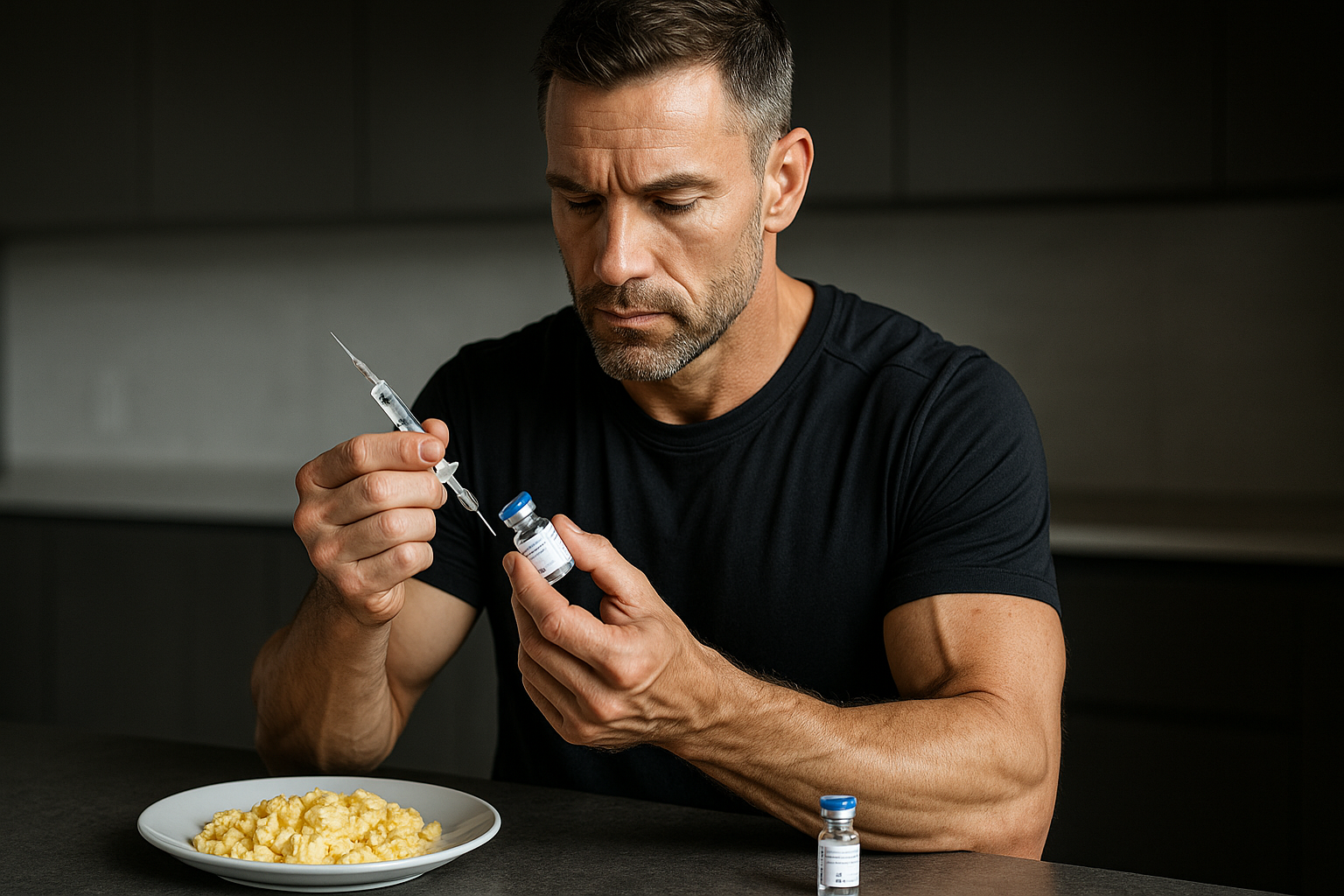
If you’re searching cjc-1295 ipamorelin, you’re probably looking for real-world guidance: how to take it, when to take it (including whether it works in the morning), what to eat, and what to do if you experience flushing/face flushing.
This guide focuses on a safety-first decision framework and practical scheduling rules. Because peptide dosing and suitability vary by person, use this as educational context—not a prescription—and discuss your plan with a qualified clinician.
What cjc-1295 ipamorelin is (and how the combo is typically framed)
CJC-1295 and ipamorelin are commonly discussed together as a “growth hormone support” peptide stack. In most consumer and clinic conversations, the combo is framed as:
- CJC-1295: discussed for its longer-acting profile (often positioned as a GH “releasing” support component).
- Ipamorelin: discussed as a growth-hormone–related agent that’s often described as more “selective” in online comparisons.
Important: Online descriptions can vary a lot, and marketing language may overpromise. The goal of this article is not hype—it’s to help you understand how dosing/timing questions usually come up, what “normal” versus “concerning” reactions may look like, and how to handle them responsibly.
Why people choose this stack (high-level mechanisms, no medical promises)
People commonly consider cjc-1295 ipamorelin for goals tied to growth hormone signaling—such as body composition, recovery, and general wellness. However, your results (if any), side effects, and risk profile depend heavily on:
- Your baseline health markers
- Your age and training/nutrition
- Sleep quality and stress
- Other meds/hormone-related therapies
- How the dosing plan is individualized
For a general reference on how the combination is commonly described, you can review CJC-1295 + Ipamorelin overview and safety considerations.
Before you start: safety-first screening and supervision
Before thinking about cjc-1295 ipamorelin dosage, build a safety baseline. Many issues with peptides aren’t about “will it work?”—they’re about who should not use it, what needs monitoring, and whether you’re stacking too much complexity.
Who should avoid or only use under medical care (general caution, not a diagnosis)
Do not self-prescribe. You should be especially cautious and ask a clinician first if you have (or suspect):
- Active or past hormone-sensitive cancers
- Uncontrolled diabetes, significant insulin resistance, or frequent abnormal glucose readings
- Serious heart, kidney, or liver disease
- Significant uncontrolled hypertension or cardiovascular risk
- Pregnancy/breastfeeding (or trying to conceive)
- Any history of serious hypersensitivity reactions
If you’re unsure whether you fit in a higher-risk group, bring your medication list and lab history to a qualified provider.
What to discuss with your clinician (baseline health markers, meds, monitoring)
When clinicians evaluate peptide use, they commonly want answers to:
- Baseline IGF-1 (and sometimes GH-related markers)
- Fasting glucose and/or HbA1c (especially if you’re metabolically at risk)
- Lipids and relevant metabolic panels
- Any relevant symptoms (edema, numbness/tingling, headaches, vision changes)
- Your current meds/supplements (particularly anything affecting glucose or hormones)
- Your sleep schedule and training load
Also ask how they want you to monitor for adverse reactions, including flushing/face flushing.
Dosing basics (how protocols are usually structured)
There isn’t a single “correct” cjc-1295 ipamorelin dosage that fits everyone. Even when two people are using the same peptides, clinicians may adjust based on your labs, response, and side effects.
“Start low, adjust” concept (explain variability; do not prescribe a universal dose)
A safer real-world principle is:
- Start conservatively (as directed by your clinician).
- Give it time to understand early effects (appetite, sleep, tolerability).
- Adjust based on monitoring, not guesswork.
This matters because peptide responses vary—what feels fine for one person can be uncomfortable or unsafe for another.
Interpreting “dosage reddit” discussions vs clinician protocols
People frequently search cjc 1295/ipamorelin dosage reddit to see what others are doing. That can be useful for understanding how conversations work, but it’s not a substitute for individualized medical oversight.
Here’s how to interpret online dosage talk more responsibly:
- Expect wide variation in dose and frequency across posts
- Remember many posts omit key details (age, labs, body composition, other meds)
- Don’t copy numbers without knowing your risk factors and lab baseline
If you discuss “dosage reddit” with your clinician, bring your goals and risk profile—not just a dose you want to copy.
When to stop or seek help (trigger-based guidance)
General trigger examples to take seriously (and contact a clinician promptly) include:
- Flushing/face flushing that is intense, persistent, or comes with other symptoms (see the flushing section below)
- Severe headaches, vision changes, or neurologic symptoms
- Significant swelling/edema, shortness of breath, chest discomfort
- Signs of glucose dysregulation (e.g., unusual thirst/urination in people at risk)
Because this is educational content, your safest move is to treat “concerning reaction” as a reason to pause and get medical guidance.
Morning vs evening timing
Timing is one of the most searched practical questions, especially for people with work schedules, lifting sessions, and sleep constraints.
can i take cjc-1295 ipamorelin in the morning
Can i take cjc-1295 ipamorelin in the morning? People ask this because morning use can fit routines—but you still need a clinician-approved plan.
Here’s a practical decision framework to discuss with your provider:
- Appetite changes: If you’re prone to increased hunger after dosing, you may prefer timing that supports your meal structure.
- Sleep impact: If dosing disrupts sleep for you (even if it helps some people), you may need an earlier schedule.
- Consistency: Aim for repeatable timing daily to make response patterns easier to interpret.
Even when “morning dosing” is feasible, the key is watching your response and ensuring it doesn’t create unintended metabolic or sleep issues.
What to consider if sleep or appetite changes
If you notice you’re hungrier, less hungry, or your sleep quality shifts, don’t just “push through.” Instead, track:
- Time of dose
- Time you first notice appetite or appetite suppression
- Training performance and recovery sensations
- Sleep onset latency and overnight awakenings
Then adjust with clinician guidance (timing, dose, or both).
Hunger and meal timing (can you eat?)
One of the biggest execution gaps in peptide content is meal-timing clarity. Many pages talk about benefits but avoid the operational question: can you eat after taking cjc-1295/ipamorelin?
can you eat after taking cjc-1295/ipamorelin
Can you eat after taking cjc-1295/ipamorelin? In practice, many people do eat, but the safest approach is to follow your clinician’s protocol.
Because protocols vary, here’s the decision framework you can use in real life:
- If dosing makes you hungry: you’ll want a plan so you don’t default to high-sugar or low-protein options.
- If dosing makes you feel nauseated or “off appetite”: prioritize smaller, simpler meals and adjust timing with your clinician.
- If your protocol includes any fasting window: respect it exactly (that window is often part of how safety and response are managed).
Practical eating guidance for users who notice appetite shifts
Think of meal timing as “fueling around appetite,” not “strict rules.” If you notice appetite increases, aim to structure it for muscle support:
- Anchor meals with protein to improve satiety and maintain training recovery
- Use high-protein foods even if you eat at nonstandard times
- Prefer minimally processed carbs around workouts
If you need quick meal ideas, these can help you stay consistent during appetite fluctuations:
Side effects to watch: flushing and other early reactions
When people search cjc-1295 ipamorelin flushing or cjc-1295 ipamorelin face flushing, they usually want two things:
- What it can look like
- When it’s “normal-ish” versus a red flag
cjc-1295 ipamorelin flushing (what it can look like)
Flushing can present as:
- Warmth or redness in the face/neck
- A “hot” sensation or tingling
- Transient discomfort that resolves after some time
Some users report mild transient flushing. Even if you’ve seen others mention it, you should still treat it as a signal to slow down and assess triggers (dose, injection timing, your hydration status, and any concurrent substances).
cjc-1295 ipamorelin face flushing (when to seek medical help)
Face flushing becomes more concerning if it’s intense, persistent, or accompanied by symptoms such as:
- Swelling of lips/face, hives, or rash
- Difficulty breathing, wheezing, or throat tightness
- Severe dizziness or fainting
- Chest pain or significant shortness of breath
If flushing/face flushing is accompanied by any of the above, seek urgent medical care.
If the flushing is not severe but is recurring, discuss it with your clinician before continuing the same dosing plan. This is especially important if you’re increasing dose or stacking other peptides.
Peptides bodybuilding safety-first side effects checklist alignment (tie to existing Forged Alpha guidance)
Forged Alpha’s approach to peptides emphasizes expectation-setting and risk management, not hype. If you want a practical checklist to align with your monitoring habits, read:
Peptides Bodybuilding: Safety-First Side Effects Checklist, Real Expectations
Use it alongside your clinician’s guidance, especially for early reactions like flushing, appetite shifts, and sleep changes.
Stacking and comparisons (what’s commonly searched)
Searchers often compare stacks because they want to choose between options or combine them. The safety issue here is increased complexity: more moving parts mean harder monitoring and potentially higher risk.
tesamorelin vs cjc 1295 ipamorelin (who typically uses which, decision factors)
When people search tesamorelin vs cjc 1295 ipamorelin, they’re usually trying to answer:
- Which one fits my schedule?
- Which one is “easier” to tolerate?
- Which one is more aligned with my goals?
Decision factors to discuss with a clinician:
- Your metabolic and IGF-1 baseline (and whether monitoring is planned)
- How dosing timing affects sleep and hunger for you personally
- Whether you’re stacking other agents (and whether you should simplify)
A responsible takeaway: don’t treat “which is better” as a performance contest—treat it as which is safer and more compatible with your health profile.
cjc 1295/ipamorelin with retatrutide (stack considerations)
People also search cjc-1295 ipamorelin with retatrutide. Combining peptides that affect growth-hormone signaling and appetite/metabolic pathways can create overlapping effects (for example, appetite suppression changes versus hunger changes).
If you and your clinician discuss this type of stack, ask specifically about:
- How to monitor glucose and appetite-related side effects
- Whether your dosing schedule needs to be separated to reduce confusion
- How to interpret lab changes (so you don’t guess)
Do not start multi-peptide stacks without medical oversight.
can you take cjc-1295/ipamorelin and sermorelin together (common stack logic + cautions)
Can you take cjc-1295/ipamorelin and sermorelin together? This question comes up often because people try to “combine” growth-hormone–related approaches.
Cautions:
- Stacking increases monitoring demands (more variables, more side-effect tracking)
- It can become difficult to identify which component caused appetite changes or flushing
- Clinicians may want to adjust one variable at a time
If you’re considering combining cjc-1295/ipamorelin with sermorelin, the key is to ask your clinician how they want you to structure the plan (sequence, timing, and what labs/symptoms to track).
FAQ
1) can you eat after taking cjc-1295/ipamorelin?
Often, people can eat after dosing, but the safest answer depends on your clinician’s protocol (some plans include specific fasting/meal windows). If appetite changes occur, plan meals around protein and consistent fueling rather than making random food choices.
2) can i take cjc-1295 ipamorelin in the morning, and what should I watch for?
It may be possible for some people, but you should only confirm with your clinician. If you use morning timing, watch for appetite shifts and any sleep disruption that follows dosing changes.
3) What does cjc-1295 ipamorelin flushing feel like, and is it normal?
Flushing/face flushing can feel like warmth and redness in the face/neck. Mild, transient reactions are sometimes reported, but recurring or intense reactions should be discussed with a clinician. Seek urgent help if flushing is accompanied by rash, swelling, breathing trouble, or severe dizziness.
4) Can I adjust timing if I notice hunger/appetite changes after dosing?
In many cases, timing adjustments (and sometimes meal structure) can help, but don’t change doses on your own. Track when hunger changes occur, then discuss options with your clinician.
5) tesamorelin vs cjc 1295 ipamorelin: how do I decide which is better to discuss with my clinician?
Don’t frame it as “which is strongest.” Use clinician discussion points: your baseline labs/metabolic health, your sleep schedule, expected monitoring, and tolerability. The “best” choice is the one that fits your safety profile and schedule.
6) can you take cjc-1295/ipamorelin and sermorelin together safely (what should I ask my doctor first)?
Ask how the combined plan will be monitored, whether labs like IGF-1 and glucose will be checked, how you’ll track side effects (including flushing), and whether you should add one variable at a time with a clear timeline.
Conclusion: your next step
cjc-1295 ipamorelin is often discussed for growth-hormone–related goals, but the questions that matter most for real life are: dose guidance, timing (including can i take cjc-1295 ipamorelin in the morning), meal timing (can you eat after taking cjc-1295/ipamorelin), and side-effect triage (especially flushing/face flushing).
Next step: If you’re planning to use or already using a protocol, write down your schedule, any appetite/sleep changes, and any flushing details (time, intensity, duration). Bring that to your clinician and ask for a plan that includes monitoring and clear stop/seek-guidance triggers.
Medical disclaimer: This article is for educational purposes only and is not medical advice. Do not self-prescribe or use peptides without qualified healthcare supervision. Dosing and suitability vary by person. If you experience flushing/face flushing that is intense, persistent, or accompanied by concerning symptoms (such as rash, swelling, breathing difficulty, severe dizziness, or chest symptoms), seek medical guidance promptly. Combining peptides (e.g., tesamorelin, retatrutide, sermorelin) increases complexity and should only be considered with clinician oversight.