
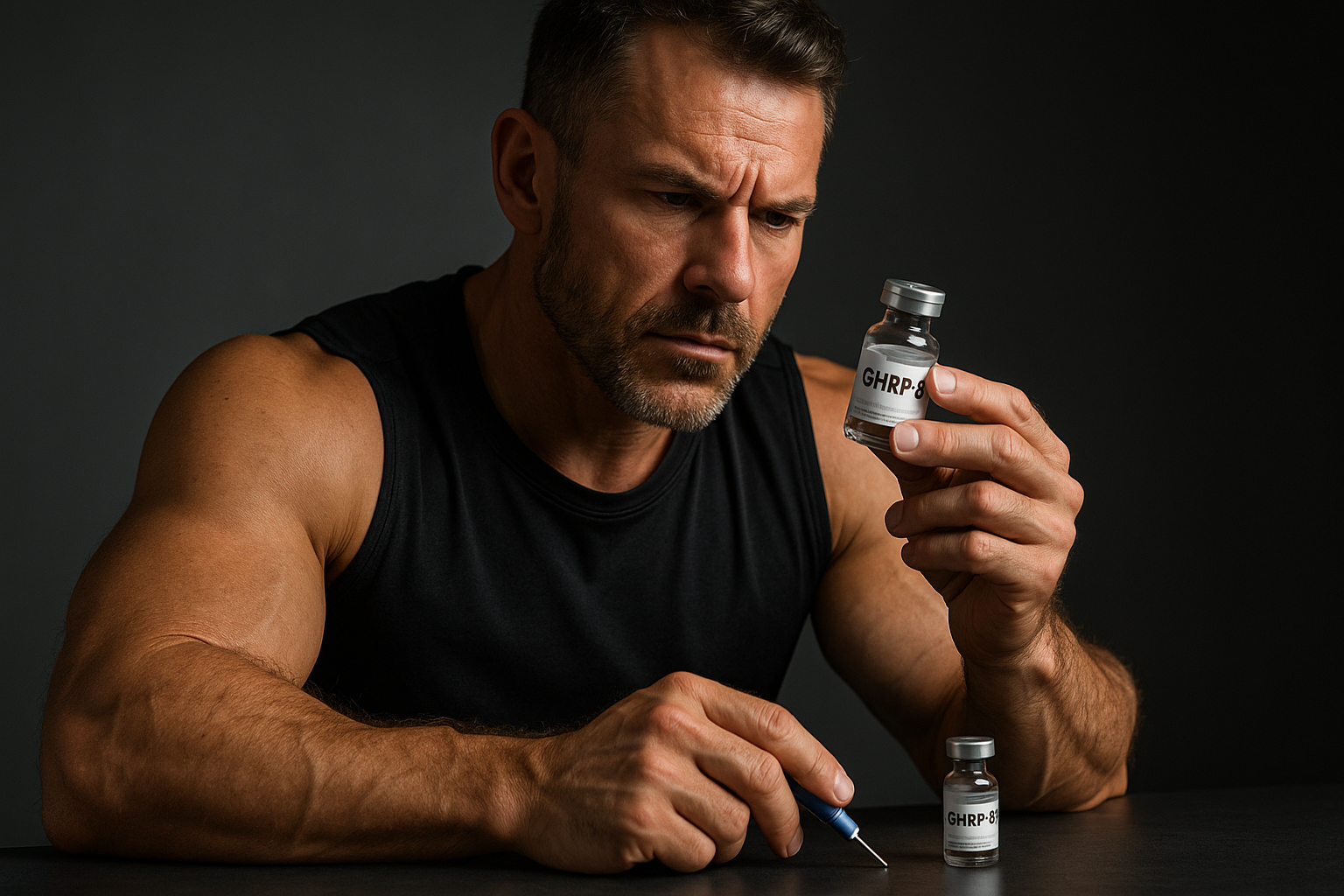
If you’re searching for ghrp-6 side effects or ghrp-6 dosage per day, you’re probably trying to weigh potential benefits against real-world risks—especially in a bodybuilding context. This guide breaks down what GHRP-6 is, what people commonly report as side effects (clearly labeled as anecdotal), the main safety red flags, and how dosing is often structured (harm-reduction, not medical advice).
Quick medical note: Peptides can carry health risks, dosing decisions should be discussed with a qualified healthcare professional, and legality/regulation varies by location. This article is for education only and is not medical advice.
What Is GHRP-6?
What “growth hormone secretagogue” means (plain English)
GHRP-6 is a peptide commonly discussed in the “growth hormone (GH) axis” space. It’s often described as a growth hormone secretagogue, which means it may help stimulate your body to release growth hormone signals rather than directly being “growth hormone itself.”
High-level mechanistically, GH secretagogues are studied for how they interact with pathways that influence the pituitary gland’s release of growth hormone. The goal of discussion online is usually about downstream effects like tissue support, recovery signaling, and metabolic changes—though exact outcomes are not guaranteed and evidence in healthy bodybuilders is limited.
How GHRP-6 differs from “growth hormone” itself (clarify expectations)
People often compare GHRP-6 to injectable HGH, but they aren’t the same thing. In simple terms:
- HGH is the hormone (more direct biologic input).
- GHRP-6 is a peptide that’s discussed as potentially influencing GH release (an indirect approach).
Also, many product claims you’ll see online are not the same as clinically proven, bodybuilding-relevant outcomes. That’s why a safety-first approach to ghrp-6 dosing conversations matters: if you’re going to explore it at all, you should understand ghrp-6 side effects and warning signs before anything else.
Authority background: For general characteristics of growth hormone–releasing peptides (including high-level discussion of GHRP-6), see this review: Synthetic Growth Hormone-Releasing Peptides (GHRPs) — PMC.
GHRP-6 Side Effects (What to Watch For)
When people search “ghrp 6 side effect” or “ghrp-6 side effects,” they’re usually looking for a quick safety read. Below is a practical breakdown of what’s commonly reported online.
Important: The side effects below are commonly reported by users and are anecdotal. Anecdotal reports can be real, but they’re not the same as controlled clinical safety data.
Commonly reported side effects (anecdotal)
- Water retention / “puffiness”: Some users report feeling fuller or noticing facial/hand swelling.
- Joint or muscle discomfort: Irritation or aches have been mentioned by some users.
- Headaches: Reported as a possible effect, sometimes described alongside other “GH-axis” changes.
- Increased hunger: Some people report appetite changes.
- Flushing / warmth: A “hot” feeling or mild flushing is sometimes described.
- Numbness/tingling: Less common, but reported by some—any nerve-type symptoms should be treated seriously.
These are the kinds of effects that tend to show up in user reviews and forum discussions, and they’re also the types of symptoms that could plausibly correlate with changes in hormone signaling and fluid balance. Still, your personal response may be different.
Potential risks and “red flags” (safety-focused framing)
Beyond common complaints, there are red flags—symptoms that should prompt immediate stopping and medical evaluation (or urgent care depending on severity). Examples include:
- Severe or persistent headaches, especially if sudden or worsening
- Vision changes (blurred vision, double vision)
- Chest pain, shortness of breath, fainting
- Marked swelling of face/legs or rapid unexplained weight gain
- Signs of blood sugar trouble (excessive thirst, frequent urination, confusion)
- Severe allergic-type reactions (rash, swelling, trouble breathing)
- Neurologic symptoms (significant tingling, weakness, loss of coordination)
If you experience any of these, don’t “push through.” Stop use and seek medical help.
Who should be extra cautious / avoid (medical conditions + meds—high level)
Because GHRP-6 is discussed as affecting hormone signaling, it may not be appropriate for everyone. In general, extra caution is warranted if you have:
- Active malignancy or a history of hormone-sensitive cancer (talk with an oncologist)
- Uncontrolled diabetes, prediabetes with worsening labs, or significant insulin resistance
- Significant cardiovascular disease (fluid shifts and metabolic changes may matter)
- Severe kidney or liver disease
- Neurologic conditions where headaches/vision symptoms are a concern
- Pregnancy or breastfeeding (avoid unless specifically directed by clinicians)
Also review your medications with a clinician. Even if the peptide is “just for bodybuilding,” interactions and underlying conditions can turn a mild issue into a serious one.
If you want broader peptide safety context, you may also find helpful: HGH Peptides: What They Are, Side Effects, Reddit Claims, Cost.
GHRP-6 Benefits (Evidence vs. Claims)
What research suggests (stay general; don’t invent outcomes)
Peer-reviewed discussion of growth hormone–releasing peptides generally focuses on biologic mechanisms and potential GH modulation. However, translating that into concrete bodybuilding results (more muscle, better recovery, etc.) is where online claims can outrun evidence.
A reasonable evidence framing is:
- Potential for influencing growth hormone signaling (high-level mechanistic discussion).
- Uncertain outcomes for healthy bodybuilding users—especially in terms of magnitude, consistency, and long-term safety.
- Need for harm-reduction: if a product is used outside approved medical contexts, safety and source quality become critical issues.
For the mechanistic/background layer, reference: Synthetic Growth Hormone-Releasing Peptides (GHRPs) — PMC.
Why bodybuilding users may seek it (context only)
In bodybuilding communities, ghrp-6 peptide benefits discussions usually center on:
- Recovery (less soreness, faster return to training)
- Body composition goals (supporting a leaner look, sometimes tied to appetite changes)
- “Anabolic” signaling expectations (often linked to GH/IGF-1 axis talk)
These are common motivations, not guarantees. If you’re considering ghrp-6 dosing, you should treat safety and monitoring as part of the “plan,” not an afterthought.
GHRP-6 Dosage and Dosing Approaches (How People Commonly Structure Use)
This section addresses a major search gap: “ghrp-6 dosage per day” and “ghrp-6 dose” are popular queries, but most pages either (1) avoid dosing entirely or (2) give prescriptive directions. Instead, we’ll explain how people commonly structure dosing and what to consider generally.
Not medical advice: The following is educational/harm-reduction information. Individual needs vary, and dosing must be decided with a qualified clinician.
“Dosage per day” considerations (start-low framing without prescribing)
When people discuss ghrp-6 dosage per day, the conversation often follows a “start-low” approach in order to reduce the likelihood of side effects. Common practical themes include:
- Lower starting exposure to gauge tolerance
- Incremental adjustments only if symptoms are absent (and ideally with lab monitoring)
- Attention to dose-related symptom timing (e.g., headaches or appetite spikes shortly after dosing)
If you’ve ever seen people argue online about the “right” number, remember: without supervision and lab data, nobody can confirm the safest or most effective ghrp-6 dose for your physiology.
Dosing frequency/timing (why it matters generally)
Another theme in ghrp-6 dosing discussions is splitting doses through the day. Why? Generally, more frequent dosing can be an attempt to:
- reduce peaks that may correlate with side effects (like headaches or flushing)
- make symptom timing easier to identify (what happens after which dose)
From a harm-reduction standpoint, the “why timing matters” is simple: you want a clearer cause-and-effect relationship between dosing and symptoms. If side effects show up, that information helps you and a clinician decide what to do next.
Bodybuilding context: what users look for (claims, not proven)
In bodybuilding circles, ghrp-6 dosage for bodybuilding typically refers to how athletes plan use around training and recovery—again, not proven outcomes. Users commonly watch for:
- Appetite changes (which can affect calorie control)
- Recovery perception (soreness, readiness)
- “Water” changes (which can affect appearance and scale weight)
Because some effects (like hunger or water retention) can be mistaken for muscle gains, tracking measurements (more on that below) helps you interpret what’s actually happening.
Practical Safety Checklist Before You Consider It
If you decide to explore GHRP-6 anyway, safety should be operationalized. The checklist below is designed for real-world decision-making and symptom monitoring.
Source quality + testing considerations (non-technical)
Peptides are often obtained through channels that may not guarantee purity or consistent dosing. Before anything else, consider:
- Whether the supplier provides independent testing (not just marketing specs)
- Batch consistency (are you getting the same product across time?)
- How you would respond if the product quality is questionable
Legality and regulation vary by location, and supplement/peptide markets can be inconsistent. If a product can’t be verified responsibly, your risk goes up.
For a broader “peptide safety education” angle, this related article may help with how evidence and risks are discussed: Pinealon Peptides: What It Is, Evidence, Side Effects, Dose Buying Guide.
Monitoring plan (what symptoms would prompt stopping and seeking care)
A monitoring plan is how you turn “I hope it’s fine” into harm reduction. Consider the following:
- Baseline (before starting)
- Note existing conditions (headaches history, blood sugar concerns, swelling tendency)
- If possible, get relevant labs through a clinician (blood sugar/IGF-1-related markers may be discussed depending on context)
- Track dose timing + symptoms
- Write down when dosing happens and what you feel within the next 24 hours
- Pay special attention to appetite, headaches, unusual swelling, tingling/numbness
- Stop and seek medical help for red flags
- Severe headache, vision changes, chest pain, shortness of breath, fainting
- Rapid swelling or signs of allergic reaction
- Neurologic symptoms (worsening tingling/weakness)
- Reassess if side effects become persistent
- If symptoms repeat with each dosing window, don’t ignore them
- Discuss with a clinician before continuing or changing anything
If you’re building a broader “GH-axis peptide” knowledge base, you may also be interested in comparative safety thinking like this: GHK-Cu Peptide Side Effects: Safety, Dosage Chart.
Bottom Line
If you came here for ghrp-6 side effects and ghrp-6 dosage per day, the most useful takeaway is this: online dosing discussions often lack medical context, while safety issues can vary widely person to person. Treat GHRP-6 as a higher-stakes decision than most supplements—focus on harm reduction, be alert to symptoms, and use clinician-guided decisions whenever possible.
Next step: If you’re considering any GH-releasing peptide, review the side-effect red flags above and build a monitoring plan (symptom + timing + lab discussion with a healthcare professional). That’s the safest way to approach the conversation.
FAQ
What are the most common GHRP-6 side effects people report?
Commonly reported (anecdotal) effects include water retention/puffiness, appetite increases, headaches, joint or muscle discomfort, flushing/warmth, and occasionally tingling or numbness. Any severe or persistent symptoms should be evaluated medically.
Is GHRP-6 oral, injectable, or both—and what does the research say generally?
In general, GHRP-6 is discussed as being active when administered (and some literature/reviews discuss oral administration characteristics). However, specific real-world outcomes depend heavily on formulation, source quality, and individual physiology—so you should not rely on product marketing.
What does “GHRP-6 dosing” mean in practice (timing/frequency)?
In practice, “dosing” refers to how much peptide exposure you’re taking and how often you take it across the day. Many users split dosing to better observe timing and potentially reduce symptom peaks—this is harm-reduction reasoning, not a medical recommendation.
How do people determine a GHRP-6 dose per day without a clinician?
Most people use forum-style “start low, assess tolerance” strategies and adjust based on side effects. That approach is risky because it lacks individualized medical assessment and lab monitoring. If you want a safer route, discuss dosing and monitoring with a qualified clinician.
Are there any reasons someone should avoid GHRP-6 (medical conditions/meds)?
Extra caution is warranted for people with uncontrolled diabetes/prediabetes, significant cardiovascular disease, active malignancy (or hormone-sensitive cancer history), severe kidney/liver disease, pregnancy/breastfeeding, or neurologic issues where headaches/vision symptoms are a concern. Medication interactions should be reviewed with a clinician.
Does GHRP-6 have benefits for bodybuilding, and what is actually supported by research?
Research primarily discusses mechanisms related to GH signaling. Bodybuilding outcomes (muscle gain/recovery) are largely mixed and not reliably proven in healthy athletes. Many “benefits” are claims or anecdotal reports, so safety-first decision-making and realistic expectations are important.
Medical disclaimer: This article is for education only and is not medical advice. Peptide use can carry health risks. If you choose to pursue anything related to GHRP-6, consult a qualified healthcare professional, and stop and seek medical attention if you experience concerning symptoms. Legality and regulation vary by location, and product quality can significantly affect safety.