
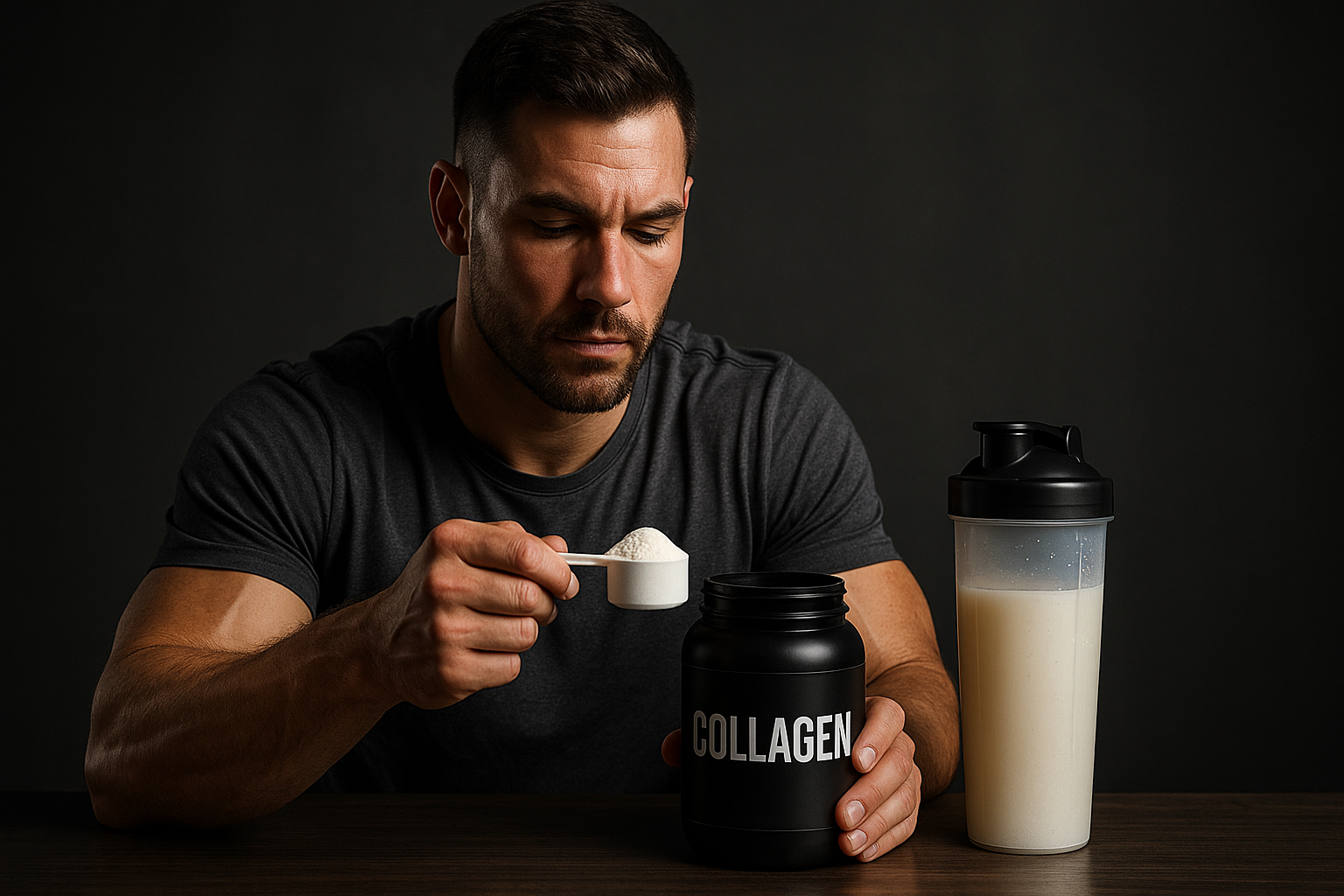
If you’re searching for mens collagen, you’re probably trying to figure out whether it’s worth adding to your routine—and if so, which type. The short, evidence-first answer: most men’s collagen supplements on the market use hydrolyzed collagen peptides, and they’re most often used for joint health support, skin health support, and sometimes as a simple “recovery-friendly” addition alongside training.
This guide breaks down collagen peptides vs whole collagen, what benefits are realistic (and what to be skeptical about), a practical dosage (men) range to start with, and a label checklist you can use immediately.
What “mens collagen” actually means (collagen peptides vs whole collagen)
“Collagen” is a protein made of amino acids. When brands say “mens collagen,” they usually mean a collagen supplement designed for men’s goals (joint comfort, skin, and sometimes training recovery support). But the key difference is the form of collagen in the product.
Hydrolyzed collagen peptides: why most supplements use this form
Most mens collagen supplements list “collagen peptides,” “hydrolyzed collagen,” or both. Hydrolyzed means the collagen has been broken down into smaller peptides, which can be easier to mix into drinks and may be more convenient for consistent daily use.
What to look for: In the ingredients, confirm you’re actually buying hydrolyzed collagen peptides (not just “collagen” with vague wording).
Collagen types (high-level): what’s typically targeted for skin/joints (avoid overpromising)
Collagen comes in different types. You’ll often see Type I, II, and III mentioned in collagen research and labeling:
- Type I (often emphasized for skin support because it’s a major component of skin structure).
- Type II (commonly used in joint-related products; some supplements market specifically for cartilage/joints).
- Type III (also linked with skin and connective tissue).
Reality check: Many general-purpose mens collagen supplements don’t clearly list type distribution, and even when they do, you still shouldn’t expect collagen to “fix” a medical problem. Think “support” and “may help,” not guaranteed outcomes.
Benefits men can reasonably look for (and what to be skeptical about)
If you’re comparing mens collagen options, the most helpful approach is to match your goal to what the ingredient is actually designed to support—then set expectations accordingly.
Joint & ligament support (common use case)
One of the most common reasons men take collagen supplements is joint health support. Some studies suggest collagen peptides may help with discomfort in certain populations, especially when used consistently over time.
Expectation to use: collagen isn’t a replacement for strength training, mobility work, bodyweight management, or proper load progression—but it can be a reasonable add-on for some men.
Skin health support (common use case)
Men often take collagen for skin health—for example, appearance of dryness or overall skin quality. Collagen is part of skin structure, so it’s logical to investigate.
Expectation to use: improvements (if they occur) are typically modest and gradual. Collagen is not the same thing as sunscreen, retinoids, or treating underlying dermatologic conditions.
Muscle recovery support (how to frame expectations)
Collagen is not a complete “muscle-building” protein like whey or whole food protein. That said, it’s sometimes used as a supportive protein addition in a routine.
How to frame it honestly: use mens collagen as part of an overall recovery strategy (protein intake, training programming, sleep). If your training is on point, collagen may complement it—especially if you’re aiming for joint comfort and connective tissue support.
Mens collagen dosage and how to take it
When men ask, “How much mens collagen should I take?” the most accurate answer is: follow the label, but here are typical starting points you’ll see across the market and general industry guidance.
Practical daily serving guidance (typical ranges—no promises)
Many collagen peptides products land in the range of 2.5 g to 10 g per day. A common “middle-of-the-road” starting point is often 5 g daily.
Quick rule: If your label lists a meaningful amount of hydrolyzed collagen peptides per serving (and your serving size is practical for you), start there.
Example for context (not endorsement): Some men’s collagen products list “5,000 mg hydrolyzed collagen peptides per serving.” You can use this idea to understand what “a full serving” often looks like. (See label example below.)
example of a men’s collagen label (hydrolyzed collagen peptides, 5,000 mg)
Timing, consistency, and pairing (with protein—keep claims modest)
Collagen peptides are usually easy to take daily—so consistency is the real “secret sauce.”
- Timing: Morning or evening both work for most men. Pick a time you can repeat.
- Consistency: Give it a fair trial. If you’re targeting joint comfort or skin support, think in weeks, not days.
- Pairing: Collagen can fit alongside your regular protein habits. If you’re training, prioritize hitting your overall protein and calories first, then add collagen as a supportive supplement.
Build a simple routine: If collagen is part of your recovery stack, pair it with sleep quality and progressive training. For a practical recovery-focused routine, consider:
sleep optimization for recovery
How to choose a mens collagen supplement (label checklist)
Most competitor content says “collagen helps joints and skin.” That’s not wrong—but it’s not enough to make a purchasing decision. Here’s the label check you can run in 60 seconds.
Confirm hydrolyzed collagen peptides and the actual mg per serving
Start with the ingredient line and serving facts:
- Look for wording like “hydrolyzed collagen peptides” (or collagen peptides).
- Confirm the supplement has a real quantity listed in mg per serving or grams per serving.
- Be cautious if the label is vague (e.g., “collagen blend” without clear dosing).
Serving size transparency + ingredient simplicity
Next, check how the serving is actually defined and whether the product stays simple.
- Serving size: Many powders are 1 scoop or a measured amount; some capsules have multiple capsules per serving.
- Ingredient simplicity: Many effective collagen peptides products have minimal ingredients. Extra add-ons aren’t automatically bad, but they can make it harder to evaluate what you’re paying for.
- Source: Some labels specify bovine (cow) or marine (fish). Choose based on tolerance and preference.
Watch-outs: allergies/sensitivities and additive caution
Collagen supplements are generally well tolerated, but you should watch for:
- Allergies/sensitivities: If you have known sensitivities related to fish/marine or bovine sources, check the source and any allergen statements.
- Added sweeteners or fillers: If you’re trying to keep ingredients clean, look at the full supplement facts panel.
- “Proprietary blends”: Avoid products that hide dosing behind a blend without clear mg amounts.
Related deep dive: If you’re evaluating a specific product format or you’re seeing brand claims about alternative collagen types, this guide helps you sanity-check the label and the evidence:
Verisol Collagen vs collagen peptides: evidence, label check, and safety
Mens collagen safety, side effects, and who should avoid it
Supplements are not “free of risk.” Most men tolerate collagen well, but safety depends on your health history, allergies, and medication use.
General supplement safety considerations
Potential side effects (when they occur) are usually mild and may include:
- GI discomfort (bloating, mild upset stomach)
- Headache or fatigue (less common)
- Allergic reactions (rare, but possible)
If you notice discomfort, stop the supplement and reassess the product—especially if you suspect an ingredient sensitivity.
When to talk to a clinician first (medical conditions, meds, allergies)
Check with a healthcare professional before using mens collagen if you:
- Have a known allergy (e.g., fish/marine or bovine sources) or history of supplement-related reactions
- Have a medical condition that requires specialized nutrition planning
- Take medications (particularly if your clinician monitors dietary protein or supplements closely)
- Are pregnant or breastfeeding (collagen supplements aren’t specifically intended for these groups)
Quick FAQ
What is the difference between collagen peptides and other types of collagen for men?
Collagen peptides are collagen broken into smaller pieces (often called hydrolyzed collagen). This is the most common format in mens collagen supplements because it’s typically easier to dose, mix, and take consistently. Other formats may exist (including specific branded collagen types), but what matters most is what the label says you’re getting and whether the dosing is clear.
How much mens collagen should I take per day?
A practical starting point for many men is often around 5 g per day, but total daily dosing varies by product. Many supplements fall within a broader 2.5 g to 10 g/day range. Use the label as your guide and choose a product with clear mg per serving of hydrolyzed collagen peptides.
Is mens collagen only for skin, or can it help joints and muscle support too?
Collagen is widely marketed for skin health, but many men take it for joint health support as well. For muscle recovery, collagen is best seen as an add-on to a complete recovery plan (training quality, overall protein intake, sleep, and nutrition). Avoid expecting it to replace normal protein or structured rehab/workout progressions.
What should I look for on the supplement label (mg per serving, hydrolyzed peptides)?
Use this label check:
- Does it say hydrolyzed collagen peptides (or collagen peptides)?
- How many mg per serving (or grams) are listed?
- Is the serving size clear and realistic for daily use?
- Does it avoid confusing “proprietary blends” that hide the dose?
How long does it take to notice effects from mens collagen?
There isn’t one universal timeline. For many people, any noticeable support for joint comfort or skin-related changes takes several weeks of consistent daily use. If you don’t see any difference after a reasonable trial (while also keeping training/sleep/protein steady), it may not be worth continuing.
Are there any side effects or safety concerns with collagen supplements for men?
Most side effects, if they happen, are mild and GI-related. The bigger safety considerations are allergies (fish/marine vs bovine source), sensitivities to ingredients, and your overall health/medication situation. If you experience adverse reactions, stop use and speak to a healthcare professional.
Conclusion: choose your mens collagen with a label check—then build consistency
For most men, the most practical choice is a mens collagen supplement that clearly lists hydrolyzed collagen peptides and provides a straightforward mg per serving you can stick with daily. The supplement won’t replace smart training, sleep, and protein—but used consistently, it may provide modest joint health, skin health, and connective tissue support.
Next step: Pick 1 product, verify the label using the checklist above, and run a consistent trial for several weeks while keeping your training and sleep on track. If you want to go deeper on collagen format differences, start with the evidence-first comparison: Verisol Collagen vs collagen peptides: evidence, label check, and safety.
Safety disclaimer: Collagen supplements are not intended to diagnose, treat, cure, or prevent any disease. Results vary by individual, and you should avoid guarantees about outcomes. If you have allergies (including to the collagen source), medical conditions, are pregnant/breastfeeding, or take medications, consult a healthcare professional before using. Stop use and seek medical advice if you experience adverse reactions.