
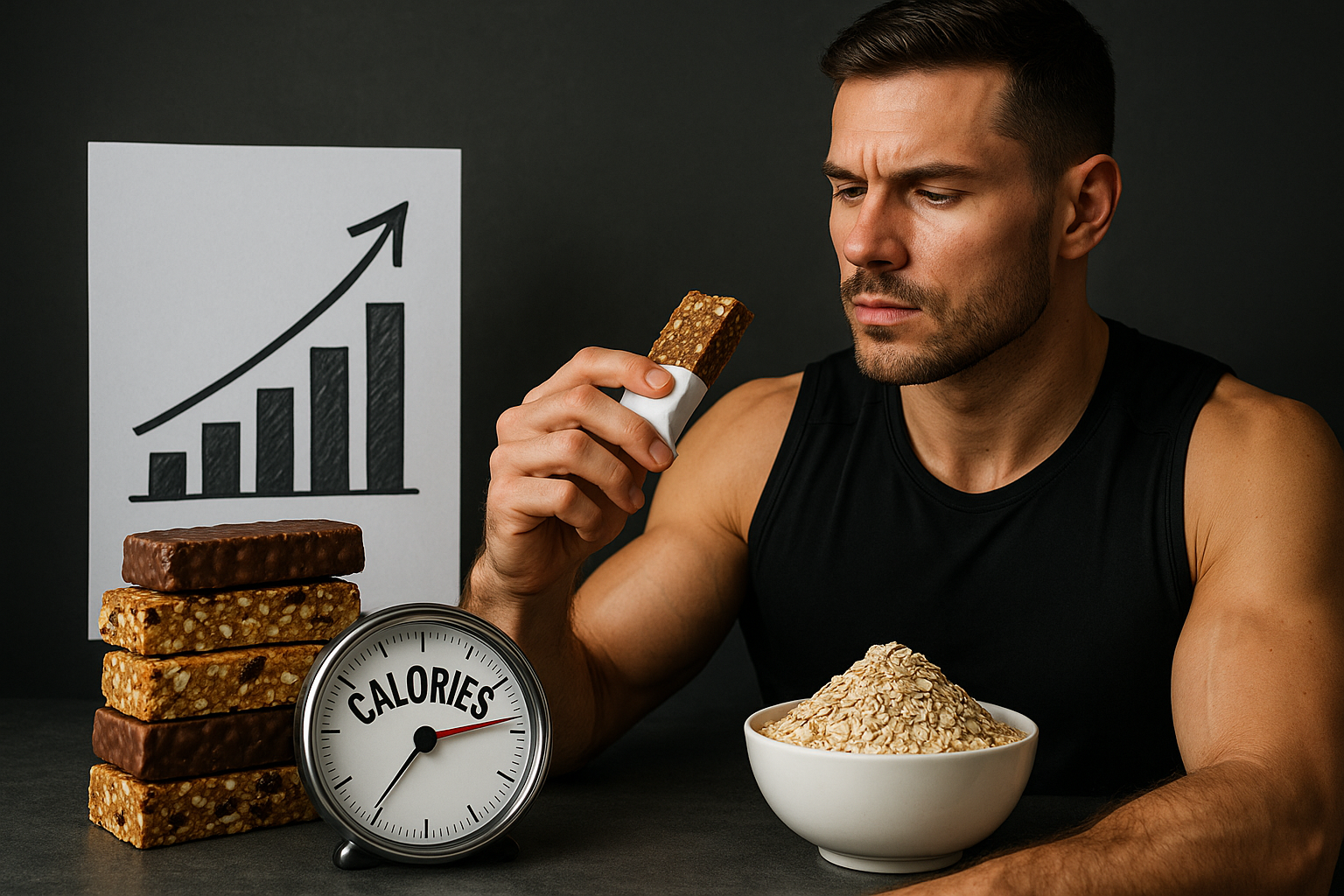
Weight gain bars can help you gain weight—but only if they make it easier for you to reach a calorie surplus. If you’re not eating enough total calories, a protein bar (or “weight gainer” bar) won’t magically change that. In practice, the best “weight gain bars” are simply a convenient way to add extra protein bar macros (calories + protein) into your day so you can stay consistent.
Quick note: These tips are general nutrition guidance and not medical advice. If you have diabetes, an eating disorder, a gastrointestinal condition, or any medical condition affecting diet/weight, consult a qualified healthcare professional. Also, some bars are high in sugar, fat, or fiber—if they cause stomach discomfort, reduce intake and reassess the bar choice.
If you want a deeper label walkthrough, use Protein Bars for Weight Gain: How to Choose as a companion guide.
Do weight gain bars actually make you gain weight?
The only reliable driver: consistent calorie surplus
All “does it work?” answers come down to the same mechanism: weight gain happens when you consistently eat more calories than you burn. A bar can support that—because it’s food that you can eat quickly—but the bar doesn’t override your overall intake.
So the best way to think about weight gain bars is as a tool for hitting your numbers, not a standalone solution.
- If your daily calories are below your maintenance: bars may help, but you still need a bigger surplus.
- If your daily calories are at maintenance: bars may keep you steady, but they won’t create gain by themselves.
- If your daily calories are above maintenance: bars can help you stay consistent long enough to gain.
How bars can help (portability, convenience, easy extra calories)
For many busy guys, the hardest part of gaining weight is not knowing what to do—it’s making it happen every day. Bars can help because they are:
- Portable (easier than cooking or packing full meals)
- Consistent (similar macros each time)
- Low-friction (you can add calories without a large appetite surge)
- Predictable for tracking (label calories make intake easier to estimate)
That’s why some people find that do protein bars help you gain weight—they’re not “special.” They’re just a practical way to reliably add calories between meals or after workouts.
When bars won’t help (not enough total calories; using them without tracking)
Here’s where people commonly get disappointed:
- You’re not in a surplus yet. If the bar is replacing an existing snack (instead of adding calories), total intake might not move.
- You’re inconsistent. One bar a week won’t do much—weight gain requires a daily or near-daily pattern.
- You’re guessing instead of tracking. If you don’t know your intake, you can’t tell whether the bars are pushing you into a surplus.
Also, if you’re asking can protein bars cause weight gain, the honest answer is: they can lead to weight gain if they push your total calories up. The “cause” is still the calorie surplus, not the bar being inherently magical.
What to look for in weight gain bars (your selection checklist)
When you’re shopping, it’s easy to get distracted by marketing like “mass gainer,” “bulking,” or “high protein.” Instead, use this checklist to choose bars designed to support calorie surplus + muscle-friendly macros.
Calories per bar (and how to hit your daily surplus)
Start with one question: How many calories am I adding per bar?
- If your target surplus is ~250–400 calories/day, you generally need either (a) 1–2 bars/day, or (b) one larger meal replacement-style bar plus other foods.
- Smaller protein bars can work, but you may need multiple servings to make a meaningful calorie dent.
Rule of thumb: pick bars that are high enough in calories that they can actually move your daily total—not just “a little extra.”
Protein amount (supporting muscle gain alongside surplus)
Protein won’t replace the calorie surplus, but it does matter for lean mass. As a practical target:
- Look for a bar that provides a meaningful protein dose per serving.
- If your overall protein intake is low, bars can help fill the gap—especially around training time or when you’re too busy to eat.
This is the part where many people confuse the issue. For example, you might ask: does protein bars make you gain weight or will protein bars make you gain weight. They can, but not because of protein alone. The protein supports lean mass when paired with resistance training and a surplus.
Carbohydrates vs fat vs fiber (why it matters for adding calories comfortably)
Calories are calories—but the macro mix affects how “easy” the calories are to digest and tolerate.
- Carbs can be helpful if you train and want fuel that doesn’t feel overly heavy.
- Fat is calorie-dense and can raise calories quickly, but too much can feel heavy or slow for some people.
- Fiber can help satiety, but if you’re sensitive, high fiber may cause bloating or discomfort—especially if you’re eating bars frequently.
If you find that can protein bars cause weight gain for you but also cause stomach issues, the fix isn’t “stop everything.” It’s often choosing a bar with a macro profile your gut tolerates better (and adjusting how many you eat per day).
Ingredient quality & “better bar” considerations (avoid oversimplified “high protein = weight gain” thinking)
“Best” doesn’t mean “clean label perfection,” but it should mean the bar makes it easier for you to hit your goal without constant GI problems. When possible, consider:
- Protein source (whey, casein, soy, etc.) and whether it agrees with you
- Sugar and sugar alcohols (some people tolerate them well, others don’t)
- Total ingredients (you don’t need to avoid all additives, but extreme complexity can be a red flag for quality or palatability)
- Fiber level (higher isn’t always better if it makes you feel worse)
For additional perspective on “what to choose,” see Lose It RD guidance on choosing a healthier protein bar and the consumer testing lens from Consumer Reports guide on the best and worst energy bars.
You can also look at how major retailers position these products. For example, Target’s weight gain bars selection is useful for context on pricing and typical calorie ranges—even though you’ll still want to apply your own calorie/protein checks.
Protein bars vs meal replacement bars: which fits your goal?
This is one of the biggest missed distinctions in the “weight gain bars” conversation. Many guys buy a protein bar expecting it to behave like a meal. If you’re trying to gain weight, you may need the right bar type.
When a meal replacement bar is useful
Meal replacement bars are typically better when:
- You struggle to eat full meals (appetite, schedule, travel)
- You need a larger calorie bump in one bite
- You want to “stand in” for a snack or sometimes a meal (depending on your total day)
They often have higher calories and a more meal-like macro distribution. As one example of what high-calorie meal replacement options can look like, see Range Meal Bars (example of high-calorie meal replacement bars).
When a protein bar is better as an in-between snack
Protein bars can be ideal when:
- You already eat enough total calories but need help hitting protein targets
- You want an “add-on” snack rather than replacing a meal
- You prefer smaller, easier-to-tolerate portions multiple times per day
In other words: if your issue is not enough calories, meal replacement bars often create the surplus more reliably. If your issue is not enough protein, protein bars may be the better fit.
How to use weight gain bars to support lean mass gains
The best usage strategy is simple: use bars to make your nutrition plan more consistent. Then train with resistance, and adjust based on your results.
Timing ideas (between meals, post-workout snack)
Common, practical timing options:
- Between meals: Add a bar when you’d otherwise “skip” calories.
- Post-workout: If it helps you eat soon after training, it can be a convenient way to deliver protein and calories.
- Before a long gap: If you’ll be busy later, eat the bar earlier so you don’t fall behind your calories.
For more on building portable intake, you can also check 7 Cheap High Protein Snacks for Muscle Gain (Portable Bodybuilding Snacks).
Practical dosing example framework (add 1–2 bars/day and adjust based on results)
Here’s a no-drama approach that avoids overcomplicating it:
- Pick your bar type (protein bar vs meal replacement) based on whether you need more protein or more calories.
- Add 1 bar/day for 7–14 days, keeping everything else relatively consistent.
- Track trend, not perfection. Weigh yourself several times per week and look for an upward trend (common goal: gradual gain).
- If weight isn’t moving, add 1 more bar/day or adjust your surrounding meals.
- If you feel too full or your stomach feels off, reduce quantity and choose a better-tolerated bar or split it (half portion twice/day).
This framework matters because the question isn’t just do protein bars help you gain weight—it’s whether the total plan is actually creating and sustaining a calorie surplus.
Training note: If your goal is lean mass, a resistance training routine is the “engine.” Nutrition (including bars) is the “fuel and building material.” Bars won’t replace training effort.
Common mistakes when people try to gain weight with bars
Relying on bars without overall calorie tracking
A bar can become a “trust me” food. If you don’t track intake at least roughly, you can accidentally:
- Replace calories you would’ve eaten anyway
- Under-estimate total intake
- Stop adjusting when your weight stalls
Use labels and a simple daily log for a week or two so you know whether the bar is truly pushing you into a calorie surplus.
Choosing bars that are “high protein” but not high enough in total calories
This is the classic mismatch. If you buy bars that are optimized for protein content but still relatively low in calories, you can end up eating “clean” snacks that don’t move your overall totals.
Ask before purchase: Is this enough calories to support my surplus? If not, you may need a meal replacement bar or more total servings.
Ignoring GI tolerance/sugar load; switching if bars cause discomfort
Some bars contain ingredients that can be hard for certain people to tolerate—especially higher sugar alcohols, certain fibers, or very high fat loads. If you notice bloating, cramps, or diarrhea, it might be a bar choice issue, not a “your diet is failing” issue.
What to do: reduce intake temporarily, try a different macro profile, and prioritize bars that you can digest comfortably enough to use consistently.
If bars aren’t enough, you can still improve your overall protein strategy with food and/or supplements—see Cheap High Protein Meals for Muscle Gain and Cheap High Protein Food: 20 Best Budget Picks.
FAQ
Do protein bars make you gain weight?
They can, if they help you eat more total calories than you burn. Protein bars don’t automatically cause weight gain—your overall calorie surplus does.
Will protein bars make you gain weight?
They may support weight gain if they help you reach a surplus consistently. If your calories stay the same (for example, the bar replaces another snack), you likely won’t gain.
Do protein bars help you gain weight if you’re not eating enough calories?
Yes, protein bars can help you gain weight in that situation because they add convenient calories. The key is making sure the bars increase your daily total intake, not just your snack variety.
Can protein bars cause weight gain (and could it be fat gain instead of muscle)?
Protein bars can contribute to weight gain if they increase your calorie intake. Whether the gain is more fat or more lean mass depends on training, total calories, protein intake, and overall lifestyle—not the bar alone.
Are meal replacement bars better than protein bars for gaining weight?
Often, yes—if your main problem is not enough calories. Meal replacement bars tend to be higher calorie. If you primarily need more protein, a protein bar can be sufficient as a snack.
What should I look for on the label when choosing weight gain bars?
Look for:
- Calories per bar (can it help you hit your surplus?)
- Protein amount (supports lean mass when paired with training)
- Carbs/fat/fiber (for digestibility and comfort)
- Ingredients you tolerate well (especially if you get stomach issues)
Conclusion: the “best” weight gain bars are the ones that help you stay in a surplus
The short answer to weight gain bars is straightforward: bars can help you gain weight when they make it easier to build and maintain a calorie surplus. Choose based on calories + protein, match the bar type to your goal (protein bar vs meal replacement bar), and use a simple adjustment framework (add 1–2 bars/day, track your trend, iterate).
Next step: Pick 1 bar that fits your calorie target and tolerance, then test it for 1–2 weeks alongside your normal food. If your weight trend doesn’t move, don’t just buy “higher protein”—increase calories or switch bar type using the checklist above.