
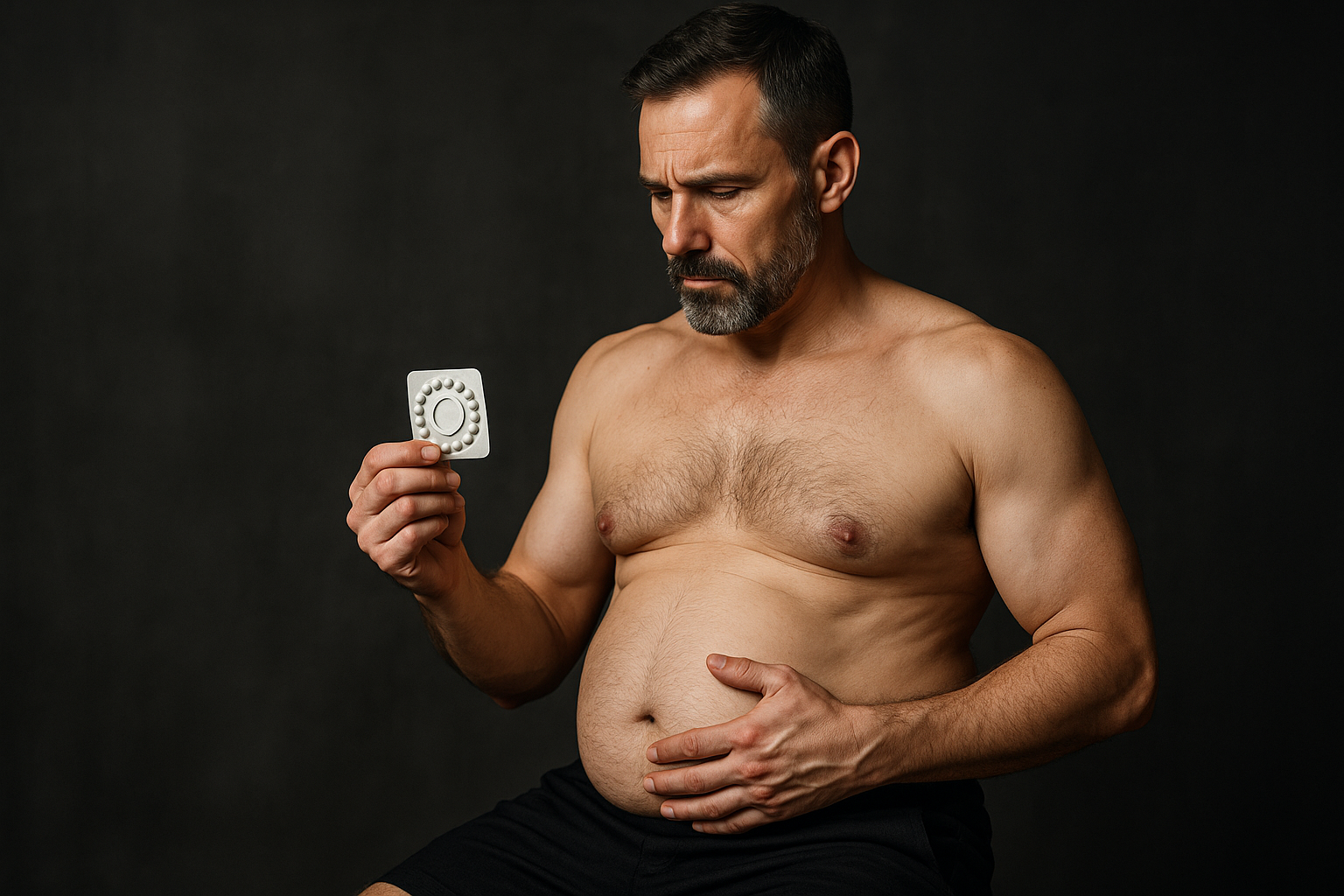
Estrogen and weight gain are linked—but not in the simple way most headlines imply. Estrogen (especially estradiol) helps regulate how your body stores fat, how sensitive you are to insulin, and how appetite signals work. When estrogen levels shift—such as after menopause, with hormone imbalance, or during certain forms of hormone therapy—some people may notice weight gain or changes in waist size and body composition. The “why” depends heavily on your hormone scenario (high vs low estrogen, estrogen dominance, or estrogen combined with progesterone/HRT).
This guide breaks down the mechanisms and the common scenarios behind weight gain and estrogen, plus a practical checklist for spotting whether your changes may be hormone-related—and what to discuss with a clinician.
Safety note (please read): This article is for education only and isn’t medical advice. Don’t start, stop, or change estrogen/progesterone (including patches, pills, or bioidentical hormones) without a qualified clinician. If you have severe or worsening symptoms, abnormal uterine bleeding, or any red-flag health concerns, seek prompt medical evaluation.
Testing & interpretation: Hormone testing should be clinician-directed and interpreted in context (timing in cycle, symptoms, medical history, and medication use).
What “estrogen and weight gain” really means (the hormone-fat link)
Estradiol and body weight regulation: what the research suggests
When people ask whether estrogen and weight gain are connected, they often mean “Will taking estrogen make me gain weight?” The more accurate question is: How does estradiol (estrogen) influence the systems that control body weight?
Research reviews highlight that estradiol plays a role in body weight regulation and metabolic health in women. For example, a loss of estradiol after menopause may contribute to increased obesity risk and reduced insulin sensitivity (insulin resistance), which can make fat gain easier and weight loss harder for some people.
External reference: The importance of estradiol for body weight regulation in women
That said, estrogen isn’t a magic switch. Even if estrogen affects insulin sensitivity and fat regulation, the outcome depends on many variables: age, activity level, dietary pattern, sleep, stress, genetics, and—critically—where your hormones sit in your spectrum (high vs low) and what other hormones are present.
Why fat distribution may shift (not just scale weight)
One reason weight gain and estrogen gets discussed so often is that estrogen changes can alter fat distribution—especially around the abdomen.
- Insulin sensitivity: Lower estradiol and some hormone transitions may be associated with changes in insulin sensitivity. Poorer insulin control can increase the tendency to store energy as fat.
- Appetite & signaling: Estrogen influences multiple brain pathways involved in satiety and energy balance. When levels fluctuate, appetite cues can shift for some people.
- Body composition: Some people experience more visceral or abdominal fat gain rather than dramatic scale increases—so the number may not tell the full story.
Translation: you might not only “gain weight.” You might notice changes in waist size, clothing fit, and how body fat is distributed—often first.
High estrogen vs low estrogen: how each can relate to weight changes
A common SERP gap is that many sources blend “high estrogen” and “low estrogen” into one bucket. In real life, high estrogen and weight gain and low estrogen and weight gain can look different and have different drivers.
High estrogen and weight gain: common associations and symptoms
When estrogen is relatively high—sometimes discussed as estrogen dominance and weight gain—people may report:
- Water retention or bloating (which can look like quick weight changes)
- Greasier appetite or cravings (especially if blood sugar regulation is also off)
- Cycle-related changes (for those who menstruate)
- Fat distribution changes (varies by person)
Important nuance: “High estrogen” can mean different things depending on lab timing, cycle phase, and what the person is experiencing symptom-wise. Some “estrogen dominance” discussions also overlap with insulin resistance, thyroid dysfunction, stress hormone changes, and lifestyle factors—so the root cause can be mixed.
Practical takeaway: If your weight gain is paired with significant bloating, cyclical swelling, or symptom swings that track your cycle, it may be worth exploring hormone-related factors (along with diet, sodium intake, sleep, and activity).
Low estrogen and weight gain (especially around menopause)
Lower estradiol is a major context people bring up with low estrogen and weight gain, and it’s one of the best-supported hormone scenarios for metabolic shifts.
During menopause transition, many people experience:
- Changes in insulin sensitivity, which can make fat gain more likely
- More abdominal fat storage in some cases
- Reduced lean mass risk (if training and protein intake aren’t dialed in)
- Sleep disruption, which can increase hunger and reduce energy expenditure
External clinical context: Menopause weight gain and hormone therapy (UChicago Medicine)
Key point: Low estrogen may contribute, but it rarely acts alone. Menopause timing often coincides with other changes (muscle mass, activity, stress, sleep quality), which can compound the effect.
Estrogen + progesterone: do they cause weight gain together?
This is where things get especially confusing, so let’s address the exact SERP intent behind queries like does estrogen and progesterone cause weight gain and can estrogen and progesterone cause weight gain.
Does estrogen and progesterone cause weight gain?
In many clinical discussions, estrogen and progesterone (or progestins) are grouped as “HRT.” But the body’s response can vary widely. For some people, combined therapy can be associated with weight changes; for others, the scale doesn’t move much.
Why the mixed results?
- Different baseline hormone states: Starting HRT may be correcting a deficiency, or it may be added for symptom control in a different context.
- Different regimen types and doses: The hormone form matters, plus total dosing and timing.
- Competing lifestyle/metabolic factors: People often start HRT during a life phase where sleep, stress, and training habits are also changing.
- Water vs fat changes: Some people notice short-term swelling; others notice longer-term body composition changes. These are not always the same mechanism.
So rather than “estrogen + progesterone always causes weight gain,” a more medically aligned answer is:
Estrogen and progesterone regimens may be associated with weight change in some people, but the direction, magnitude, and mechanism depend on the individual and the specific regimen.
Why answers vary (individual response, insulin resistance risk, lifestyle factors)
If you’re trying to interpret does estrogen and progesterone cause weight gain in your own life, the most useful framework is to consider what’s changing besides hormones.
- Insulin resistance risk: If insulin sensitivity is already drifting (common during menopause transition), appetite and fat storage may shift—regardless of whether HRT is involved.
- Muscle maintenance: Less resistance training and lower protein can reduce muscle retention, which can slow metabolism and worsen body composition over time.
- Sleep and stress: Poor sleep can increase hunger signals and reduce energy output—often showing up as weight or waist increases.
- Timing: The same regimen can feel different at week 2 vs month 8. Short-term water changes can be mistaken for fat gain.
If you suspect a hormone connection, the best move is to track trends (waist, weight trend, symptoms, and timing relative to regimen changes) rather than reacting to day-to-day scale fluctuations.
HRT forms matter: patches, pills, and bioidentical hormones
Another SERP gap: many pages talk about “HRT” broadly. But if you searched estrogen patch and weight gain or estrogen patch and progesterone pill weight gain, you’re looking for something more specific.
Estrogen patch and weight gain (what people report vs what clinicians assess)
An estrogen patch delivers estradiol through the skin. People sometimes report changes in weight when using an estrogen patch and weight gain context. Clinically, it’s important to distinguish:
- Short-term scale changes (often more consistent with water retention/bloating)
- Longer-term changes (which suggest shifts in appetite, insulin sensitivity, lean mass, or overall energy balance)
Clinicians typically assess not just weight, but also changes in waist size, metabolic markers (when appropriate), and other symptoms that might affect eating, activity, or sleep.
Estrogen patch and progesterone pill weight gain
When estrogen and progesterone are used together—commonly referenced as “estrogen patch and progesterone pill weight gain”—the combined regimen becomes the variable.
Again, responses vary. Some people notice:
- Fewer menopause symptoms (which can indirectly support weight regulation if sleep improves and cravings reduce)
- Or, in some cases, increased appetite or changes in fluid balance
If you’re trying to interpret your own experience, make sure you’re also tracking the non-hormone drivers (protein intake, steps, resistance training, alcohol intake, sleep). Regimen-related symptoms can shift lifestyle behaviors quickly—sometimes before you realize it.
Bioidentical estrogen and weight gain: how to talk about it with your clinician
“Bioidentical estrogen and weight gain” questions show up often because patients want clarity and reassurance. Bioidentical doesn’t automatically mean “better” or “weight neutral.” What matters is:
- The exact hormones used (estradiol, estriol, progesterone, etc.)
- The dose and delivery method
- Your starting hormone state
- How your symptoms and metabolic markers respond
When you talk to your clinician, focus on measurable changes: time course, waist, appetite, sleep, and any relevant bloodwork they recommend.
How to tell if your weight gain is hormone-related (practical checklist)
Sometimes weight gain is simply energy balance. Other times, hormones contribute. A good way to decide whether to investigate is to look for a pattern—especially around hormone transition points.
Menopause timing, cycle changes, and other hormone symptoms
Use this checklist to evaluate whether weight gain and estrogen might be part of the picture:
- Timing matches a hormone transition: You gained weight during perimenopause/menopause or after starting/stopping hormone therapy.
- Waist increases before major scale changes: Clothing fit changes with central fat tendency.
- Cycle changes: Irregular periods, changes in flow, or new PMS/PMDD-like symptoms (if you menstruate).
- Hot flashes/night sweats or sleep disruption: Sleep loss can drive appetite changes.
- New mood or energy shifts: Fatigue and low motivation can reduce training consistency.
- Signs of fluid retention: Ring tightness, puffy face, or day-to-day swelling—especially around regimen changes.
If several items fit, it’s reasonable to ask your clinician about hormone-related contributors and whether any targeted testing or regimen review is appropriate.
Tracking approach (weight trend, waist, symptoms) and what to bring to an appointment
If your goal is to get answers rather than guess, track with a “forensic but simple” approach:
- Weight trend: Weigh 3–4 times per week, same conditions; focus on weekly average (not single-day swings).
- Waist measurement: 1x per week (same time of day). Take note of central gain.
- Symptom log: Track sleep quality, hot flashes, cravings, bloating, and energy (0–10 scale works).
- Regimen/lifestyle timeline: Note start dates/dose changes for any estrogen patch, progesterone, or other meds/supplements.
Bring this info to your appointment. Ask questions like:
- “Does my pattern suggest high estrogen and weight gain, low estrogen and weight gain, or mostly water retention?”
- “If I’m on an estrogen patch and progesterone pill regimen, could timing/dose explain the changes I’m seeing?”
- “What labs or evaluation would you recommend given my symptoms and weight/waist trend?”
Clinicians may tailor testing based on your history; hormone levels aren’t always perfectly informative without context.
What to do next (evidence-aligned next steps)
Medical evaluation prompts (what to ask; testing may be clinician-directed)
Here’s a responsible “next step” list that supports hormone-aware care without assuming hormones are the only cause:
- Review your timeline: When did weight and waist changes start relative to menopause transition or HRT changes?
- Discuss metabolic health: Ask whether screening for insulin resistance risk is appropriate (your clinician can advise based on your history).
- Assess thyroid and other contributors: Not everything weight-related is estrogen-driven.
- If on HRT: Ask whether your current regimen (dose/form) is matching your symptom goals and whether any adjustments are warranted.
- Rule out red flags: If you have abnormal bleeding or concerning symptoms, prompt evaluation matters.
Important: Don’t self-adjust patches/pills. Even if weight is frustrating, changing dosing without guidance can worsen symptoms or create other risks.
Lifestyle priorities that support weight regulation alongside hormonal changes
You don’t need to “out-diet hormones”—but you do need systems that help your body regulate energy and preserve muscle during hormonal transitions.
- Protein & resistance training: Support lean mass to protect body composition as hormones change. If you’re struggling to hit protein targets, simplify with reliable options like Cheap High Protein Meals for Muscle Gain.
- Sleep consistency: Poor sleep can increase hunger and reduce energy output—especially during menopause.
- Steps + progressive training: Keep activity steady and build gradually to avoid “all-or-nothing” cycles.
- Track waist, not just scale: Many hormone-related changes show up centrally; waist is a better early warning system.
These steps won’t replace medical care, but they can reduce the “noise” so you and your clinician can better interpret whether hormone shifts are driving the changes.
Key takeaways
| Scenario | How estrogen may relate to weight | What to focus on |
|---|---|---|
| High estrogen and weight gain | May be associated with bloating/fluid shifts and, for some, appetite or metabolic effects—results vary. | Look for symptom timing (cycle changes), waist trend, and fluid retention patterns. |
| Low estrogen and weight gain (often menopause transition) | Loss of estradiol may contribute to insulin sensitivity changes and a tendency toward central fat gain in some people. | Sleep, resistance training, protein intake, and metabolic screening discussion. |
| Estrogen + progesterone | Some people report weight changes, but it depends on the regimen, baseline state, and other lifestyle/metabolic factors. | Track time course, waist, appetite, sleep, and ask about regimen review if needed. |
| Estrogen patch and progesterone pill | Different forms/timing can influence water vs fat changes and symptom comfort, which indirectly affects weight. | Separate short-term swelling from longer-term body composition changes. |
Bottom-line summary by scenario
- Does estrogen cause weight gain? Not in a universal way. Estrogen can contribute to metabolic regulation and fat distribution, especially via estradiol-related changes.
- High vs low matters: high estrogen and weight gain and low estrogen and weight gain can present differently and require different evaluation angles.
- Estrogen + progesterone/HRT: does estrogen and progesterone cause weight gain depends on the person and regimen. Water retention and lifestyle shifts can make results look inconsistent.
- Forms matter: Reports about estrogen patch and weight gain and estrogen patch and progesterone pill weight gain are common, but the medical “answer” is best understood through your timeline and symptom/metabolic context.
FAQ: estrogen and weight gain
Does estrogen cause weight gain, or is it fat distribution changes?
Estrogen (particularly estradiol) may influence insulin sensitivity and appetite signaling, which can affect overall weight and body composition. In many cases, the most noticeable change is fat distribution (often central/waist-related) rather than dramatic scale changes alone.
Does low estrogen cause weight gain during menopause?
Low estradiol during menopause transition may be associated with weight gain tendencies in some people—partly through metabolic changes like insulin sensitivity. However, sleep, muscle mass, and activity changes commonly interact with this effect.
Do estrogen and progesterone cause weight gain together (and does it depend on the regimen)?
It can—some people experience weight changes on combined therapy—but it’s not guaranteed. Timing, dose, baseline hormone status, and lifestyle factors all influence outcomes. That’s why answers like does estrogen and progesterone cause weight gain often seem contradictory online.
Can estrogen dominance lead to weight gain?
Estrogen dominance and weight gain may be discussed in wellness contexts, and some people report weight/bloating changes when estrogen activity is relatively higher. But the underlying cause may be multifactorial (metabolism, stress, thyroid function, insulin sensitivity), so it’s worth a clinician-informed evaluation.
Can an estrogen patch and progesterone pill affect weight differently than other forms?
Different delivery methods and timing may influence how your symptoms change and whether short-term fluid retention occurs. That can affect the scale and how you perceive “weight gain,” so focus on trend plus waist and symptoms—not only day-to-day numbers.
What should I ask my clinician if I suspect hormone-related weight gain?
Ask about your timeline (when weight/waist changes started), whether symptoms suggest a hormonal transition (e.g., perimenopause/menopause), and what evaluation is appropriate. If you’re already on HRT, ask whether your regimen (dose/form/timing) could explain your changes and whether any lab work or adjustments are recommended.
Author note (Forged Alpha)
At Forged Alpha, we cover men’s and performance-focused health through a weight-regulation lens—training, nutrition, and practical systems that help people maintain body composition across life changes. Hormones matter, but we don’t recommend self-treating. If you’re dealing with estrogen and weight gain, our goal is to help you identify whether your symptoms follow a hormone-related pattern and to prepare smart questions for your clinician—while also supporting evidence-aligned habits that protect lean mass.
Conclusion: a useful next step
If your weight gain lines up with menopause transition or with starting/changing HRT, it’s reasonable to consider hormone contributions—but the highest-value move is to track waist + trends, document symptoms and timing, and discuss next steps with a qualified clinician. In parallel, prioritize muscle-supporting nutrition and consistent training so your body has the best chance to respond well to hormonal changes.
Next step: Start a 4-week log (weekly weight average, waist once per week, sleep quality, cravings/bloating, and medication timeline). Bring it to your appointment and use the checklist above to guide the conversation.
Reminder: This is informational content, not medical advice. Seek urgent care for severe/worsening symptoms, abnormal bleeding, or other red-flag concerns. Don’t change HRT/estrogen/progesterone without clinician guidance.