
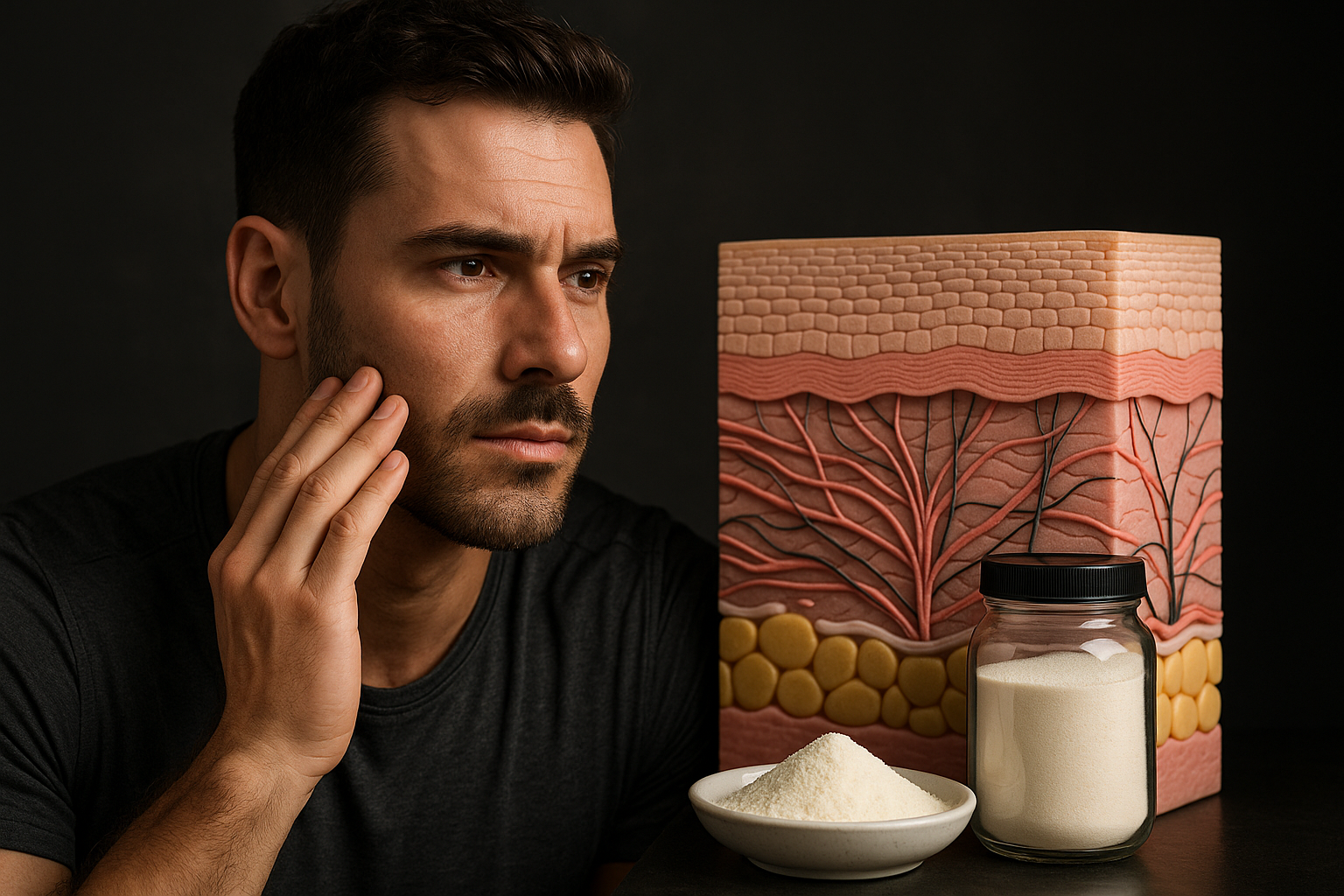
If you’re looking up collagen peptides for skin care, you’re probably trying to answer two questions: (1) what skin collagen actually does, and (2) whether taking collagen peptides can meaningfully improve skin appearance. The short version: collagen fibers in skin provide structure and support, while collagen supplements for firming skin may help with outcomes like moisture, hydration, and elasticity for some people—though they’re not a guaranteed anti-aging “rebuild” button. Below, we’ll connect the biology (what collagen fibers allow the skin to do) to what’s realistic from oral collagen peptides vs topical collagen products.
What skin collagen is (and why “collagen fibers” matter)
Collagen is the most abundant protein in the body. In the skin, it’s a key structural component of the dermis—the deeper layer that helps give skin its strength and “bounce.” When people say collagen fibers skin look different as you age, they’re referring to collagen’s organization into long, rope-like structures (often described as collagen fibers). These fibers are part of the scaffolding that supports:
- Skin firmness (resistance to sagging)
- Elastic recoil (how quickly skin springs back)
- Hydration environment (collagen helps support the matrix that holds water)
What do healthy collagen fibers allow the skin to do?
When collagen fibers are healthy and well-organized, the skin is generally better at maintaining its mechanical properties. In practical terms, what do healthy collagen fibers allow the skin to do?
- Maintain structure so skin feels firmer and looks less “loose.”
- Support hydration because the dermal matrix influences water content and the feel/appearance of dryness.
- Work with other dermal proteins (especially elastin) to preserve elasticity.
As collagen declines or becomes more disorganized with age, sun exposure, smoking, and metabolic stress, skin can look thinner, drier, and less resilient.
Skin collagen and elastin: how they work together
Collagen and skin collagen elastin aren’t interchangeable. Collagen contributes strength and structure; elastin contributes stretch and recoil. If collagen provides the “framework,” elastin acts more like the spring. That’s why “firmness” and “bounce” tend to reflect both proteins—plus hydration, inflammation, and overall skin barrier function.
This is also why topical collagen can be misleading if marketed as if it “fixes elastin.” Even if topical products contain collagen, they generally function differently than oral collagen peptides.
Collagen in the body vs “collagen in food/animal skin” FAQs
One common confusion: “If collagen is in meat and animal skin, does eating it automatically rebuild skin?” Animal products can contain collagen, but digestion breaks down proteins into amino acids and peptides. Your body then uses those building blocks to support its own collagen maintenance—not a one-to-one swap.
That said, it’s fair to ask the specific animal-skin questions people search for.
Does pork skin have collagen?
Yes. Pork skin contains collagen (similar to other animal connective tissues). But in the context of skin care, the key point is that eating pork skin contributes collagen-containing protein that gets digested. It’s not the same as applying or directly transferring collagen fibers to your dermis.
Does chicken skin have collagen?
Yes. Chicken skin contains collagen as well. Again, the digestion process matters: your body would use amino acids/peptides from the meal as raw materials, alongside your overall nutrition, sun exposure level, and lifestyle factors.
If your goal is collagen peptides for skin health, that’s where targeted supplements come in—because peptide formulations are standardized and easier to dose than trying to estimate how much collagen you’re getting from different servings and cooking methods.
Collagen supplements and peptides for skin care (what evidence supports)
Let’s separate marketing from what research supports. The best-supported claims for oral collagen supplements relate to skin moisture/hydration and elasticity, especially in formulations taken consistently over time.
A strong evidence summary comes from the NIH/NLM indexed review:
NIH review on collagen supplements improving skin moisture/elasticity/hydration
In general, reviewed studies in that literature suggest oral collagen supplements (including collagen peptides) can improve measures related to moisture, elasticity, and hydration for some users.
Collagen peptides vs other collagen forms (high-level label/function considerations)
When you shop for collagen peptides for skin care, you’ll see different labels. Here’s the practical difference to look for, without overcomplicating it:
- Collagen peptides: smaller collagen fragments/peptides designed for easier digestion and absorption. This is the most common form in supplements aimed at skin outcomes.
- Intact collagen (sometimes labeled “gelatin,” depending on context): larger protein forms. They can be used in various foods; skin-specific dosing evidence is less standardized than for peptides.
- Hydrolyzed collagen: hydrolyzed generally means broken down; many “hydrolyzed collagen” supplements are peptide-rich, but you still want to read the label and understand what you’re actually buying.
From a buying standpoint, “peptides” often signals a smaller, more predictable ingredient profile. But always confirm the dosing and the product’s third-party testing claims.
What improvements are most consistently reported (moisture, elasticity, hydration)
When users and studies report benefits, they often cluster around:
- Moisture and hydration (skin feels less dry; appearance can look more supple)
- Elasticity (skin may look and feel less “flat,” sometimes described as improved firmness)
What’s less consistent: dramatic “wrinkle reversal” or instant transformations. Collagen is a gradual process. If you track progress like a strength goal—measuring inputs and outcomes over weeks—you’ll be more likely to see realistic improvements and avoid disappointment.
How to choose collagen supplements for skin repair/firming
If you want collagen supplements for skin repair or collagen supplements for firming skin, selection matters. Here’s a checklist that I’d actually use to evaluate a product.
Collagen boosting ingredients for skin (and why vitamin C is commonly paired)
Collagen production involves multiple enzymatic steps. Because of that, it’s common to see ingredients paired with collagen supplements—especially vitamin C. Many supplement formulas include vitamin C to support normal collagen synthesis pathways.
That said, your overall diet matters too. If you’re already getting enough vitamin C from fruits/vegetables, you don’t necessarily need an extra mega-dose.
Practical “label reading” priorities:
- Ingredient transparency: clear “collagen peptides” or similar peptide-forward wording
- Dose per serving: higher isn’t always better, but a vague “proprietary blend” makes outcomes harder to evaluate
- Quality testing: third-party verification for contaminants can be a differentiator
- Allergen fit: some collagen sources may not work for every diet preference
Practical expectations and timelines (what to monitor)
If you’re trying collagen peptides for skin care, think in timelines:
- First 2–4 weeks: you may notice changes in skin feel (often hydration/comfort) but don’t judge results too harshly.
- 6–12 weeks: this is where consistent users tend to see more visible “supple” changes and some elasticity-related improvement.
- After that: reassess. If there’s no change in hydration/texture and your routine is otherwise solid, you might pause and adjust your approach.
How to track without obsession: take standardized photos in the same lighting (morning vs evening matters), and note subjective changes like tightness after washing. Keep expectations anchored to the evidence-supported outcomes: moisture, elasticity, and hydration—rather than claiming you’re “rebuilding deep dermal collagen” instantly.
Topical collagen products: where they fit (e.g., collagen masks/creams)
Topical collagen can have a role, but it’s usually more about surface hydration than reconstructing dermal fibers. Many topical products act like moisturizing gels/creams: they can improve appearance and reduce the “dry, tight” feel, especially if they include humectants and emollients.
Collagen jelly cream for skin vs collagen mask for dry skin: realistic role in a routine
Here’s a practical way to think about it:
- Collagen mask for dry skin: can help temporarily improve smoothness and hydration on the surface, especially if it also includes moisturizing agents.
- Collagen jelly cream for skin: similar story—support comfort and barrier feel, potentially making skin look less dull.
What topical collagen generally won’t do (based on how skin absorption works): it’s unlikely to rebuild deep collagen fibers in skin the way oral peptides aim to support underlying processes. So consider topical collagen as a complementary comfort step, not the core “skin structure” intervention.
Safety, who should be cautious, and when to talk to a clinician
Collagen supplements are generally considered low risk for many people, but “generally safe” doesn’t mean “no exceptions.”
This article is for informational purposes only and is not medical advice. If you are pregnant, nursing, have a medical condition, or take medications, consult a healthcare professional before using collagen supplements.
General supplement safety checklist
- Check allergies and source: collagen may come from marine or bovine sources (and ingredients vary).
- Start with consistent dosing: avoid stacking multiple collagen products at once without a reason.
- Watch for GI discomfort: some people report mild digestive changes early on.
- Choose quality: third-party testing helps reduce contamination risk.
Interactions/medical conditions
Because collagen supplements are still supplements (not a prescription), they may not be appropriate for everyone. If you have kidney disease, certain autoimmune conditions, or take multiple medications, it’s smart to discuss with your clinician—especially if your diet already includes high amounts of collagen/protein or if you’re planning longer-term use.
If you’re also using other peptides for fitness or health goals, it’s worth taking a safety-first approach. (If helpful, see Safety-first peptide checklist (expectations + side effects).)
Quick internal “buying logic” for collagen peptides for skin care
Here’s how I’d decide if collagen peptides for skin care are worth trying:
- Match the goal: if you want improved hydration/moisture and some elasticity support, peptides are a reasonable starting point.
- Choose credible labels: look for “collagen peptides” and a non-mysterious dose.
- Pair smartly: vitamin C is commonly included because it relates to collagen biology—don’t ignore your baseline nutrition.
- Run a real test: measure the same outcome over 6–12 weeks before deciding.
- Avoid topical hype: collagen masks/creams can help comfort, but they’re not a direct replacement for oral peptides if your goal is dermal support.
If you want a label-and-evidence comparison, this is a helpful next step:
Verisol collagen vs collagen peptides (evidence + label check)
FAQ: skin collagen and collagen peptides
Does pork skin have collagen?
Yes. Pork skin contains collagen. However, eating pork skin doesn’t directly transfer collagen fibers into your skin; it’s digested into amino acids/peptides that your body can use as building blocks.
Does chicken skin have collagen?
Yes. Chicken skin contains collagen. As with pork skin, digestion breaks it down—so the skin-care impact depends on your overall diet, consistency, and how your body uses the protein/peptides provided.
What do healthy collagen fibers allow the skin to do?
Healthy collagen fibers in skin help maintain skin structure, support hydration and the dermal water environment, and work alongside elastin to support elasticity—contributing to a firmer, more resilient look.
Collagen peptides for skin care: are peptides the right form for skin?
Peptides are the most commonly studied and marketed form for skin outcomes like moisture, elasticity, and hydration. If you’re choosing a collagen supplement for skin, peptide-forward options are typically the most straightforward match to the evidence.
Collagen supplements for firming skin: how should someone set expectations?
Think “gradual improvement,” not overnight reversal. Many people report changes in hydration/elasticity after consistent use over weeks. Results vary based on sun exposure, lifestyle, baseline collagen status, and overall skincare routine.
Is there a difference between skin collagen and elastin for firmness/elasticity?
Yes. Collagen provides structural support; elastin contributes stretch and recoil. Firmness and elasticity reflect both, plus hydration and skin barrier function.
Conclusion: what to do next
Skin collagen is the structural backbone of the dermis, and collagen fibers in skin help determine how firm, resilient, and hydrated your skin appears—especially through their relationship with elastin. For many men looking for a practical approach, collagen peptides for skin care are a reasonable supplement option to test, with the most evidence-backed targets being moisture/hydration and elasticity rather than dramatic wrinkle “undoing.”
Next step: pick a peptide-forward collagen supplement with a clear dose, give it a consistent 6–12 week trial, and track hydration/elasticity changes with photos and simple notes. If you want deeper label clarity, start with Verisol collagen vs collagen peptides (evidence + label check).