
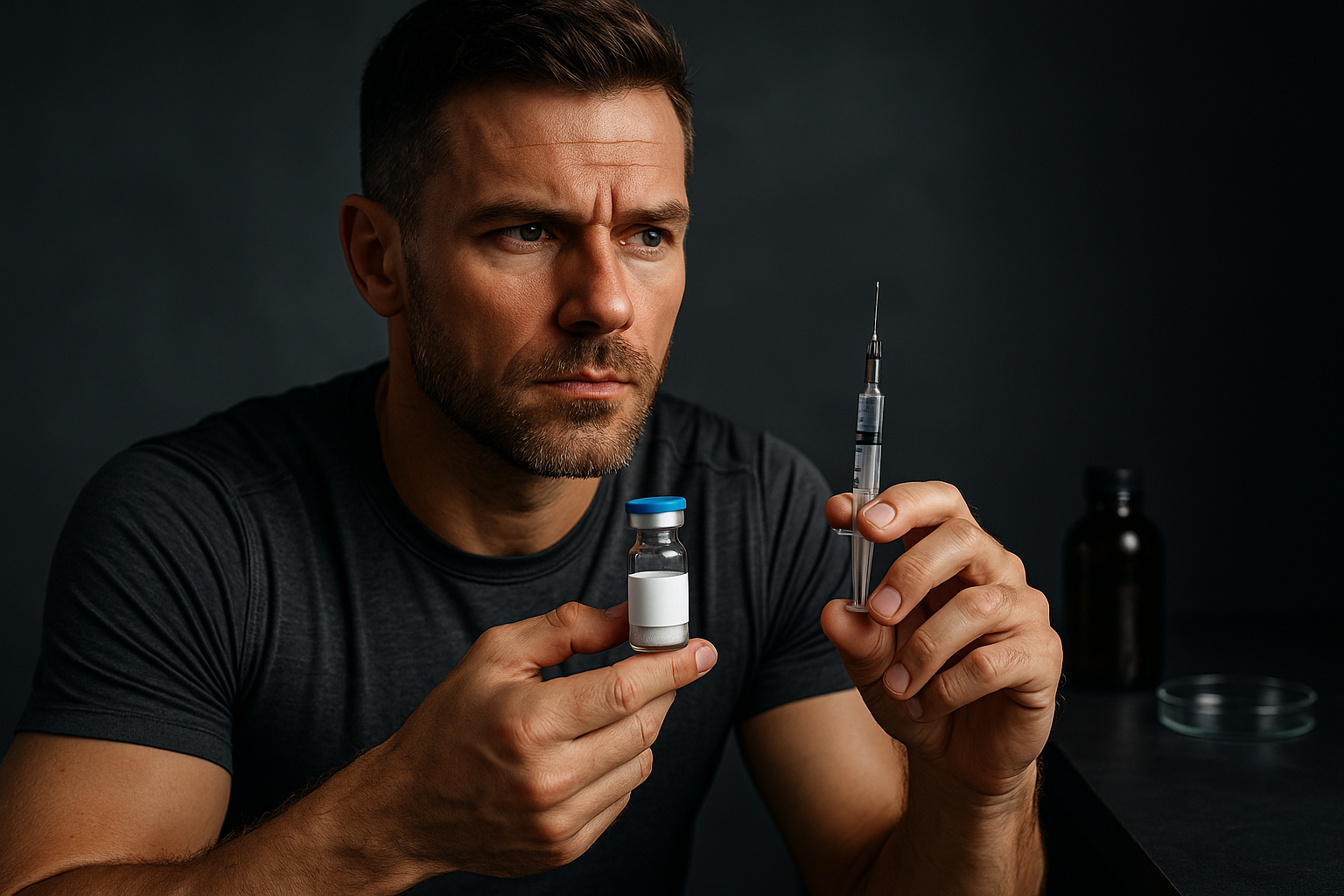
If you’re searching “SLU-PP-332 peptide benefits,” you’re probably trying to understand two things fast: (1) what SLU-PP-332 actually is and whether it’s a peptide, and (2) what people mean by “results,” along with any SLU-PP-332 peptide side effects and safety concerns—especially around SLU-PP-332 peptide dosage talk online.
Short answer: SLU-PP-332 is not typically described as a peptide (despite the way it’s often labeled in supplement/DIY communities). It’s better categorized as a synthetic ERR agonist—meaning it acts on estrogen-related receptors involved in metabolic regulation—rather than as a classic peptide hormone. This distinction matters for how evidence is interpreted, how safety is framed, and why “internet dosing” isn’t reliable medical guidance.
Important safety note: This article is not medical advice. SLU-PP-332 is a research compound and is not approved as a drug for weight loss or treatment of metabolic conditions. Most available information is preclinical (animal/cell), and human safety/efficacy is not established.
What Is SLU-PP-332? (And Is It a Peptide?)
Because SLU-PP-332 is frequently discussed alongside “peptide stacks” online, many people ask: is SLU-PP-332 a peptide?
Mechanism overview: estrogen-related receptor (ERR) agonist activity
SLU-PP-332 is described in reputable compound references as an ERR agonist (ERR = estrogen-related receptor). ERRs are nuclear receptors that influence gene expression tied to mitochondrial function, energy metabolism, and metabolic pathways that are often targeted in obesity/insulin-resistance research.
In other words, SLU-PP-332 is not “a peptide” in the way many readers expect from GH/GLP-1/AMPK-style peptide narratives. It’s discussed as a small-molecule/chemical research tool that modulates a receptor axis relevant to metabolism.
For a catalog-style overview, see: SLU-PP-332 (ERR agonist) — Cayman Chemical.
Why it’s discussed alongside “exercise mimetics”
ERR agonist activity is one reason SLU-PP-332 shows up in conversations about “exercise mimetics.” The logic is not that it reproduces every training effect—rather, that ERR signaling intersects with pathways that support mitochondrial/energy regulation similar to what exercise triggers in some contexts.
This is where the “SLU-PP-332 peptide sciences” angle usually begins: people connect its receptor mechanism to downstream metabolic changes (fat mass, glucose handling) seen in preclinical obesity models.
What the Evidence Shows (Peptide Results / Research Findings)
Let’s separate what’s supported by the peer-reviewed literature from what’s inferred from community posts. The closest thing to “evidence” people point to is a peer-reviewed paper indexed in PubMed Central (PMC).
Primary evidence anchor: A Synthetic ERR Agonist Alleviates Metabolic Syndrome (PMC, 2024) (Billon et al.).
Summary of key preclinical findings (metabolic syndrome; fat mass; glucose metabolism) from the PMC study
In the PMC paper, SLU-PP-332 is investigated in multiple mouse models relevant to obesity/metabolic syndrome. The findings (at a high level, without overclaiming) include:
- Reduced fat mass in several mouse models of obesity.
- Improved glucose metabolism (how the body handles glucose) in those experimental contexts.
- Metabolic syndrome–related improvements consistent with the idea that ERR pathway modulation can shift metabolic outcomes.
When people search “slu pp 332 peptide results” or “slu-pp-332 peptide benefits,” these types of preclinical outcomes are often what they’re referencing—because they’re among the clearest, most citable results available publicly.
Translational limits (what’s known vs what’s not established)
Here’s the critical gap: mouse model improvements are not the same as proven human benefits. The PMC study supports a plausible mechanism and measurable effects in controlled experimental settings, but it does not establish:
- Optimal SLU-PP-332 peptide dosage for humans
- Whether similar fat/glucose effects occur in people
- Magnitude of effect in humans
- Long-term safety (and especially not for year-after-year use)
- How comorbidities and medications change risk
This is why safety framing should lead the conversation—not just “results narratives.”
SLU-PP-332 Benefits (Evidence-Based)
Given the evidence above, what can we responsibly say about SLU-PP-332 peptide benefits?
Metabolic outcomes discussed in research (fat mass, glucose metabolism)
Evidence-based benefit claims from the PMC paper are essentially metabolic—not “performance” in the bodybuilding sense. Based on the study’s reported outcomes, the core potential benefits are:
- Body fat reduction signals in obesity models
- Better glucose metabolism signals relevant to insulin sensitivity
- General improvement of metabolic syndrome markers within those experimental contexts
You’ll often see additional mechanistic discussion connected to energy pathways and mitochondrial-related biology. While the ERR axis overlaps conceptually with exercise-associated metabolic signaling, it’s still wise to treat “exercise mimetic” claims as hypothesis-level for humans unless clinical data exist.
Expected outcomes vs realistic uncertainties
If you’re deciding whether SLU-PP-332 is “worth looking into,” set expectations like this:
- More defensible: “It modulates an ERR pathway tied to metabolic regulation; animal data show improved fat/glucose outcomes.”
- Less defensible: “It will reliably cause X weight loss, Y insulin improvement, or Z energy boost in everyone.”
That uncertainty is exactly where safety risk rises—because people start chasing an effect without medical monitoring or dose standardization.
SLU-PP-332 Side Effects & Safety Considerations
Let’s tackle the question behind searches like “slu-pp-332 peptide side effects.” The honest answer is: human side effect data are limited. Most of what’s discussed is speculative, inferred, or anecdotal. Still, risk management matters.
Medical disclaimer (repeat): This is not medical advice. SLU-PP-332 is not approved as a drug. If you have metabolic, hormonal, or cardiovascular conditions—or take prescription medications—talk to a clinician before using any research compound.
Known/mentioned safety considerations from literature (stay conservative; don’t invent)
In the absence of widely available, large human trials, the safest interpretation is to treat SLU-PP-332 as a systemic metabolic modulator. Any compound affecting metabolic pathways may theoretically influence outcomes related to:
- Glucose regulation (and therefore potentially interact with diabetes medications)
- Energy/mitochondrial signaling (which could affect tolerance/side effect profiles)
- Hormone receptor signaling due to the ERR agonist mechanism (even if not identical to estrogen receptor pathways)
- Cardiovascular stress markers in susceptible individuals (again: theoretical risk; not “proven harm”)
The key editorial rule: don’t claim specific side effects are guaranteed. Instead, watch for how your body responds and consider clinical supervision if you’re high-risk.
Risk framing: why “internet dosing” is not medical guidance
Communities often trade “SLU-PP-332 dosage” protocols, sometimes by matching other compounds or following informal titration schedules. But dosing becomes a safety variable because:
- Research compound purity and concentration can vary.
- Oral absorption and metabolism can differ across people.
- Without PK/PD (pharmacokinetics/pharmacodynamics) in humans, you don’t know what “effective” vs “too much” means.
- People don’t typically track labs (glucose, liver enzymes, kidney markers, lipids) unless they’re specifically trying to.
So when you read “this dose worked for me,” it’s useful as a signal of what people report—not as medical guidance.
Who should avoid or consult a clinician (general guidance)
Without making this overly specific, it’s reasonable to be more cautious if you fall into any of these categories:
- Use of diabetes or glucose-lowering medications
- Cardiovascular disease history or high risk
- Hormonal/endocrine disorders or hormone-related medication use
- Liver/kidney disease or history of adverse reactions to research chemicals
- Pregnancy/trying to conceive (general precaution—no established safety)
If any of the above applies, the safest next step is a clinician discussion and—if approved—labs and monitoring.
Dosage & Cycling—What People Report vs What’s Evidence-Based
This is where many SERP competitors fail you: they either omit dosing entirely or they blur “community protocol” with “evidence-based dose.” Here’s the distinction you should use for SLU-PP-332 peptide dose / SLU-pp-332 peptide dosage searches.
“Reported dose” discussion (clearly labeled as user-reported)
In forums and across sites, you may see people mention ranges, injection vs oral speculation, or “cycling” schedules. These are typically:
- Based on anecdotes
- Not supported by human dose-ranging trials
- Confounded by other variables (diet, training, other compounds, underlying conditions)
We will not provide actionable dosing instructions. If you’re attempting to interpret user dosing talk, treat it as “what people claim,” not a safe or validated protocol.
Why protocols can’t be standardized without clinical trials
To standardize dosing, you need human data on:
- Bioavailability (how much reaches circulation)
- Half-life (how long it stays active)
- Dose-response curve (what dose changes outcomes)
- Safety margins and adverse event rates
- Interactions with common medications
That’s not available in a clinical “how-to dose” form for SLU-PP-332. Until it is, protocols remain guesswork.
If you want a broader framework for how evidence-first dosing conversations should sound (without jumping compounds), you can compare how Forged Alpha handles other research peptides with evidence and safety framing—for example: SS-31 Peptide Dosage Protocol: Evidence, Safety Side Effects.
SLU-PP-332 Reddit & Community Experiences (What to Take With Caution)
When people search “slu pp 332 peptide reddit,” they’re usually looking for reported SLU-PP-332 peptide results—energy, appetite changes, fat loss stories, or “stacks” people used.
Common themes (anecdotal) and how to interpret them
Across community discussions, you’ll often see recurring themes like:
- Perceived metabolic “support” (often subjective—how people feel vs measured outcomes)
- Body composition claims (weight/fat perception without consistent tracking)
- Energy or training-related observations (again, not always tied to labs or body fat measures)
- Side effect stories (varied; frequently not tracked systematically)
How to interpret these without over-trusting them:
- Look for measurement: Did they report labs or credible tracking (DEXA, waist circumference trends with consistent methods)? If not, treat as anecdote.
- Check confounders: Were they also dieting, training hard, sleeping less, or using other compounds?
- Separate “worked” from “safe”: A story of weight change does not mean the risk profile is acceptable.
- Prefer patterns over single reports: One story doesn’t predict outcomes, but consistent themes across many users can flag “worth asking a clinician about.”
Editorial stance: Reddit can be useful for identifying what people report—but it’s not evidence for efficacy or long-term safety.
How to Evaluate Claims (Evidence-First Checklist)
Based on how we editorially compare preclinical studies vs community reports, here’s a simple checklist you can reuse whenever you see “SLU-PP-332 peptide benefits” claims:
- Is there a peer-reviewed source? If yes, anchor claims to that data (like the 2024 PMC ERR agonist study).
- Is the outcome preclinical or human? If it’s mouse-only, label it as such.
- Is the claim mechanistic or clinical? “ERR pathway modulation” is different from “human fat loss.”
- Are side effects discussed with risk framing? If it’s only reassurance, be cautious.
- Is dosing presented as medical guidance? If yes, that’s a red flag when there are no clinical dosing trials.
- Are labs mentioned? People with safety seriousness tend to discuss monitoring, not just “feelings.”
FAQ: SLU-PP-332 Peptide Benefits, Side Effects, and Dosage Questions
Is SLU-PP-332 a peptide?
SLU-PP-332 is commonly discussed alongside peptides online, but it’s primarily described as a synthetic ERR agonist in reputable compound references. So, it’s best categorized by its ERR agonist mechanism, not as a “classic peptide.”
What is SLU-PP-332 and how does it work (ERR agonist)?
SLU-PP-332 is described as an ERR (estrogen-related receptor) agonist. ERR signaling influences gene expression related to metabolic regulation, which is why it’s studied in contexts involving obesity and metabolic syndrome.
What does the research say about SLU-PP-332 peptide results?
The clearest publicly indexed evidence comes from preclinical work (PMC 2024) showing reduced fat mass and improved glucose metabolism in multiple mouse models. These are promising research findings, but human efficacy and safety are not established.
What are the most commonly discussed SLU-PP-332 peptide side effects?
Because robust human trials are not available, “common side effects” are mostly anecdotal. Any compound affecting metabolic/hormone-receptor-linked pathways could theoretically affect glucose regulation, energy tolerance, and other systemic markers. For real safety, prioritize clinician input and consider lab monitoring.
Is SLU-PP-332 safe to use—especially regarding dosing and long-term effects?
Safety can’t be confirmed. There’s no validated clinical dosing and no established long-term safety profile for SLU-PP-332 in humans. If you’re considering it, the risk management step is discussing it with a clinician and using objective monitoring—especially if you take medications.
What dose do people report on SLU-PP-332 reddit, and why isn’t that medical guidance?
Community reports may list “ranges” and cycling ideas, but those are typically anecdotes without human dose-ranging trials. Purity, absorption, and individual risk vary, and most posters aren’t using controlled methods or medical monitoring—so those numbers can’t be treated as safe dosing instructions.
Summary + Next Steps (Evidence-First Checklist)
Here’s the takeaway for anyone searching SLU-PP-332 peptide benefits, slu-pp-332 peptide results, or slu-pp-332 peptide side effects:
- Definition matters early: SLU-PP-332 is best understood as an ERR agonist, not a traditional peptide hormone (despite how it’s labeled online).
- Evidence is preclinical: The PMC 2024 study reports metabolic improvements in mouse models (fat mass and glucose metabolism signals).
- Human safety/efficacy is unknown: There’s no established clinical dose or long-term safety profile.
- Reddit dosing/protocol talk is anecdotal: useful for understanding what people claim, not for making medical decisions.
When to stop and seek medical help (general wording)
Stop using any research compound and seek medical help if you experience concerning symptoms such as: severe or persistent dizziness, chest pain, fainting, severe shortness of breath, symptoms of severe hypoglycemia (if applicable), allergic reactions (swelling, hives, trouble breathing), or any rapidly worsening condition.
Next step
If your goal is to make safer, evidence-aware decisions about “research compounds,” start by reading the primary evidence (PMC 2024) and then compare community claims separately. From there, if you want a model of how Forged Alpha approaches dosing and side effect risk for other popular research options, review: MOTS-c Peptide: Evidence, Dose, Benefits Side Effects (Safety Guide).
Reminder: no matter what you read online, SLU-PP-332 is not an approved treatment. Treat it as a research topic, not a medically validated weight-loss or metabolic therapy.