
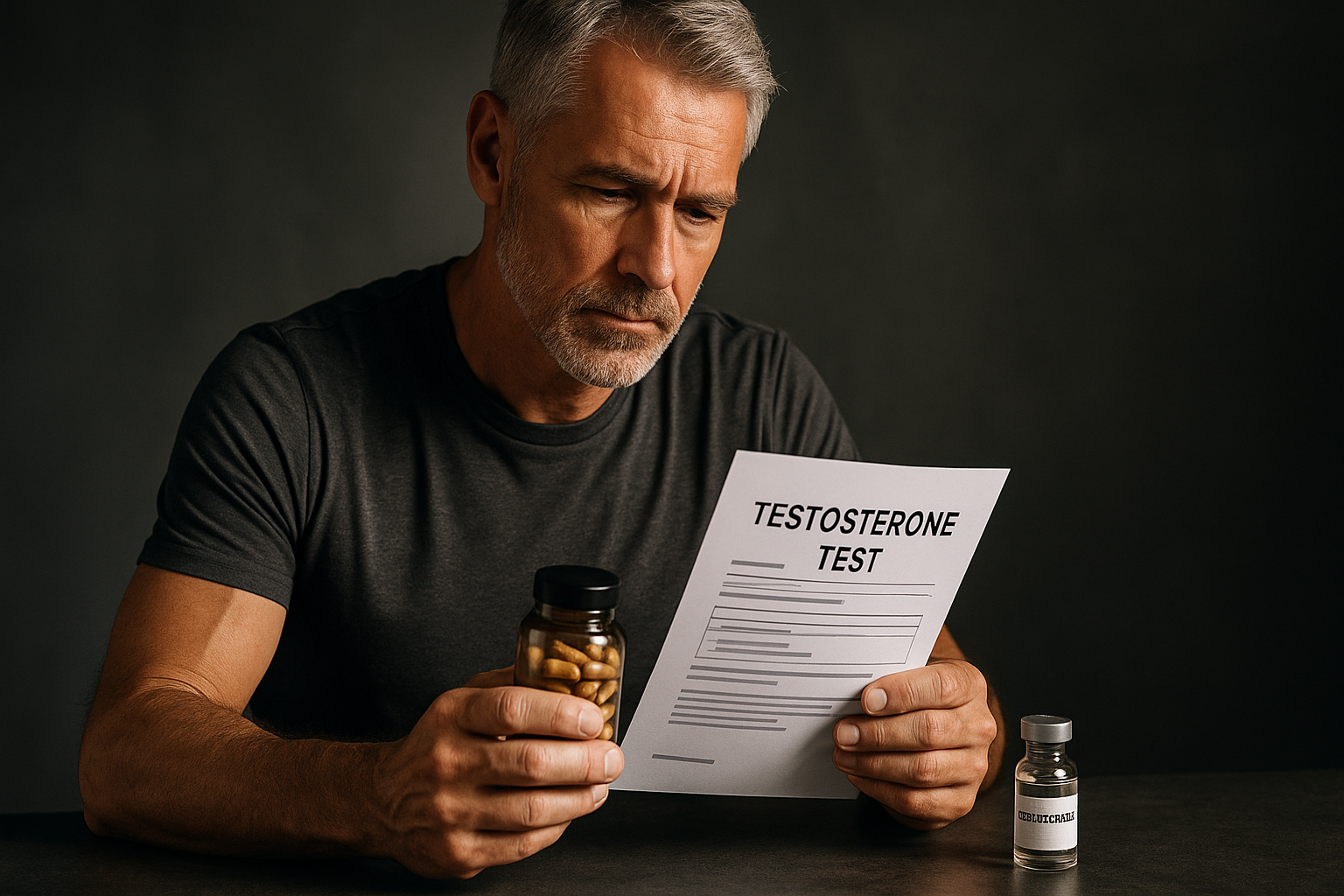
Testosterone men over 50 often notice changes like lower energy, reduced sex drive, and loss of muscle—but symptoms alone can’t confirm low testosterone. The “best testosterone supplement for men over 50” depends on whether you’ve actually had labs showing testosterone deficiency. If deficiency is confirmed, discuss testosterone replacement therapy (TRT) with a clinician and review potential heart and prostate risks. If labs don’t support low T, prioritize evidence-aligned lifestyle changes and choose supplements with realistic expectations and strong safety/quality standards.
Quick decision workflow (symptoms → labs → next steps):
- Track symptoms (libido, energy, strength, mood, sleep, body composition).
- Confirm with blood testing (total and/or free testosterone, ideally with morning collection).
- Discuss TRT candidacy only if labs + clinical context support testosterone deficiency.
- Choose supplements carefully if you’re not confirmed deficient—or as an adjunct under guidance—never as a substitute for diagnosis.
What happens to testosterone after age 50?
Testosterone levels naturally decline as you age, with a gradual drop for many men after around age 40. This age-related trend can contribute to symptoms, but the key point for testosterone men over 50 is that the decline is not the same as a medical deficiency.
Typical natural decline (and what “low” means clinically)
Many men experience a slow downward shift in testosterone in men over 50. Clinically, “low testosterone” is usually determined by blood testing
Why symptoms alone aren’t enough
Lower sex drive, fatigue, and reduced muscle/strength can happen for many reasons besides low testosterone. Sleep apnea, chronic stress, obesity, medication side effects, depression, thyroid issues, diabetes, and more can mimic the presentation. That’s why competitors often jump straight to boosters or TRT, while a better approach is diagnosis-first.
Signs and symptoms of low testosterone in men over 50
Recognizing signs of low testosterone in men over 50 can help you decide when to get tested, but remember: symptoms are not proof of deficiency.
Common symptoms (fatigue, libido, muscle loss, etc.)
Men with low testosterone may notice one or more of the following categories:
- Sexual health changes: reduced libido, fewer morning erections, difficulty achieving/maintaining erections.
- Energy and mood: low energy, increased fatigue, depressed mood, irritability, “brain fog.”
- Body composition: increased body fat (often central), decreased lean mass, slower recovery.
- Strength and performance: reduced strength, fewer gains, lower endurance, decreased training capacity.
- Sleep: worsening sleep quality (not always caused by low T, but can overlap).
When to suspect a deficiency vs lifestyle/other causes
Consider getting labs sooner if symptoms are persistent and you also have risk factors such as significant weight gain/obesity, long-term poor sleep, high alcohol intake, opioid use, or conditions known to affect hormones. Still, don’t self-diagnose. If you’re asking “testosterone levels in men over 50,” the practical answer is that your lab results and clinical context are what matter.
How to know if you truly have low testosterone (what to test)
If you’re trying to decide about the “best testosterone supplement for men over 50,” the smartest first step is to avoid guesswork. A lab testing approach helps you tell whether you’re dealing with testosterone deficiency—or something else.
Lab testing approach (tie to TRT candidacy)
Common testing often includes:
- Total testosterone (often measured in the morning)
- Free testosterone and/or SHBG (sex hormone-binding globulin) depending on your clinician’s approach
- Repeat testing if results are borderline or symptoms persist
- Additional evaluation sometimes includes related hormones and conditions that can influence testosterone (your clinician decides what’s appropriate)
Important: different labs use different reference ranges. Don’t treat a single number as a final diagnosis—ask your clinician to interpret your results with your symptoms.
Red flags that require clinician evaluation
Some situations warrant prompt medical evaluation rather than supplement experimentation:
- Rapid or severe symptom onset
- Marked sexual dysfunction that’s new or worsening quickly
- Symptoms of other endocrine/metabolic issues (significant weight change without explanation, excessive thirst/urination, thyroid symptoms)
- Use of medications that can affect hormones (or suspected steroid/androgen exposure)
Best testosterone supplements for men over 50 (what to look for)
Let’s separate “supplementing” from “treating.” In confirmed testosterone replacement therapy for men over 50, the clinical approach is different. Supplements may help certain men support testosterone-related pathways, but they generally should not be treated like a guaranteed fix.
“Best” criteria: safety, ingredient transparency, realistic expectations
When someone searches “best testosterone supplement for men over 50,” the best option for you should meet these criteria:
- Clear, specific ingredient labeling (dose amounts, not vague blends)
- Evidence-aligned mechanism (supporting testosterone or related factors without miracle claims)
- Third-party testing or strong quality standards (to reduce contamination/adulteration risk)
- Appropriate expectations: likely modest changes, not “raise testosterone into the normal range overnight”
- Safety for older adults, especially if you take medications or have cardiovascular/prostate concerns
How to compare supplement claims (what’s credible vs marketing)
Be cautious of marketing that promises:
- Guaranteed testosterone normalization
- Large dose ranges without safety context
- Testosterone “boosting” claims without referencing any human outcomes or dosing rationale
- “Male menopause” messaging that implies you don’t need diagnosis
Instead, look for practical, bounded statements: improved training capacity, support for healthy endocrine function, better sleep/recovery, or modest changes that don’t conflict with your lab results.
Before you buy (checklist):
- Have you considered getting labs first (especially if symptoms are significant)?
- Does the product list exact doses per serving?
- Is the company transparent about sourcing and quality testing?
- Are there clear side effects/contraindications for older men or people on common medications?
- Does the product avoid “one size fits all” claims?
Testosterone boosters vs TRT vs “male menopause” messaging (risk/benefit)
This is where many men over 50 get misled. Supplements and testosterone replacement therapy (TRT) aren’t the same tool, and “male menopause” marketing can blur diagnosis and safety.
TRT effectiveness and safety considerations in older men
When testosterone deficiency is truly present, TRT can improve symptoms for some men. But in men over 50, the conversation must include medical oversight and risk management. WebMD notes that testosterone therapy can be an option but highlights drawbacks, including possible heart risks in older adults. That doesn’t mean TRT is “bad”—it means candidacy should be individualized.
In other words: TRT should be considered through a clinician-guided process that reviews your symptoms, repeat labs, and overall health profile—not through a supplement-first mindset if deficiency is confirmed.
Heart/prostate concerns to discuss with a clinician
Because you’re searching for testosterone men over 50 specifically, make sure your clinician discusses monitoring plans. In general, older adults may need careful evaluation around:
- Cardiovascular risk and overall heart health
- Prostate health and appropriate screening/monitoring
- Blood markers and response to treatment
If you’re not confirmed deficient, the safer route is usually lifestyle-first and a cautious approach to supplements while you investigate the root cause of symptoms.
The Best Testosterone Boosters for Men Over 50 (WebMD)
Lifestyle actions that can support healthy testosterone
Before (or alongside) any “best testosterone boosters for men over 50” strategy, treat lifestyle like the foundation. These actions won’t replace diagnosis, but they can improve the conditions that often drive symptoms.
Sleep, resistance training, weight management
- Sleep: aim for consistent, sufficient sleep. Poor sleep can worsen energy, libido, and metabolic health.
- Resistance training: progressive strength training supports lean mass and functional performance.
- Weight management: if you carry extra body fat, reducing it can improve hormonal balance and training outcomes.
- Nutrition: adequate protein, healthy fats, and micronutrient-rich foods support training and recovery.
A practical 8-week plan (simple, not complicated)
If you want a concrete starting point:
- Weeks 1–2: lock in sleep routine and begin 2–3 resistance sessions/week.
- Weeks 3–4: add progressive overload (slightly heavier or more reps, safely).
- Weeks 5–6: track waist circumference and adjust calories if weight loss is a goal.
- Weeks 7–8: evaluate symptom trends (energy, libido, strength) and decide whether labs are warranted.
To support your training goals, you may also find this helpful: Best Peptides for Muscle Growth in 2026: A Complete Guide for Men.
FAQs: testosterone men over 50
Should a 50 year old male take testosterone?
Usually, only after clinician evaluation and blood testing that confirms low testosterone. TRT can have potential risks, including heart and prostate considerations, so it should be individualized—not started based on symptoms alone.
What is considered a good testosterone level for a 50 year old man?
A “good” level depends on your lab’s reference range, the timing of the test (often morning), and your symptoms. The safest approach is to have a clinician interpret your results alongside your health history.
What are signs of low testosterone in men over 50?
Common signs include lower libido, reduced energy, loss of muscle/strength, and sometimes mood or sleep changes. Because these symptoms are non-specific, blood testing is needed to confirm testosterone deficiency.
How can a 50 year old man boost his testosterone?
Start with sleep, resistance training, and healthy weight management, and address medical causes of symptoms if present. If you’re considering supplements, choose products with transparent dosing and realistic expectations—and confirm low T with labs before pursuing TRT.
How is testosterone replacement therapy for men over 50 effective and safe?
TRT may help men who have confirmed testosterone deficiency, but safety depends on monitoring and individualized risk review. Clinicians typically discuss potential heart and prostate risks, evaluate baseline health, and monitor response over time.
Conclusion: what to do next
If you’re a man over 50 asking about testosterone men over 50 and the best testosterone supplement for men over 50, the best next step is a diagnosis-first plan: assess symptoms, confirm with morning blood testing, and only then decide whether lifestyle, cautious supplement support, or TRT is appropriate.
Safety note: Testosterone supplements/boosters are not a substitute for medical diagnosis. If you suspect low testosterone—or if you’re considering TRT—talk with a qualified clinician to review risks, benefits, and monitoring, especially given potential heart and prostate considerations in older adults.